
Tagged: square
Sunday sketch #325
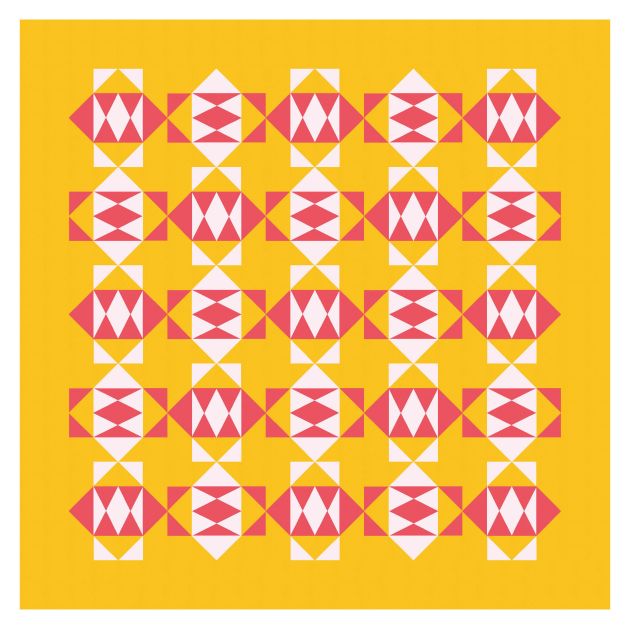
This design is a little like last week’s – check out those bow-ties hiding in the middle – and even a bit like Sunday sketch #314. It’s got the same vertical lines and those large half-square triangles creating diagonal lines.
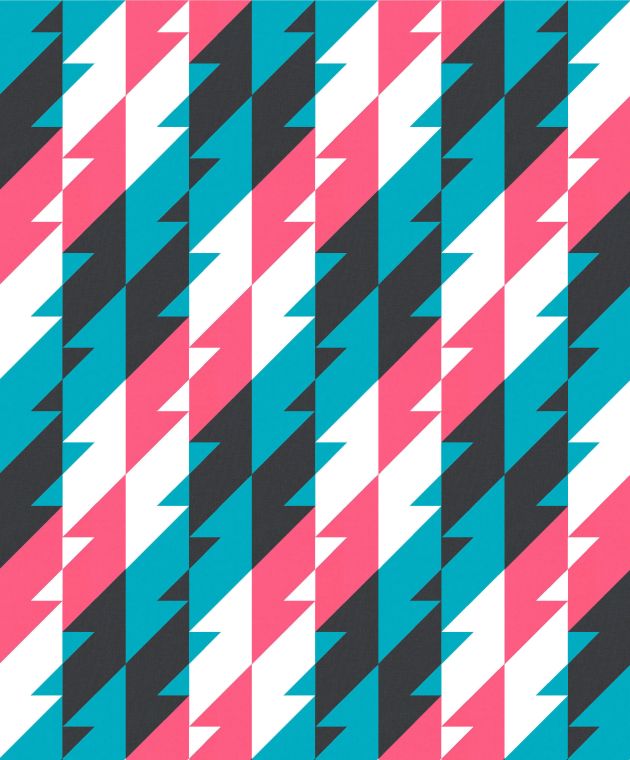
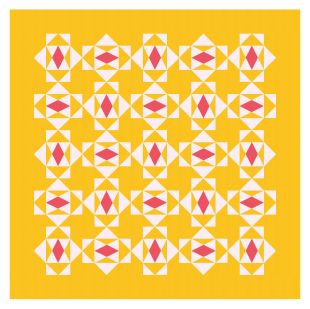
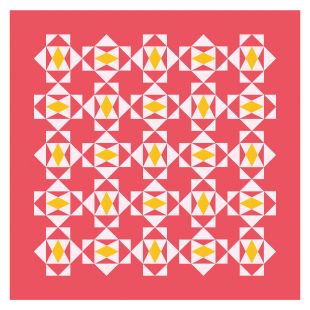
I’ve coloured the shapes in a plaid-ish way, but that still leaves lots of room for variation. Changing up the colours also affects what secondary shapes emerge – although I see large diamonds in most of these designs.
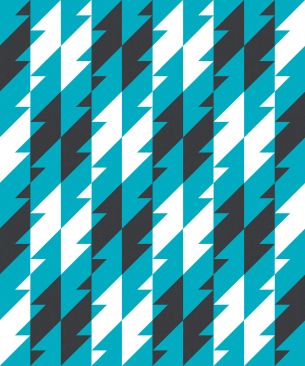

This next version demonstrates the Bezold effect – the name of which I didn’t know until quilter Carolina Oneto commented on a recent Instagram post of mine. I guess it’s an effect I use often!

And here’s a different colourway. I realise as I look at this one that there’s a slight mistake in my colouring – can you see it? I didn’t colour the hot orange shapes in the same way as the others; I’ve missed filling in the small HSTs at the very tips of the shapes. I made the same mistake in the first version, too. Ah well!

This week’s designs could be made into quilts using large and small HSTs, plus small squares (next to the small HSTs). As there’s a limited palette and repeated shapes, it would suit chain-piecing (as well as methods that make more than one HST at a time).
Sunday sketch #321
I don’t know how many flower-themed designs I’ve created over the years – I should go back and count! They always make me happy. Here’s another one.
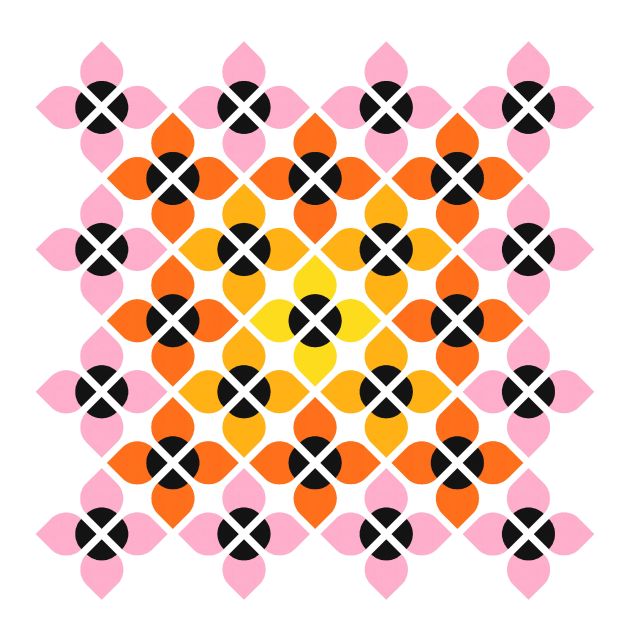
This is a block-based design, set on point. The blocks are made from a single unit, the quarter-circle (or drunkard’s path unit), plus some internal sashing. And the blocks are joined by sashing of the same width.
There are a few different ways to colour the three main elements (sashing/background, flower middle, and flower petals). In the first two versions of this week’s sketch, I’ve coloured the flower middle in the same colour, to provide some consistency across the design.
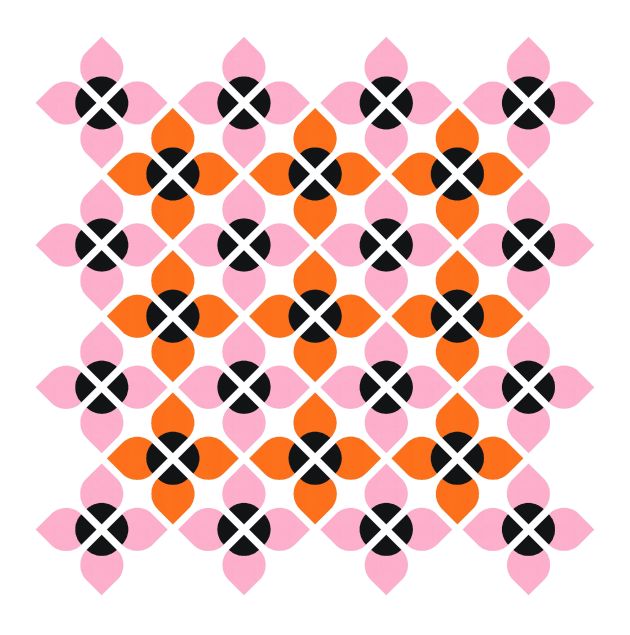
The petals can be coloured differently across the blocks, but I find that keeping at least one element in the same colour helps to avoid busy-ness.
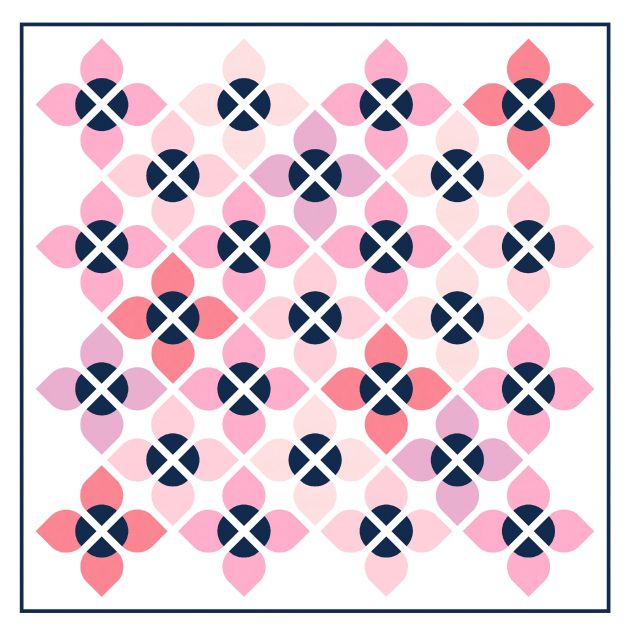
I often try a two-tone, alternating colour scheme with block-based designs, and this one’s no different. For this design, which has a retro feel, I couldn’t resist my usual pink and red/orange combo.

The design feels even more retro in a standard (rather than on-point) layout. I like how the secondary shapes (squircles) are more obvious in this version.

This week’s series of sketches could be translated into quilts using lots of a single unit, the quarter-circle, plus some squares and sashing. I love the simplicity of this design, so I’m very tempted to try making one!
Sunday sketch #318
I love creating block-based designs where lines from adjacent blocks combine to create new shapes. I guess that’s how secondary shapes emerge, but sometimes alternating block colouring can create secondary patterns too.
In the first version of this week’s sketch, alternating the colour placement in adjacent blocks creates a diagonal plaid effect. The colouring means that the features connected horizontally are that dark peachy-pink, while the same connected features running vertically are in light pink.
Changing the colour placement a bit eliminates the plaid effect. In the next version, both the block colouring and placement are the same (blocks are identical but every second one is rotated 90 degrees). Now light pink corners are touching dark pink sides, and vice versa.

There are enough different elements in this design that you can pick out single shapes to highlight.
Or several shapes.

Or avoid focusing on any particular shapes, and just colour all the blocks in the same two tones. That simple colouring helps to highlight those diagonal lines, too.

These designs could be made into quilts quite easily using flying geese units, squares, and triangle-in-a-square blocks.
