Sunday sketch #320

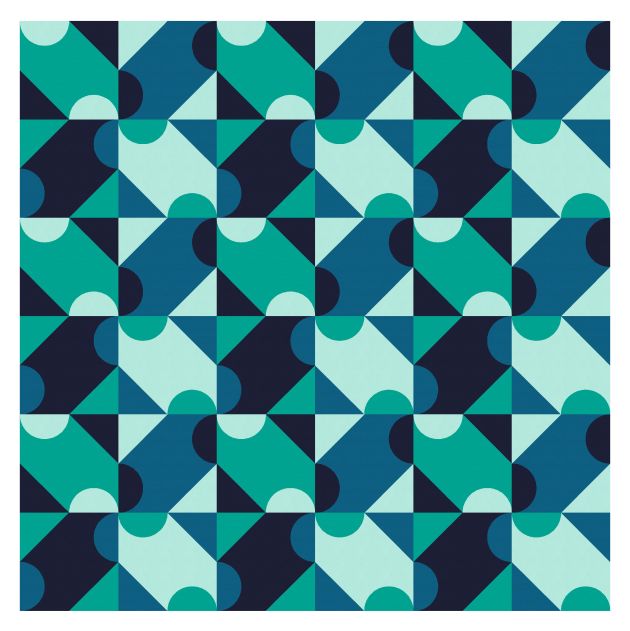
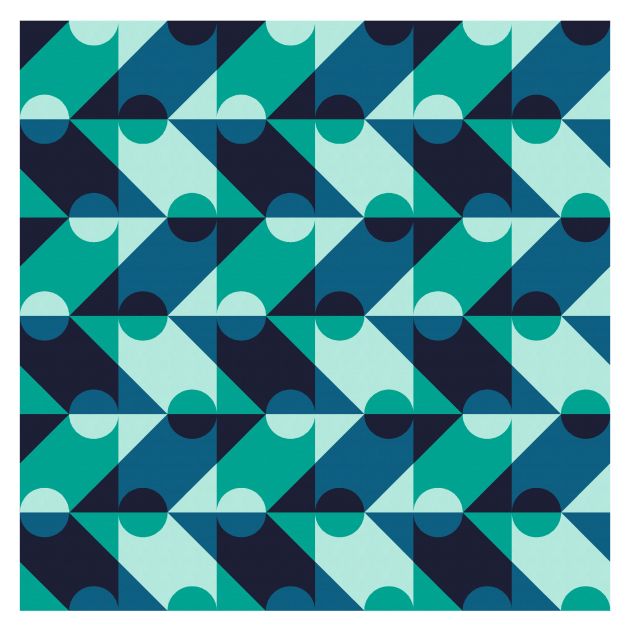
There are so many lines in this week’s block that pretty much any layout creates lots of secondary lines, interactions and shapes. I like this crazy layout the most; it seems a bit random, but there’s order in the chaos.

Here’s the same block in a different layout; the top rows of the two designs are the same, but from then on, the blocks are rotated differently. In this version, the spaces between the black and white shapes almost end up looking like they’re slightly different shades of light blue, depending on which diagonal line of blocks you’re looking at.

My eye tends to see the diagonal lines of blocks going from top left to bottom right, but there are also lines going from bottom left to top right. They’re maybe a bit easier to see with the blocks in a single colour.

Using the reverse colourway in alternate blocks presents even more opportunities for different layouts.

Things can get pretty busy though….

Pointing all the blocks in the same direction helps to show the effect of alternating the placement of the two colours in adjacent blocks.

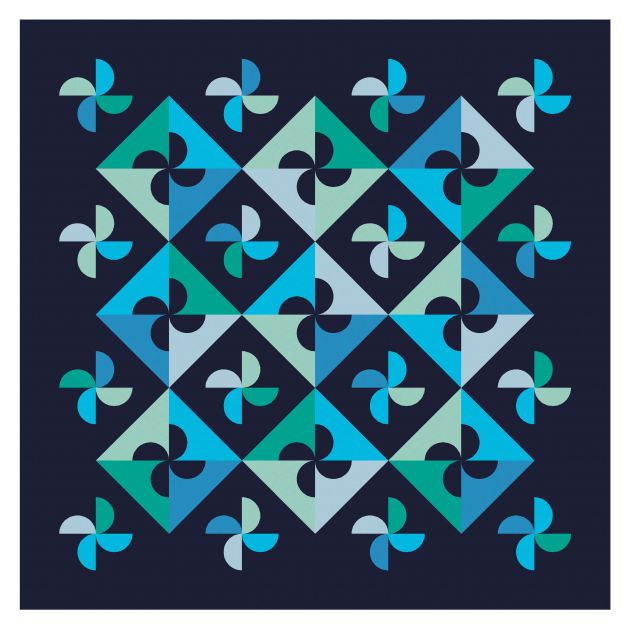
The angles in this block make it a great candidate for laying out on point. I feel like this layout changes the whole feeling of the design. (This particular version also has a diagonal grid of squares that isn’t so evident in other versions, thanks to the way I’ve coloured the shapes.)

This next version feels a bit more spiky than its standard-layout sister design. (Why is that?)

A hybrid of the previous two designs retains that diagonal grid of secondary squares (now bigger), plus the spikiness.

Many of these designs make me think of birds, so I couldn’t resist making one last version with a flock flying west.

These blocks, and all these designs, could be made into quilts using 2:1 half-rectangle triangles (twice as long as they are wide), half-square triangles and squares. There are 4 HSTs per block, so 4-at-a-time or 8-at-a-time methods would help to save time. There are also 2 HRTs of each orientation (left-facing and right-facing) in each block, so the 2-at-a-time method for making those would be perfect too.


Sunday sketch #319

This week’s design is a little bit related to Sunday sketch #313, although with lots of differences too. I guess they’re related more in concept than in execution.

The design features a square block, set on point, in a standard layout. The blocks are made mostly from half-rectangle triangles, with two half-square triangles and a single quarter-circle (or drunkard’s path unit). That first colouring, above, makes me think of cactus flowers. The ones below are more like wheat stalks.

Note that the first three versions have sashing between the blocks; the version below doesn’t. There’s enough whitespace in the blocks themselves to not let the design feel too busy, although I think I still prefer the versions with sashing. I do like a lot of ‘resting’ space in designs though.

The previous versions have coloured all the blocks the same, but of course you could use a different colour per block. And I’ve used gradating colours within each block, but that’s not necessary either. I avoided trying that though (see comment on busy-ness, above!).

This week’s design could be made into a quilt using half-rectangle triangles of different sizes/ratios, squares, half-square triangles, and quarter-circle (drunkard’s path) units.

I think this is the sort of block that you could mix in with other flower blocks for a more random garden-y feel. The same block on repeat is maybe too much for a whole quilt? But it would work well to break up other botanical blocks. I guess I need to design a bunch of flower blocks to test that out! 🙂


Sunday sketch #318

I love creating block-based designs where lines from adjacent blocks combine to create new shapes. I guess that’s how secondary shapes emerge, but sometimes alternating block colouring can create secondary patterns too.

In the first version of this week’s sketch, alternating the colour placement in adjacent blocks creates a diagonal plaid effect. The colouring means that the features connected horizontally are that dark peachy-pink, while the same connected features running vertically are in light pink.

Changing the colour placement a bit eliminates the plaid effect. In the next version, both the block colouring and placement are the same (blocks are identical but every second one is rotated 90 degrees). Now light pink corners are touching dark pink sides, and vice versa.

There are enough different elements in this design that you can pick out single shapes to highlight.

Or several shapes.

Or avoid focusing on any particular shapes, and just colour all the blocks in the same two tones. That simple colouring helps to highlight those diagonal lines, too.

These designs could be made into quilts quite easily using flying geese units, squares, and triangle-in-a-square blocks.