
Tagged: square in a square
Sunday sketch #301
The similarities between this week’s design and last week’s Sunday sketch are probably pretty obvious. Those square-within-a-square motifs are still there, but now connected by triangles instead of small squares.
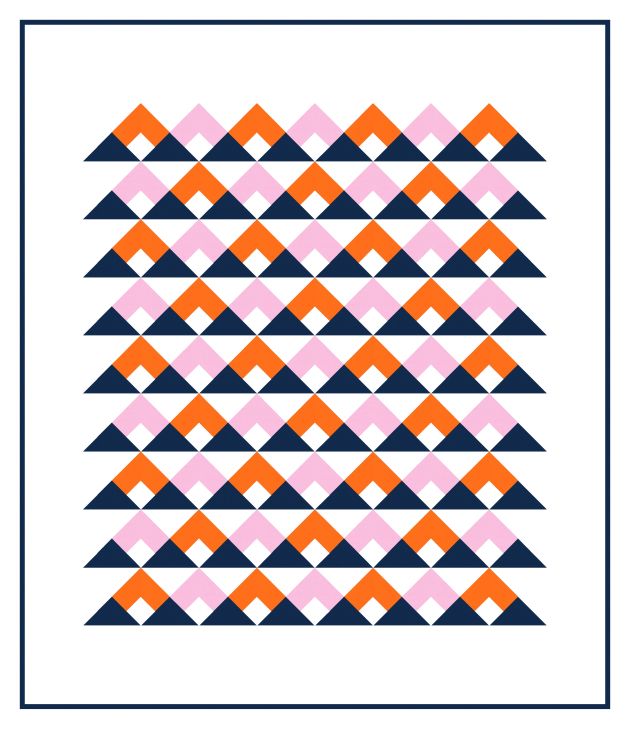
The added angles from the triangles lend more movement to the design. And they present more opportunities for interesting block placement.
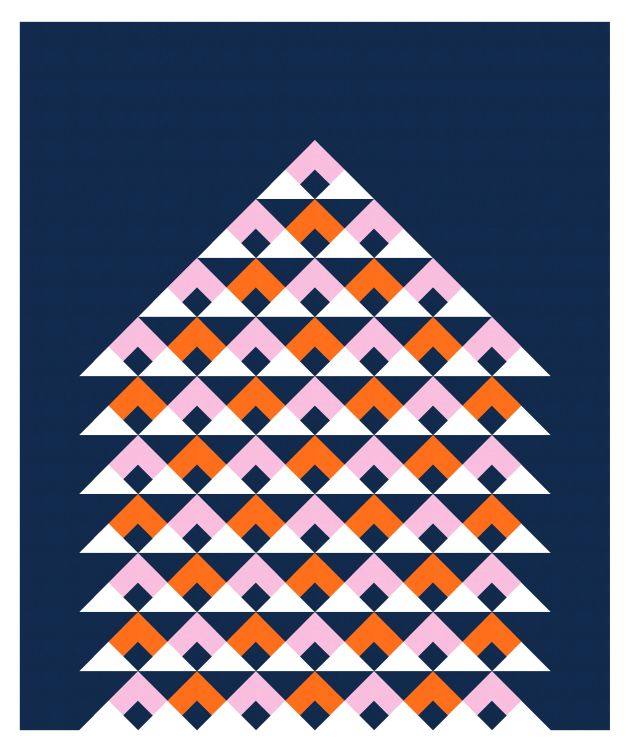
I like a dark background, but I also prefer the darker triangles – so back to a white background it is!
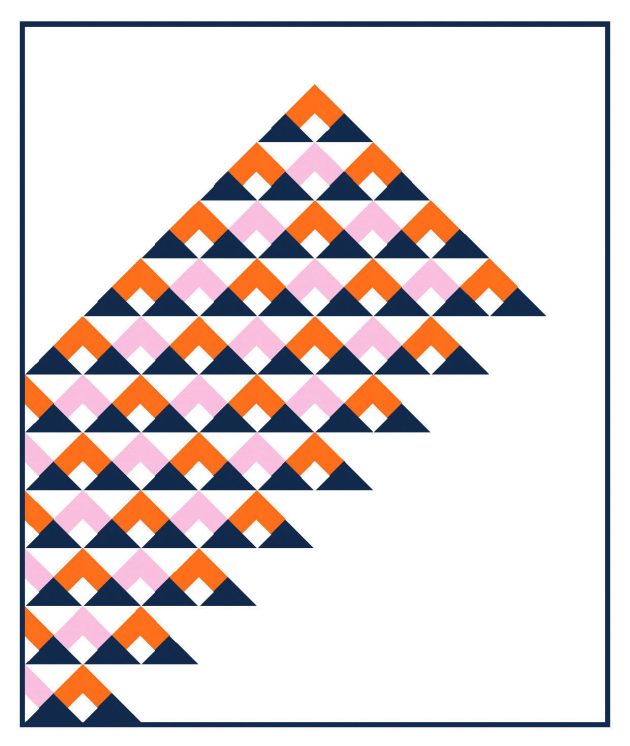
I like the balance between the straight edges on one side of the design, and the staggered, overhanging triangles on the other side.
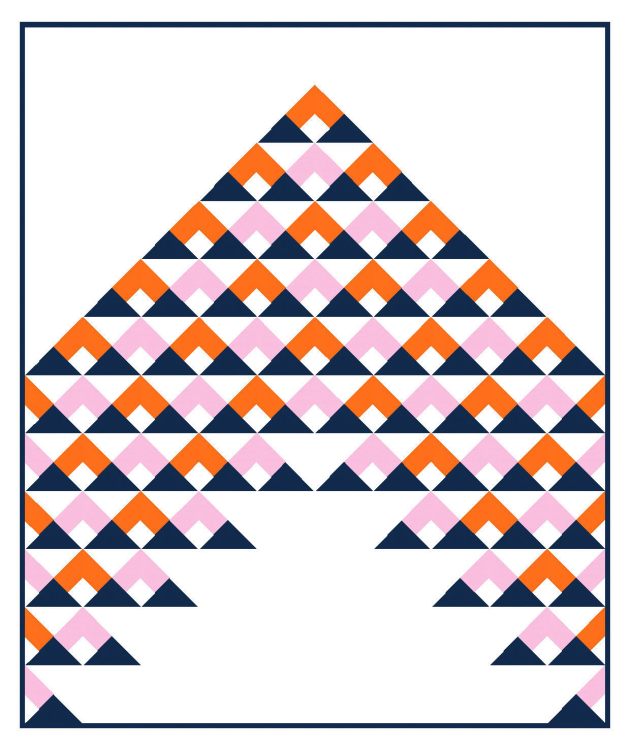
This week’s design is a fairly straightforward one – just alternating blocks, set on point. Half of the blocks are square-within-a-square units, and the other half are half-square triangles. I’ve only used three colours here, but you could probably get away with more. I reckon a scrappy approach might work too. Try it and see? (Then let me know!)
Sunday sketch #300
I’m not gonna make a big deal about this week being Sunday sketch #300, but… #300! I say it every 100 sketches or so, but I never thought this weekly habit would last this long. Thank you for following along with me!
So this week’s sketches use a motif that appeared in last week’s sketch: a square within a square. Not the start-of-an-economy-block kind of square-within-a-square, where the inner square is set on point in relation to the outer square. Just a regular small square taking up one quarter of a big square. Anyhoo…
So I decided to play with that shape some more, cos it’s kinda cool just on its own.
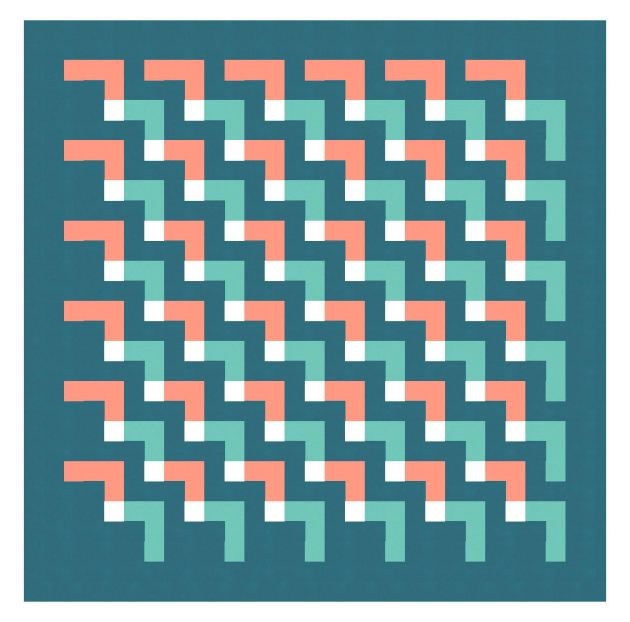
In these designs, I’ve laid out a 12 x 12 grid in which the square-within-a-square units alternate in rotation – half of the units have the small square in the top right, while the other half have the small square in the bottom left.

Sometimes with really simple, repetitive motifs like this, I like to crowd the design with loads of them so you start to see movement and secondary shapes and recurring lines, etc. But it’s also nice to pare them right back, so you get a really simplistic representation instead.
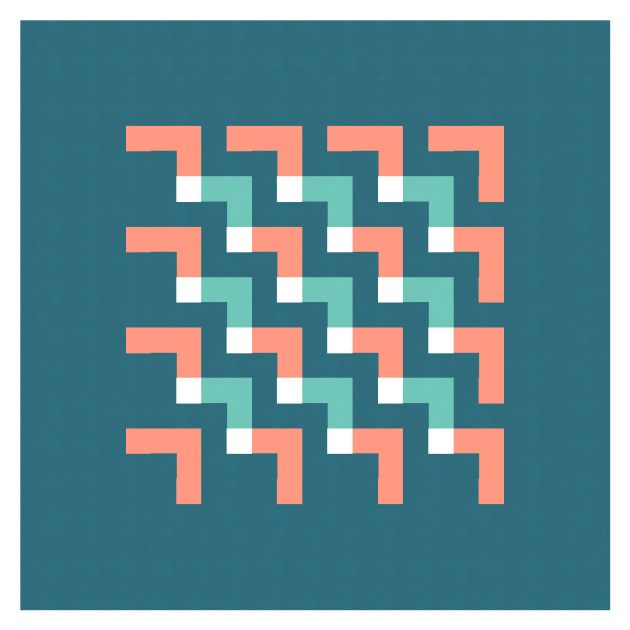
And then I started playing with orientation. (See my note below about the similarity of this version to the Thrive Quilt pattern from Suzy Quilts.)

And then with scale again.
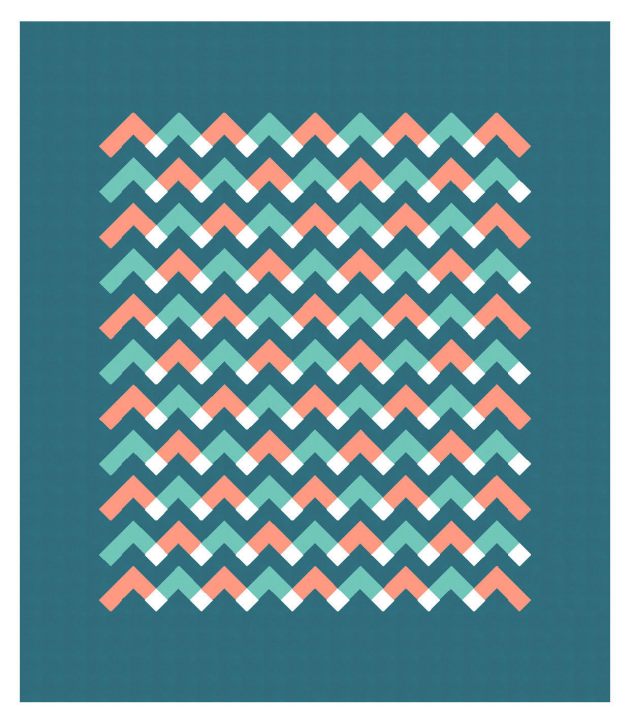
And then with other types of movement.

I didn’t play with colour, but that’s obviously something else you could vary. And there are opportunities to introduce transparency by using a colour on the small squares that combines the colours of the adjacent squares.
This series of designs led to an entirely different series of related designs that I’ll post soon. Oh, and those designs led to other ones too. These are versatile shapes, and it’s really easy to make small tweaks to create large variations.
But back to this week’s designs. They could all be made into quilts using just squares and rectangles. And because of the repetition, they’d really suit chain piecing. It’s probably the sort of top you could cut and piece in a day (famous last words!).
Note: There are definite similarities between some versions of this week’s design and the Thrive Quilt by Suzy Quilts. Whereas I use a 4-patch square-in-a-square block, Suzy’s pattern uses a 9-patch that takes that block one layer further (basically surrounding a square-in-a-square with two more sides). We both alternate the blocks to create a zig-zag effect, and we both make the small squares a feature. But I started with a different orientation and I’ve used colouring in a different way (alternating adjacent blocks). Despite the similarities, I’ve posted these versions to show the iteration between last week’s designs and next week’s.
Sunday sketch #287
This week’s sketches are iterations of last week’s. It’s been awhile since I’ve done a series of related sketches. Although I’m not sure two posts in a row counts as a series…!
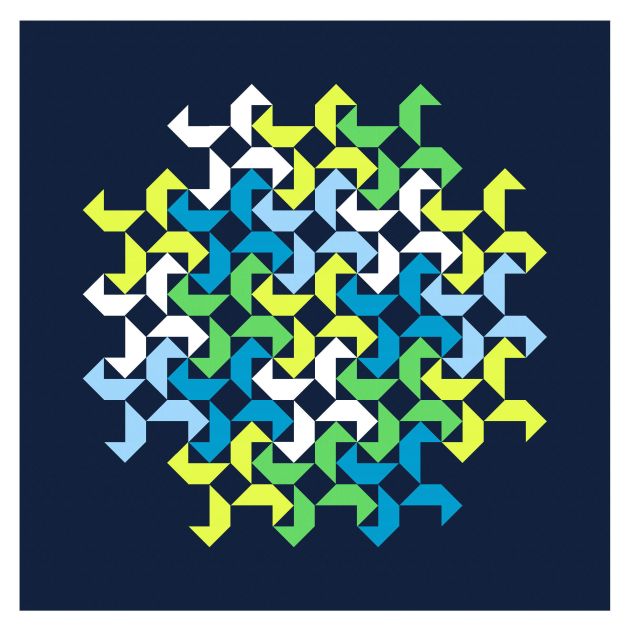
So last week’s sketches were all based around interlocking crosses – a bit like Brigid’s crosses – with alternating blocks having the reverse colouring. Using random colour placement instead produces a design like this:

And then I just started removing bits. I designed the block using flying geese and a square-in-a-square units, which means there are lots of bits that can be subtracted to create new and interesting designs. Here’s the first design again:
And here it is with alternating blocks removed (actually still there, but with only the centre square showing), to add some more negative space and help you see the individual crosses (or what’s left of them):

I also tried a simpler palette, so you can concentrate on the shapes rather than the colours.

This week’s sketch could be made into a quilt using flying geese, squares, square-in-a-square units and rectangles.
This isn’t one that I’ll be rushing to make, but I enjoyed the process of iterating the design and exploring different shapes and palettes. That’s the kind of experimentation that I like doing with the Sunday sketches – often a little shape or combination of shapes will spark a new idea and a new sketch. For example, I really love this little shape, which is repeated and rotated in the above designs:

It feels a bit like fingertips touching (not that I’m comparing my work to that of Michelangelo or anything..!). Anyway, I’ll keep playing with it and see if I can come up with something new. Watch this space!
