
Sunday sketch #475
This week’s sketch makes use of zig-zag edges to give the impression that adjacent blocks are slotting into each other. I’ve used that effect before, but I think this is the best example! It’s definitely my favourite, anyway.
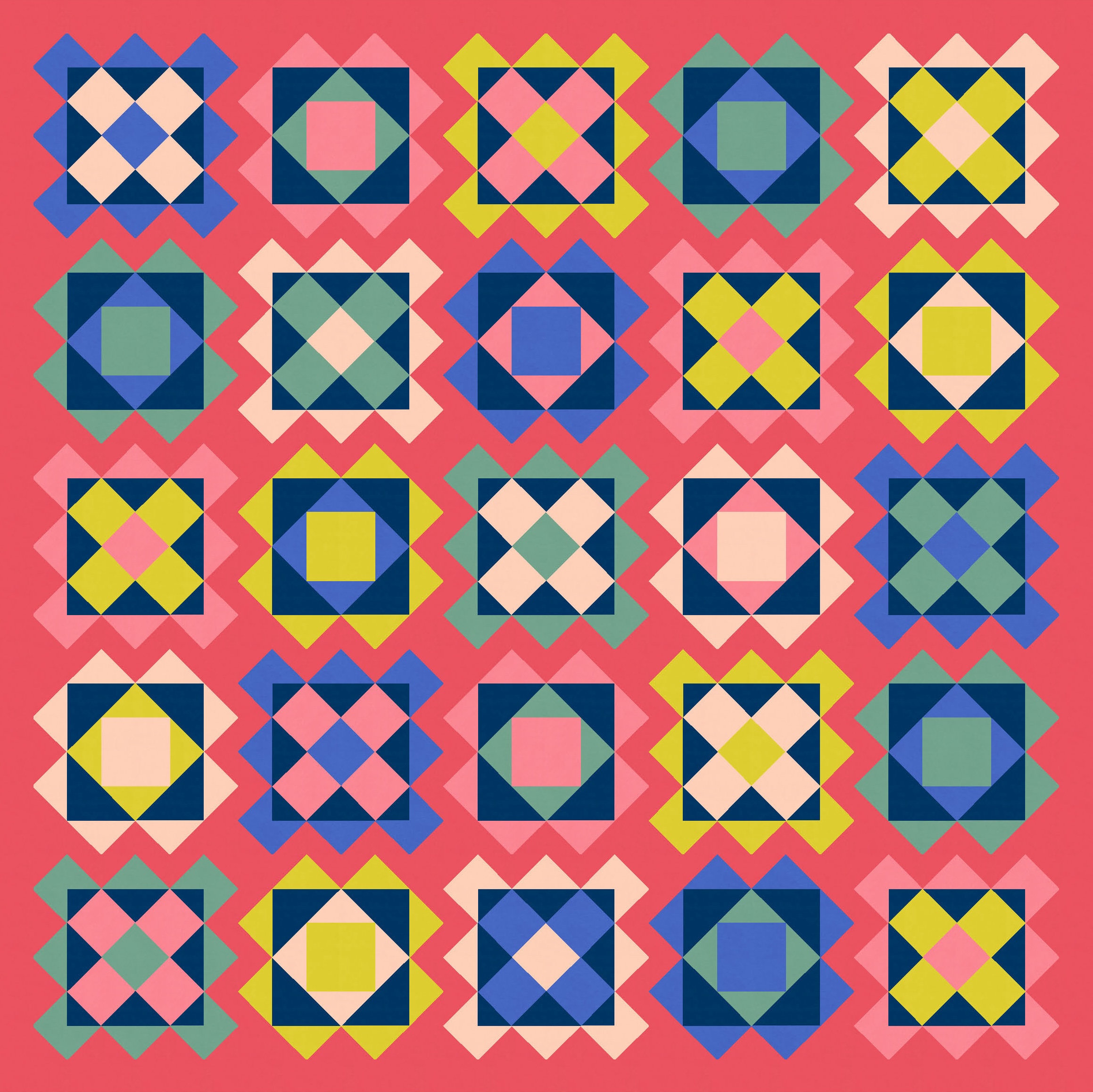
(With thanks to Tara Glastonbury / Stitch & Yarn for palette inspiration from issue 7 of Curated Colour!)
Would you believe that I actually designed this one in January 2024?
I loved the design so much that I held on to it for a while, intending to make it before I shared it. I finished the quilt earlier this year, but only recently managed to get a decent photo of it. I’ll share the finished quilt soon, but I figured I should post the design as a Sunday sketch first!
I used the same approach with the interacting block edges in Sunday sketches #388 and #406, for example (and to a lesser extent in Sunday sketch #445). It adds a bit of movement in the design and a bit of visual interest. And I think it makes the design look a little more complicated than it actually is.
There are two block types; in a 5 × 5 layout, that means 12 of one and 13 of the other. I went a bit overboard with the colours in the first version, but the design works well in a palette of three colours.
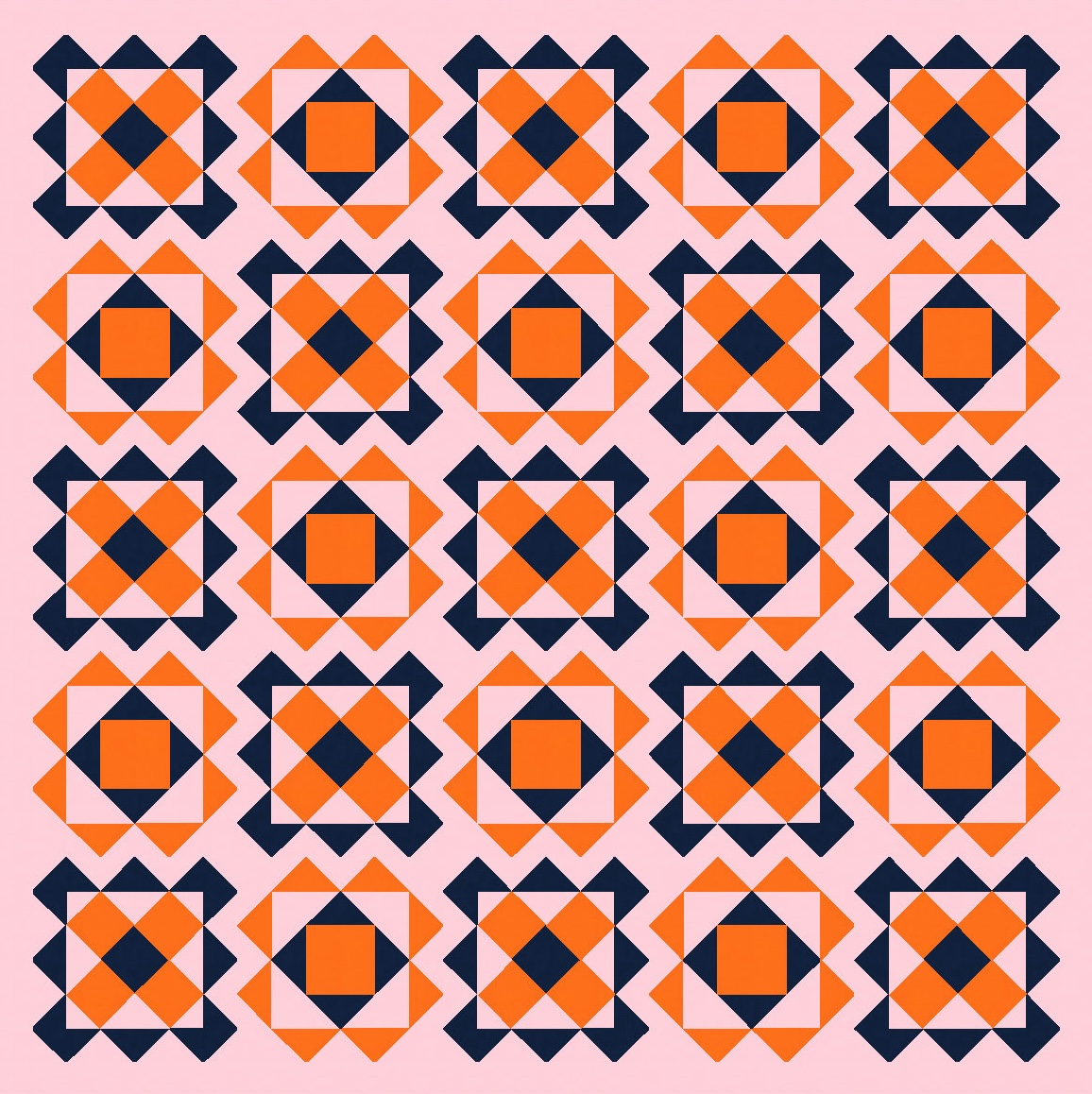
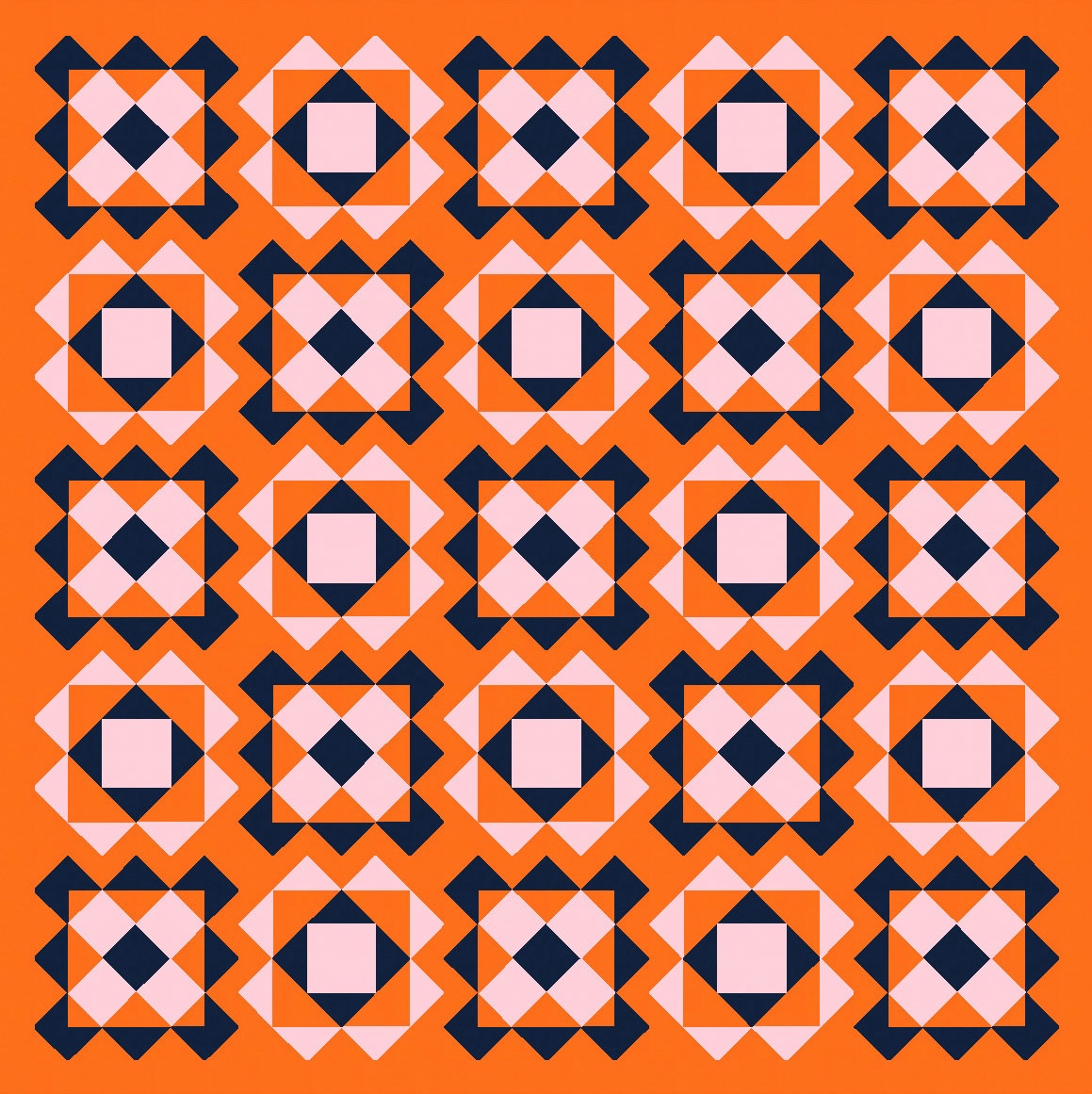
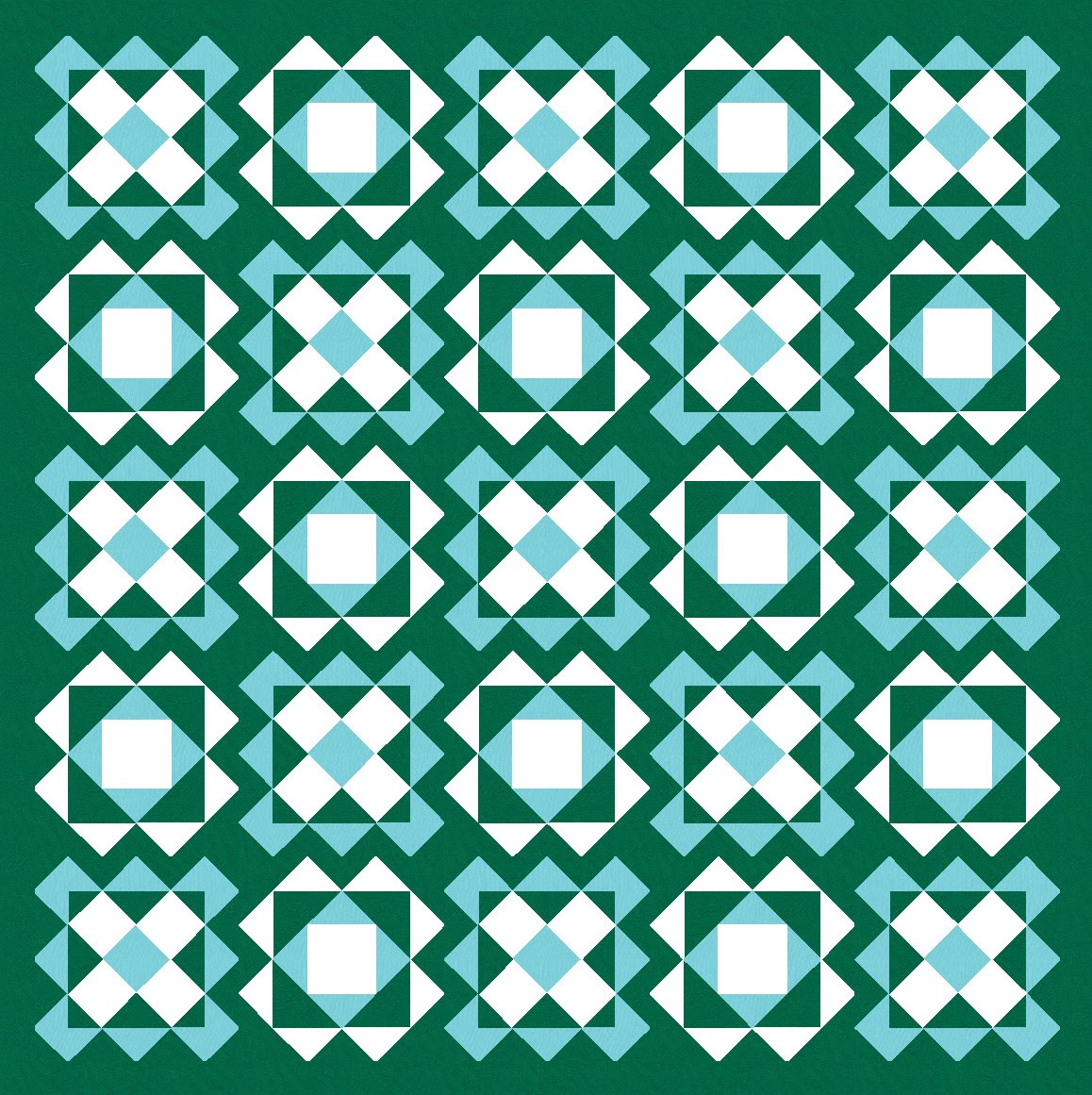
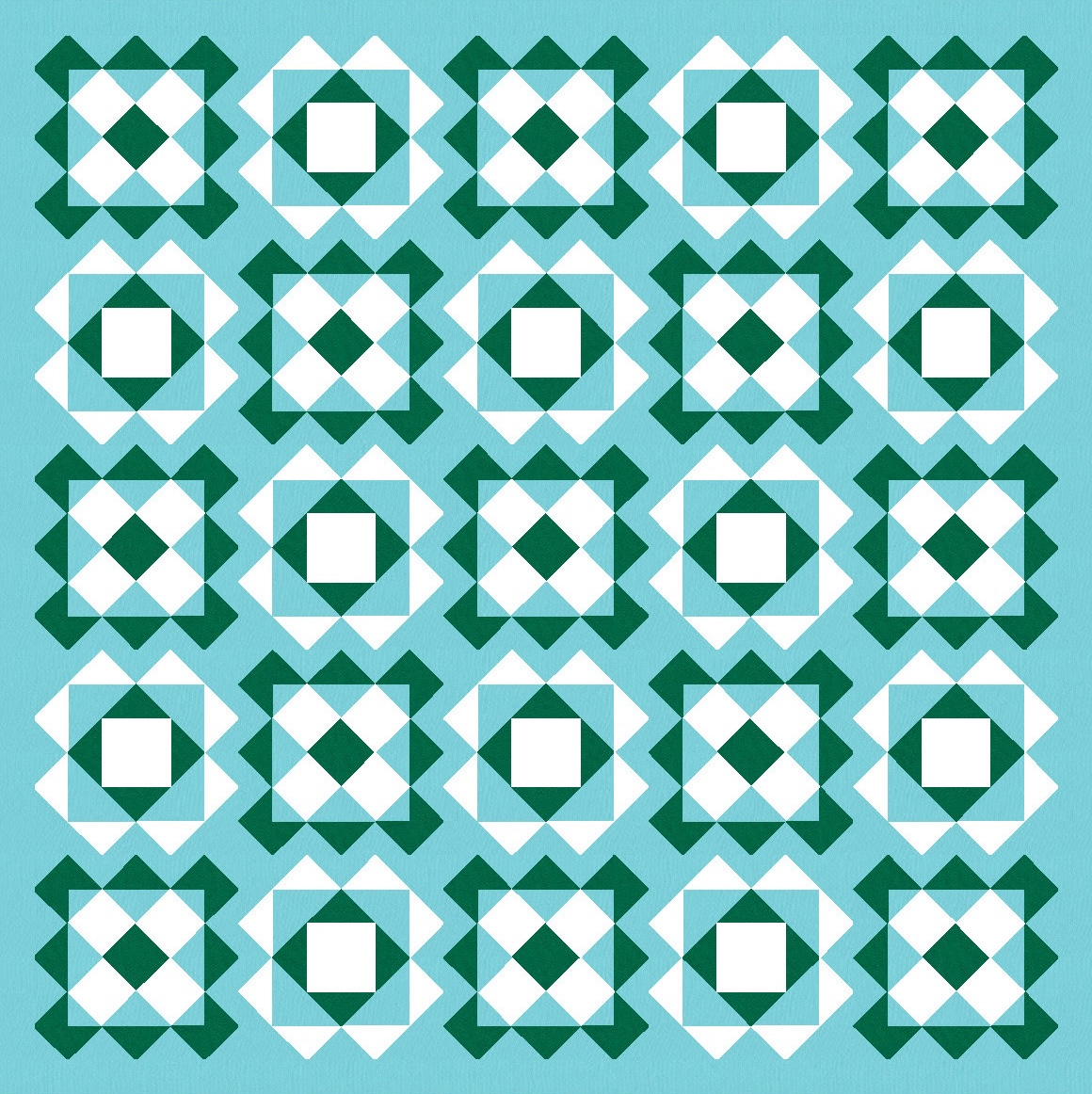
It doesn’t seem to matter too much where the light, medium and dark shades are placed in the design; they all look pretty good.
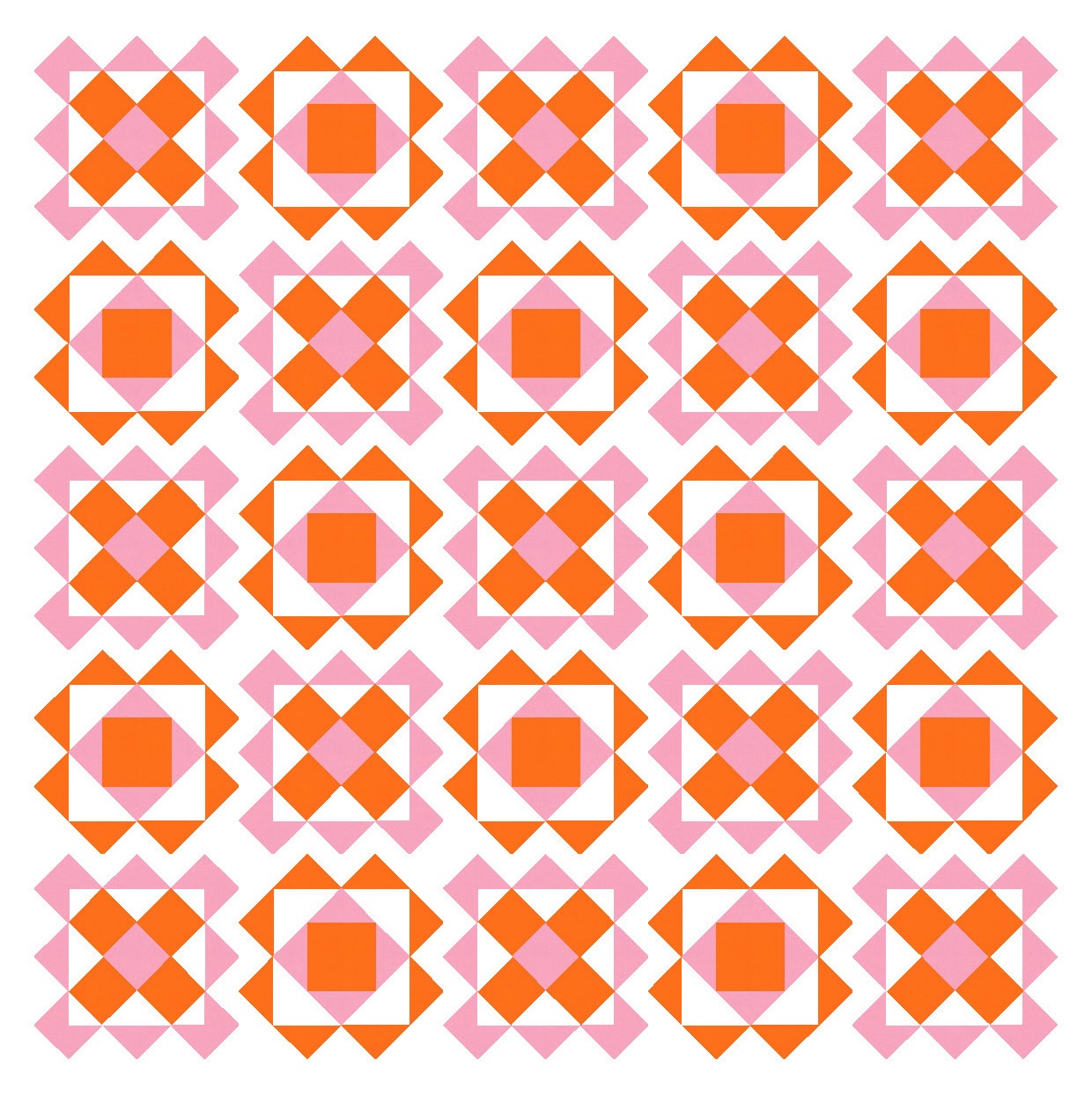
I designed the blocks so they interact nicely with adjacent blocks – seeming to fit into each other in a zig-zaggy way. Each block type on its own might be one you’ve seen before. I couldn’t find any online that are exactly the same, but one is basically a modified granny square block, and the other is an economy block with a few extra bits. Nothing revolutionary, but together they’re more than the sum of their parts.
I expanded the palette to five colours for the 5 × 5 layout so I could do my usual Sudoku-like colour placement (where each colour appears only once for each shape in any row or column). Well, I’m actually working with a seven-colour palette here: five colours plus black(ish) and (off)white. I also changed the colour placement a bit in these next two versions, with the colour creating those inner squares in all blocks rather than the crosses and economy blocks.
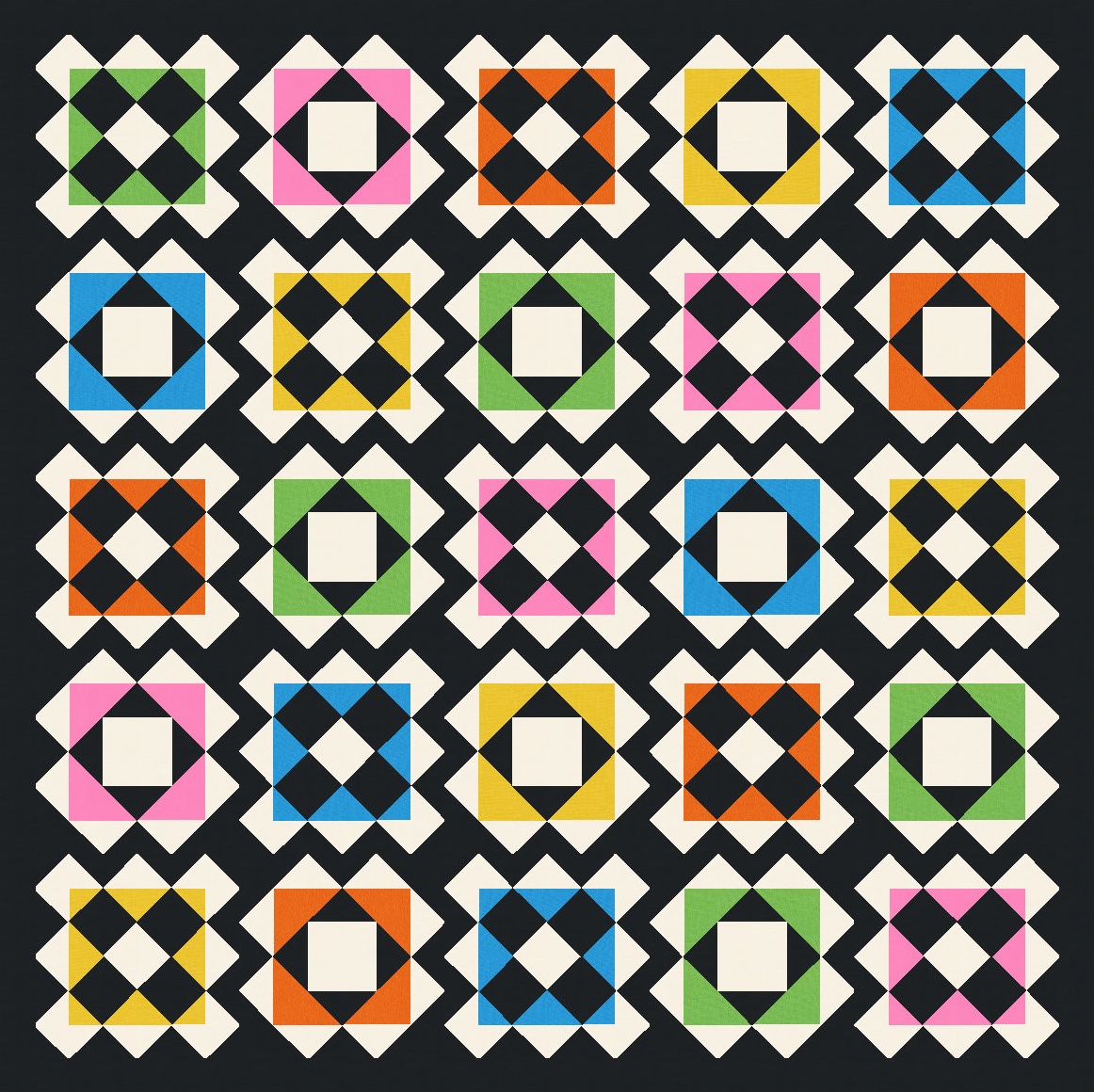
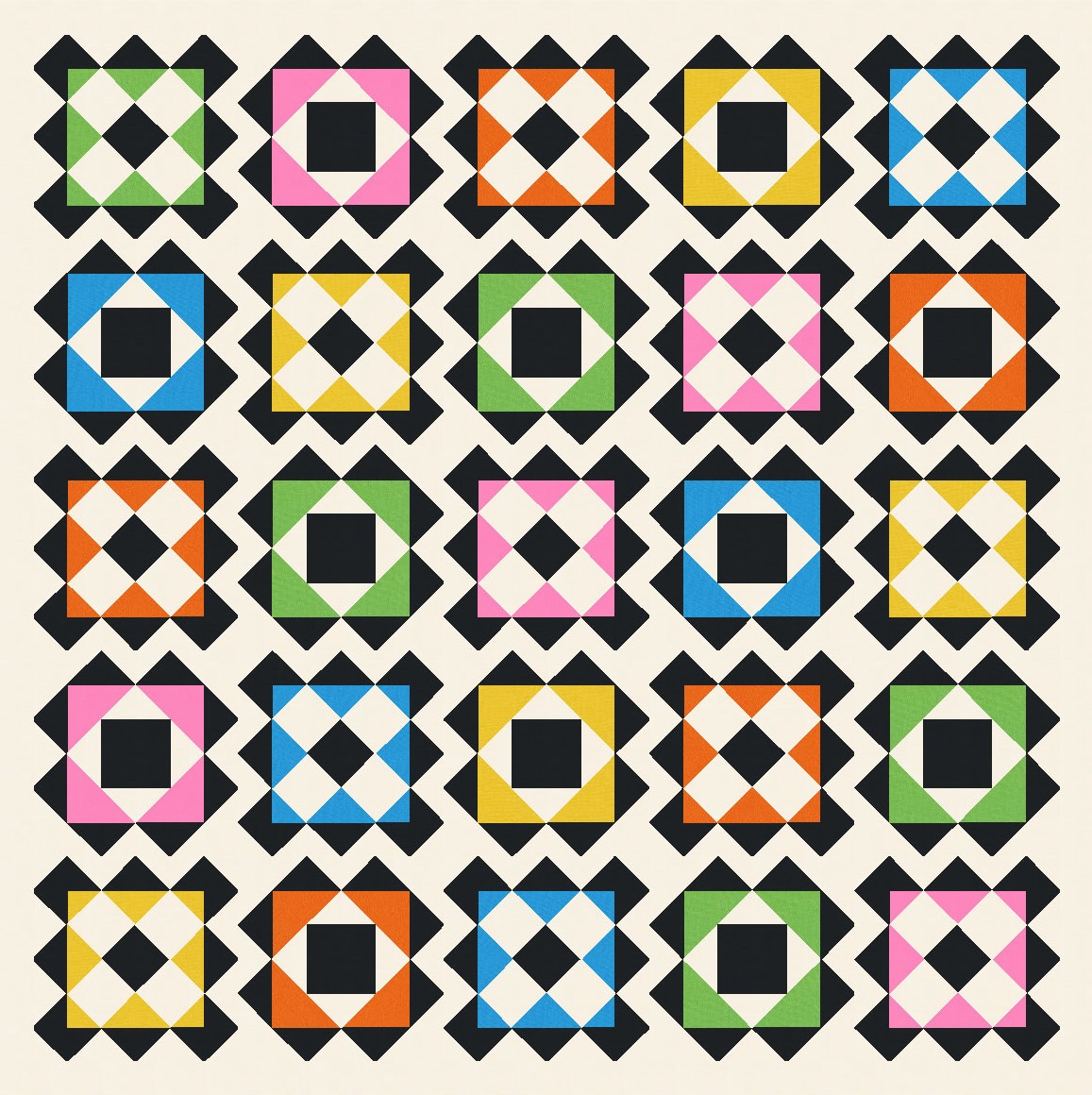
I like the consistency of those coloured squares across all blocks. But ultimately I decided I preferred the other version, where the colour’s used for the crosses and the middle of the economy blocks.
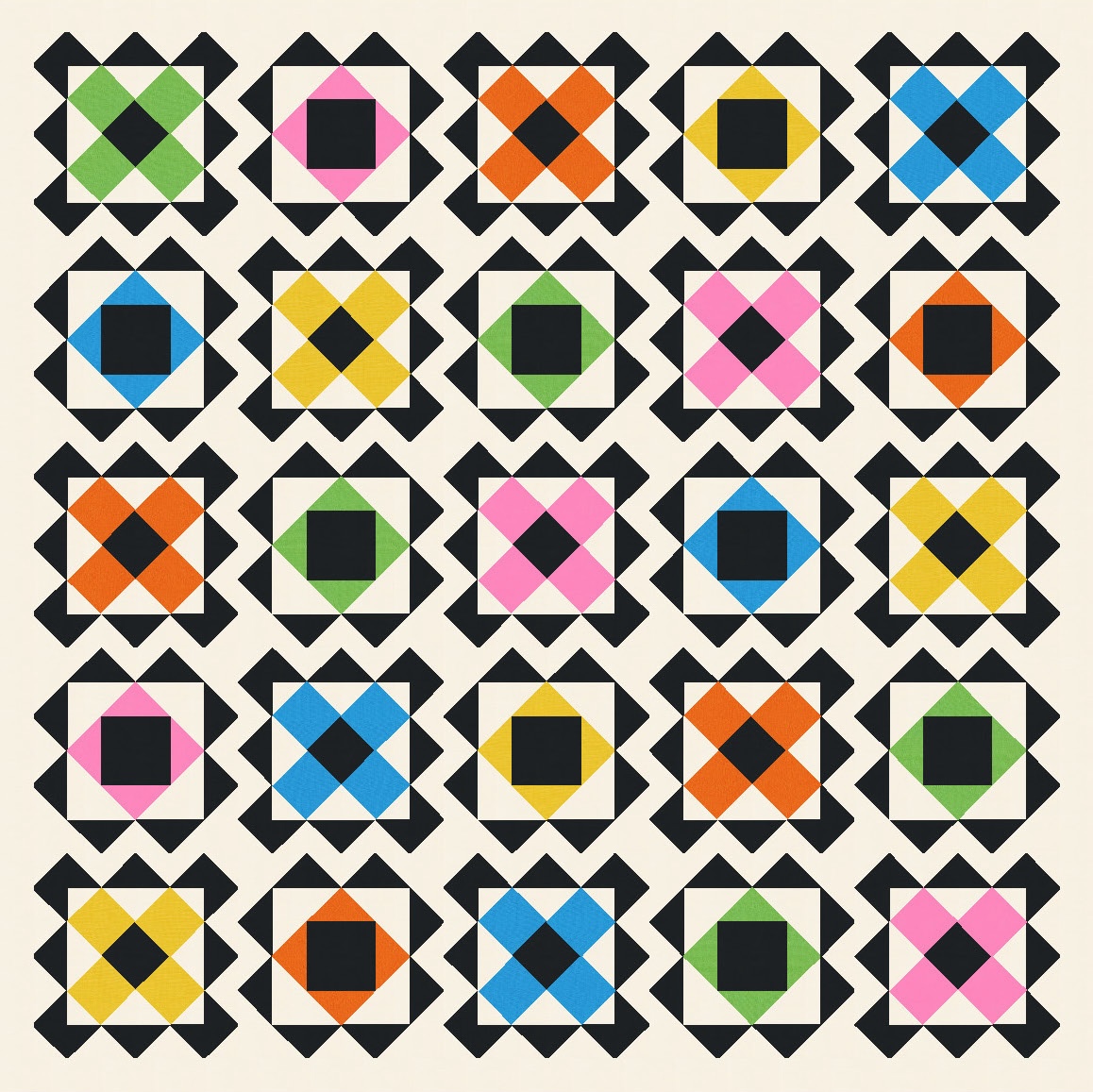
I also tried a dark background and a different colour for the outer shapes in each block.
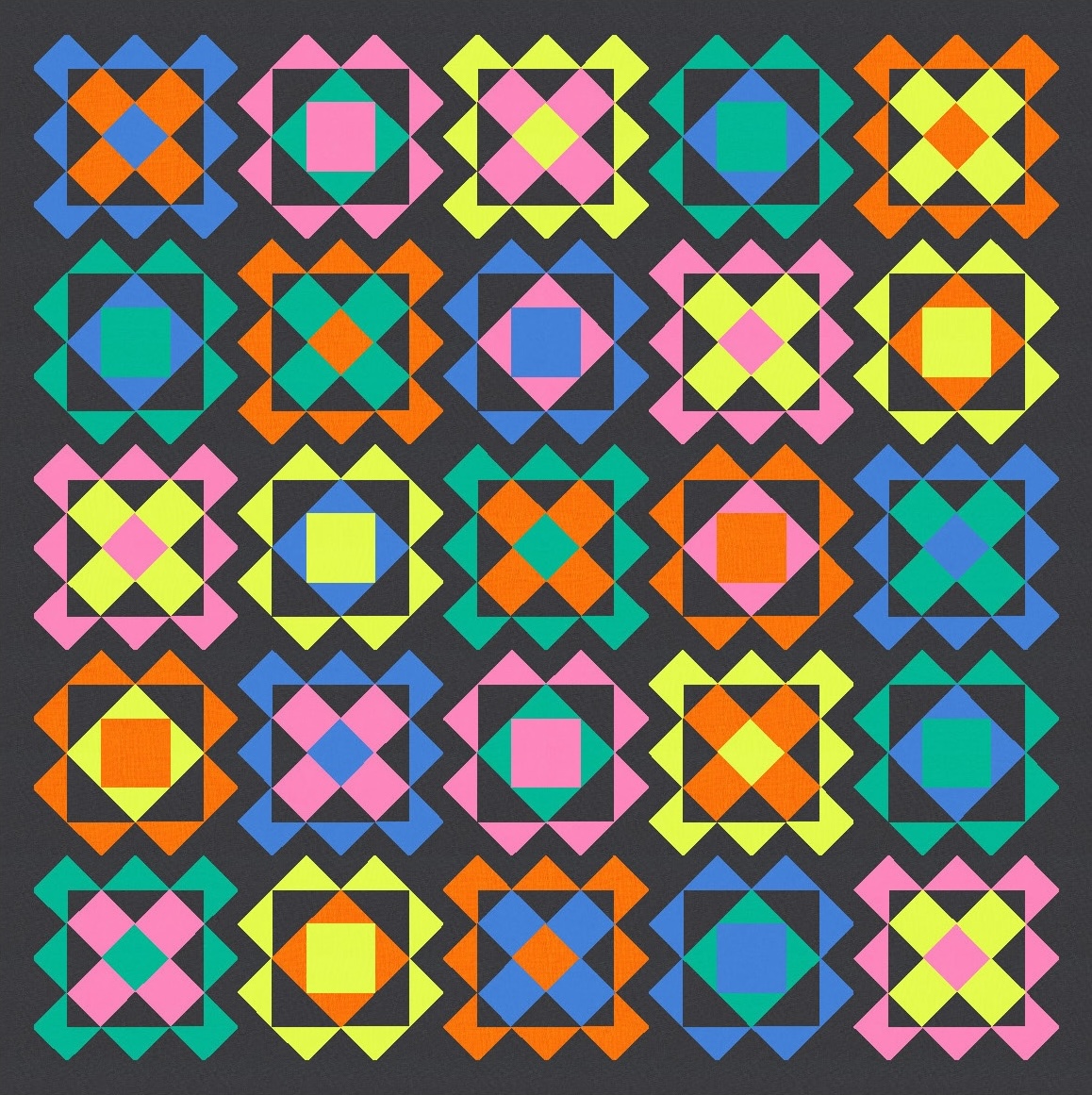
I love the controlled chaos of this colour palette and placement, not to mention the dark background (which I don’t tend to use that often). This was originally going to be the main pic I showed this week, until Tara released issue 7 of Curated Colour and I couldn’t resist recolouring it! Here’s a recoloured dark version….
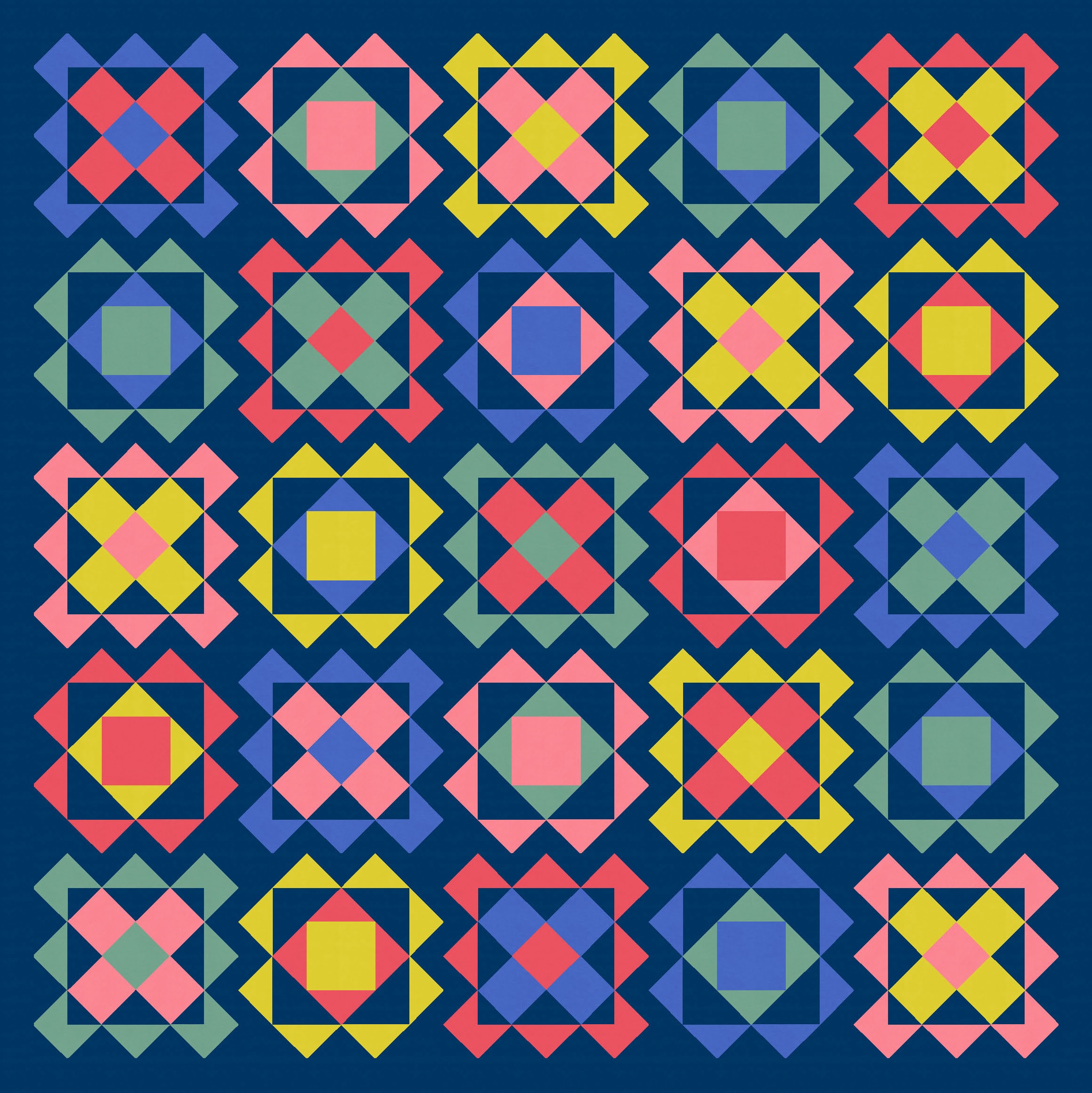
And then there’s the first version I showed (shown here again), which uses two colours per block plus the same colour to define the internal squares in each block. That means the blocks don’t have any background colour within them, but it doesn’t seem to matter so much? I think the amount of background colour around the edges is enough to keep the blocks from feeling too heavy.
Those last few arrangements would make construction a tad less easy, though. Not complicated, by any means, just a bit more time-consuming, because there’d be less opportunity to use chain-piecing.
The blocks are created on-point, using squares, half-square triangles, quarter-square triangles, flying geese and setting/corner triangles. When the colour’s used only in the middle of the blocks, all the other units can be chain-pieced for all blocks from just black and white. (Otherwise I would’ve had to count up how many of the different units were in different colour combinations.) Anyway, I’ll explain a little bit more about construction when I post the finished quilt later this week.
This is definitely my favourite of all the sketches I’ve designed using this interacting-edges approach. I find it so much more interesting than just straight-edged blocks, side by side. I’m not sure I’ll be able to top this one, but I’ll keep trying!
Discover more from Geometriquilt
Subscribe to get the latest posts sent to your email.
