
Sunday sketch #490
More sawtooth stars this week, since I’m building on last week’s sketch. It’s essentially the same underlying design, just coloured differently. Let me show you how I got here from there!

So last week, I showed a version that was a little like this next one – basically a block-based design where each block was coloured differently but included a sawtooth star surrounded by a square of background colour, within a larger frame of zig-zag edges. Last week, the zig-zag edges were all one colour; here, I’ve used two colours. One matches the block’s feature colour, while the other matches the non-background colour used across all blocks (here, a very dark blue that reads almost black). Essentially I’ve extended out those sawtooth stars in the same colour.

Well that got me thinking about how it might look to colour all blocks in a single colour. Once again, colour placement matters: using the lightest colour as the background (below left) seems to work better than using the mid-range colour (below right). The former feels much more coherent to me; the latter feels a bit messy.
But anyway, colouring the design in this way essentially creates even more sawtooth stars. And what’s wrong with that?! (Hint: nothing!)
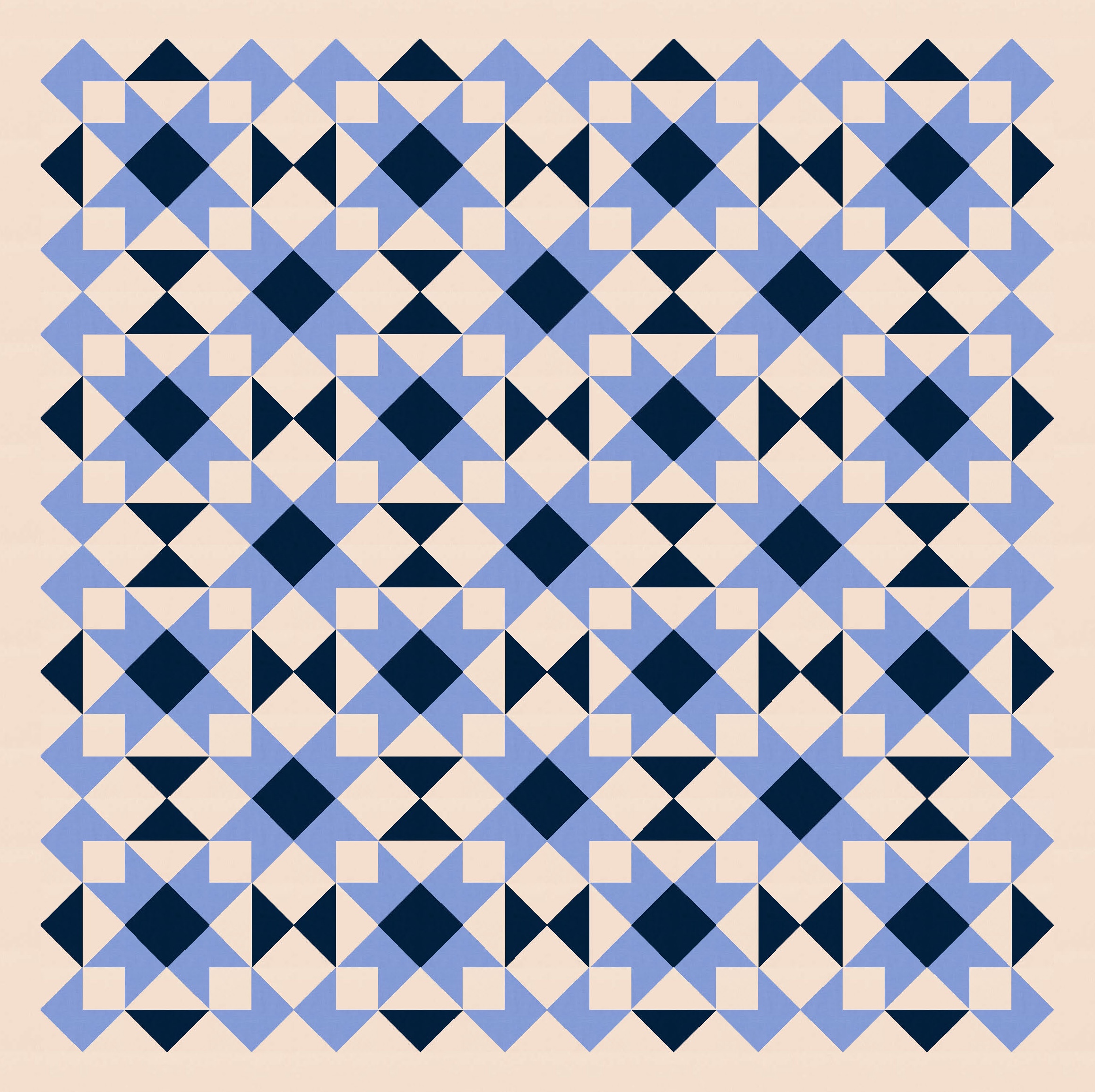

As much as I love this design already, it’s a lot for the eye to take in. Even the ‘coherent’ version includes a ton of movement – the diagonal grid, the floating squares, the hourglasses pointing this way and that. Perhaps extracting some elements might help to alleviate the overall busy-ness? I moved to a slightly different colour palette for this bit.

First I changed the border from blue to red. Everything else is the same, but see what a difference that small change can make (below left)? Suddenly I’m looking at a field of overlapping blue squares. (They were there before, just less obvious.)
The outer shapes (the half- or quarter-squares) feel out of place (below left), so I removed them first (below right).
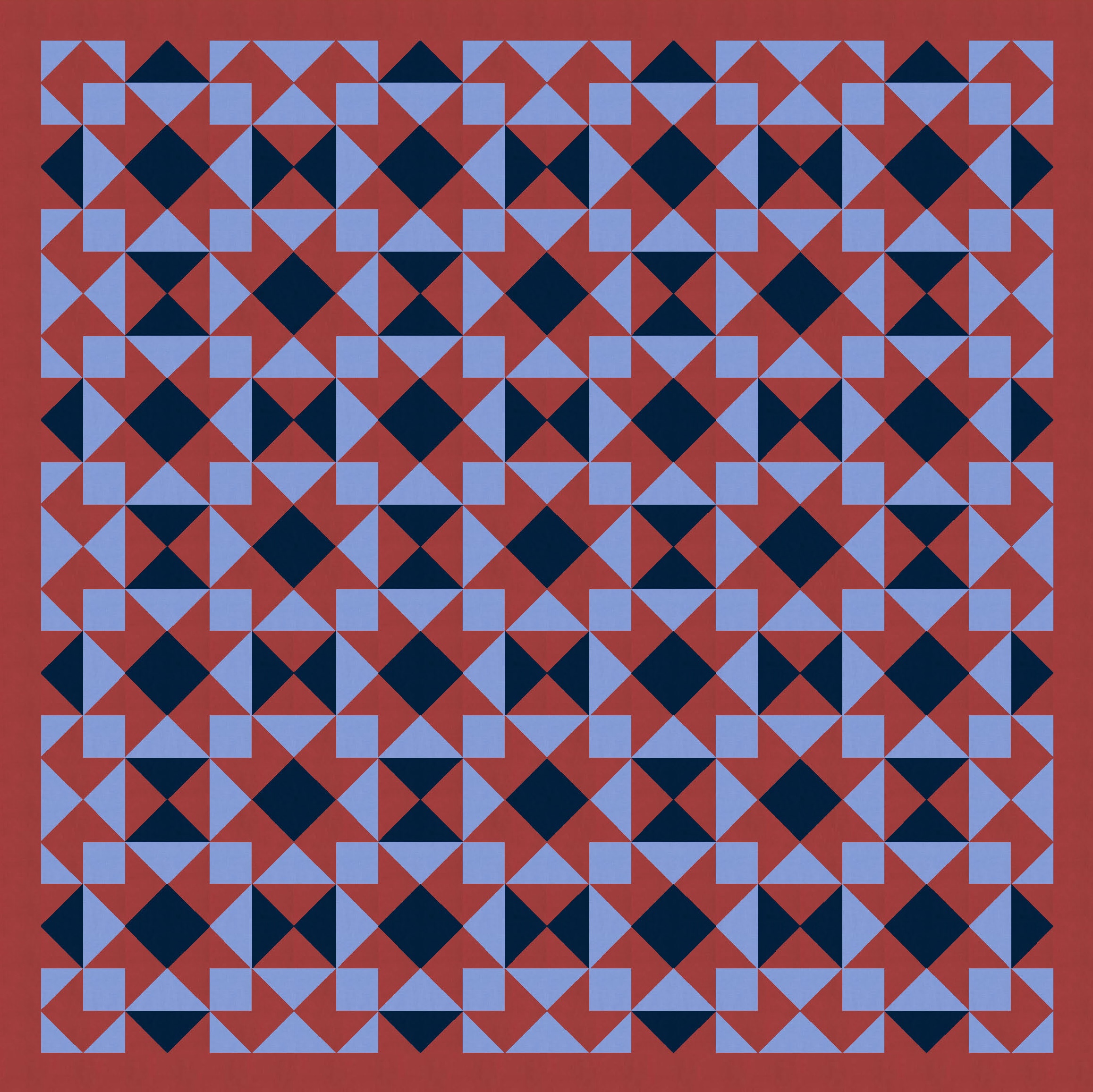
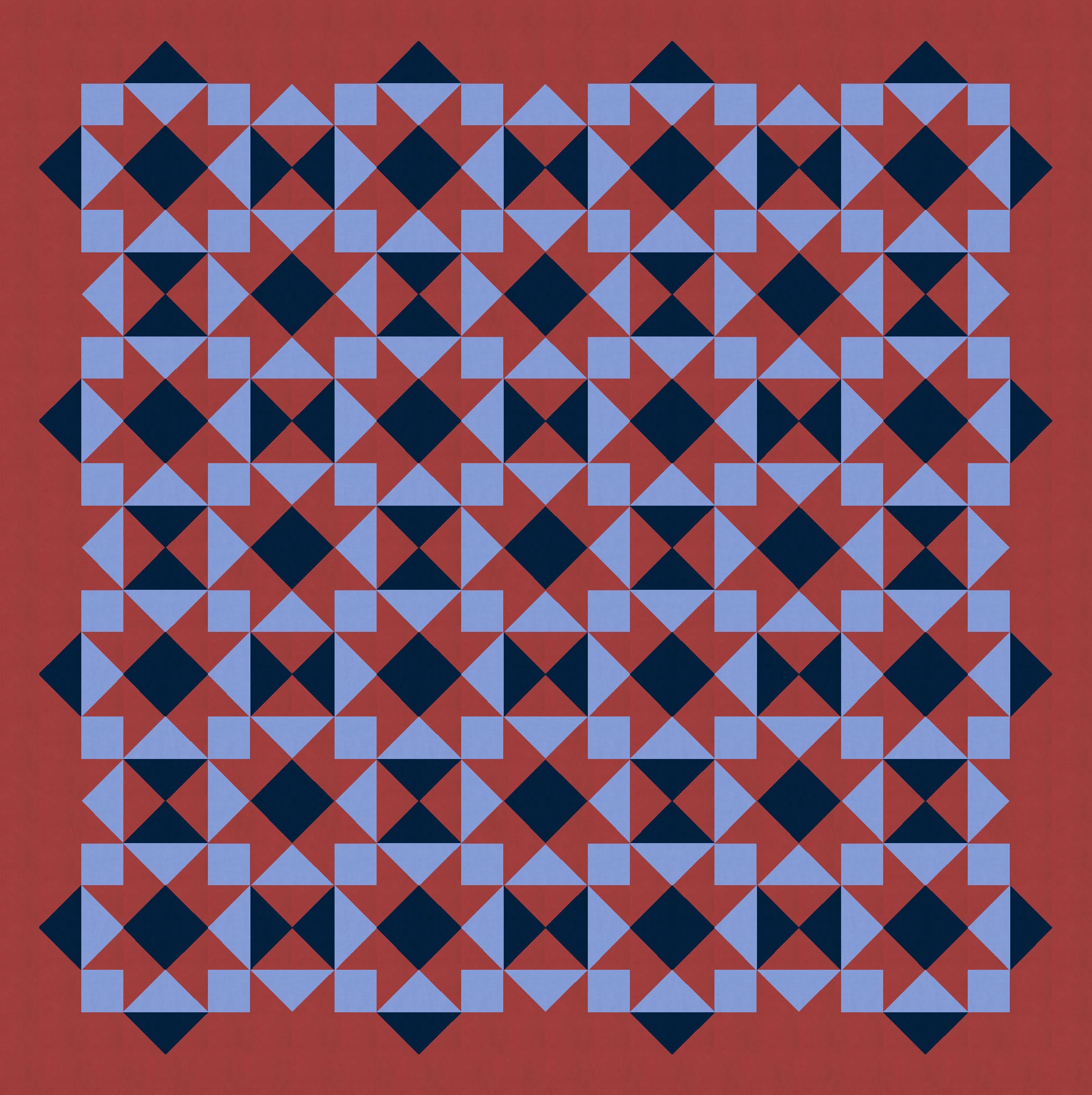
Hmm. Now I feel like those dark blue/black triangles around the outside are too much, so I removed them next (below left). Nice, but perhaps nothing special? Maybe it’s time to add something in. I focused on the sawtooth stars that are created at the corners between four adjacent blocks, and coloured them in the opposite colourway (below right). I’m not creating any new shapes here; just colouring in shapes that were already there.
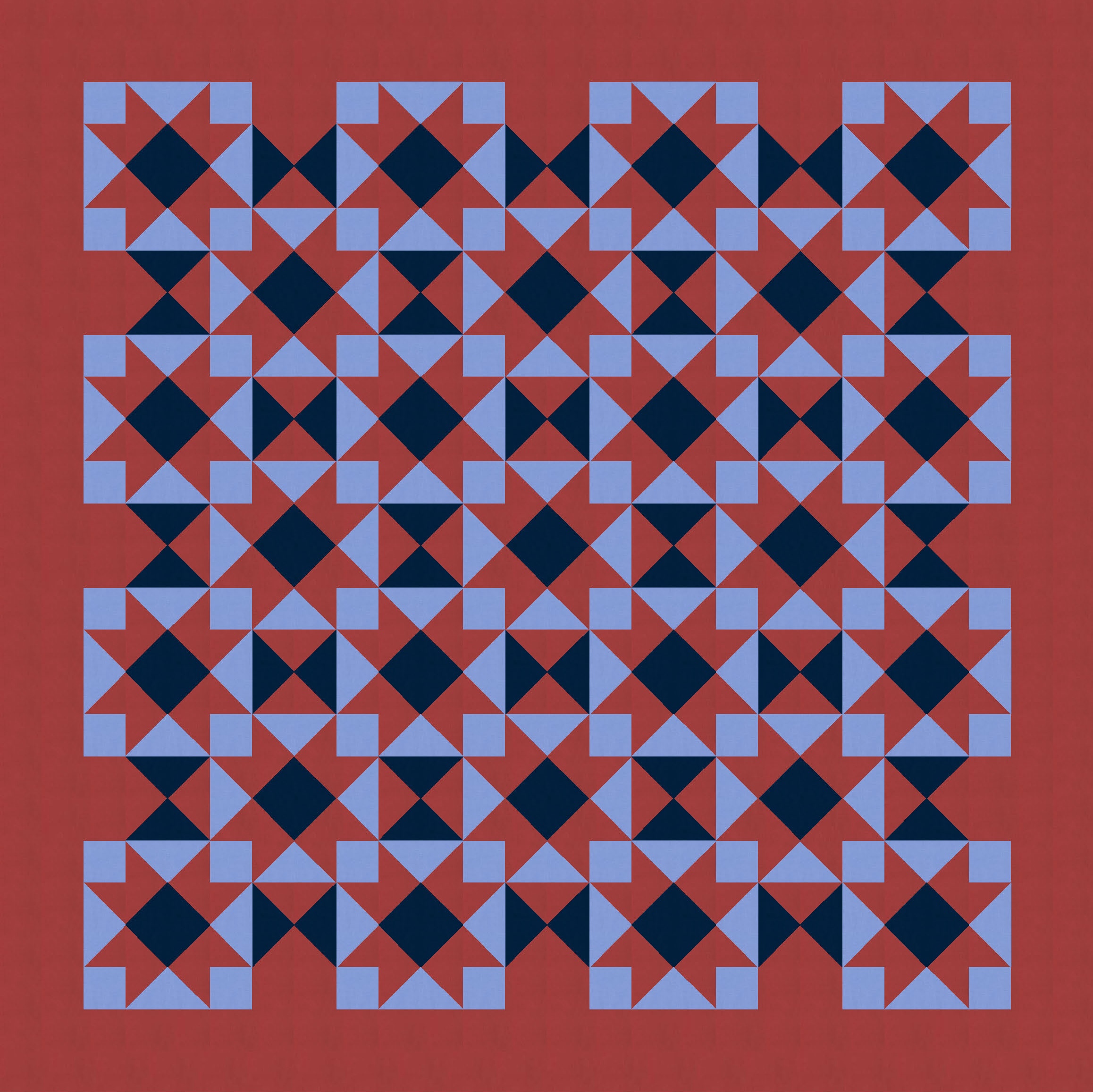
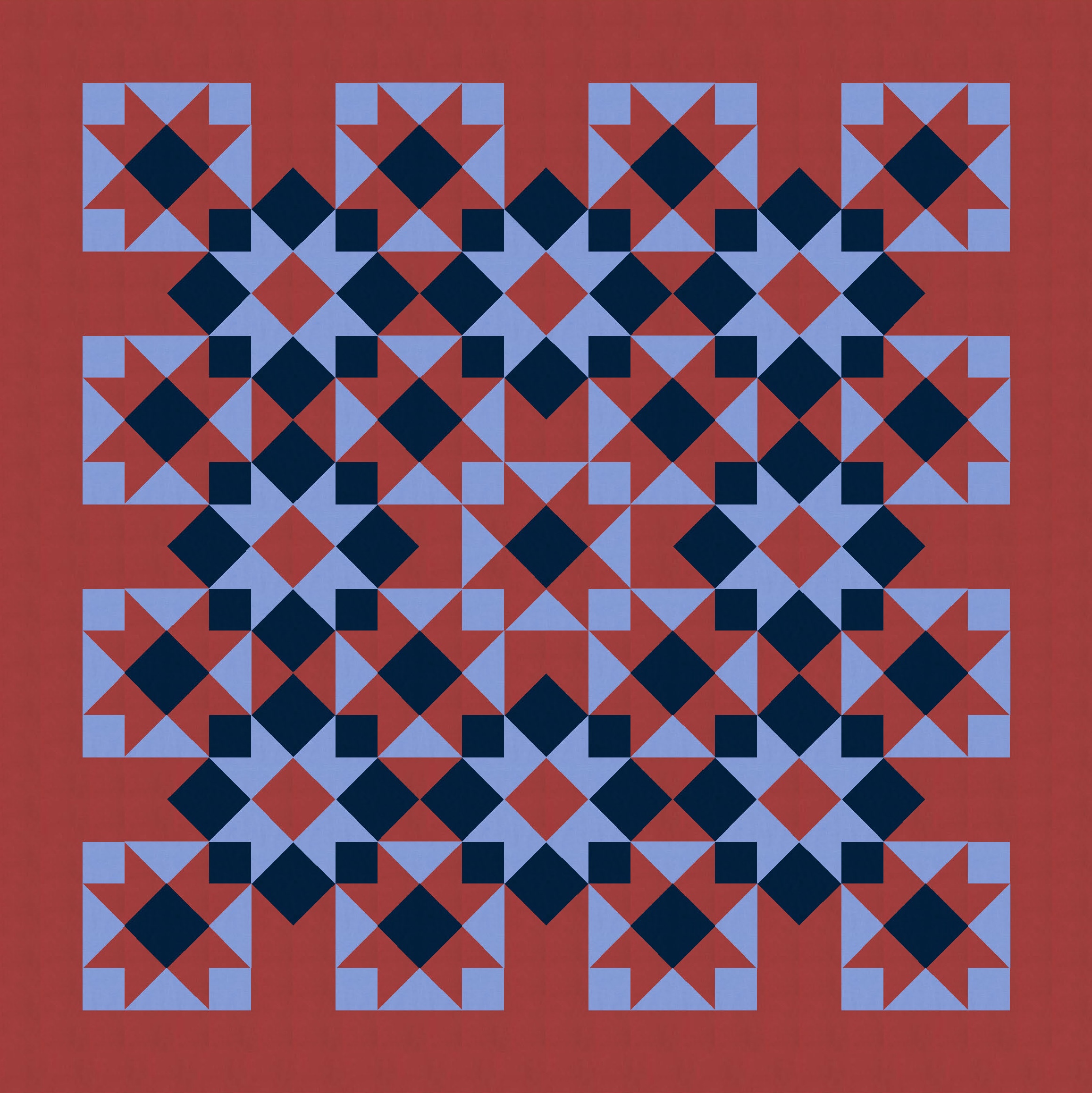
In the previous version (above right), I left the very middle sawtooth star untouched, but I decided I might as well treat it the same as its surrounding stars (below). Then I just kept playing with the colours.
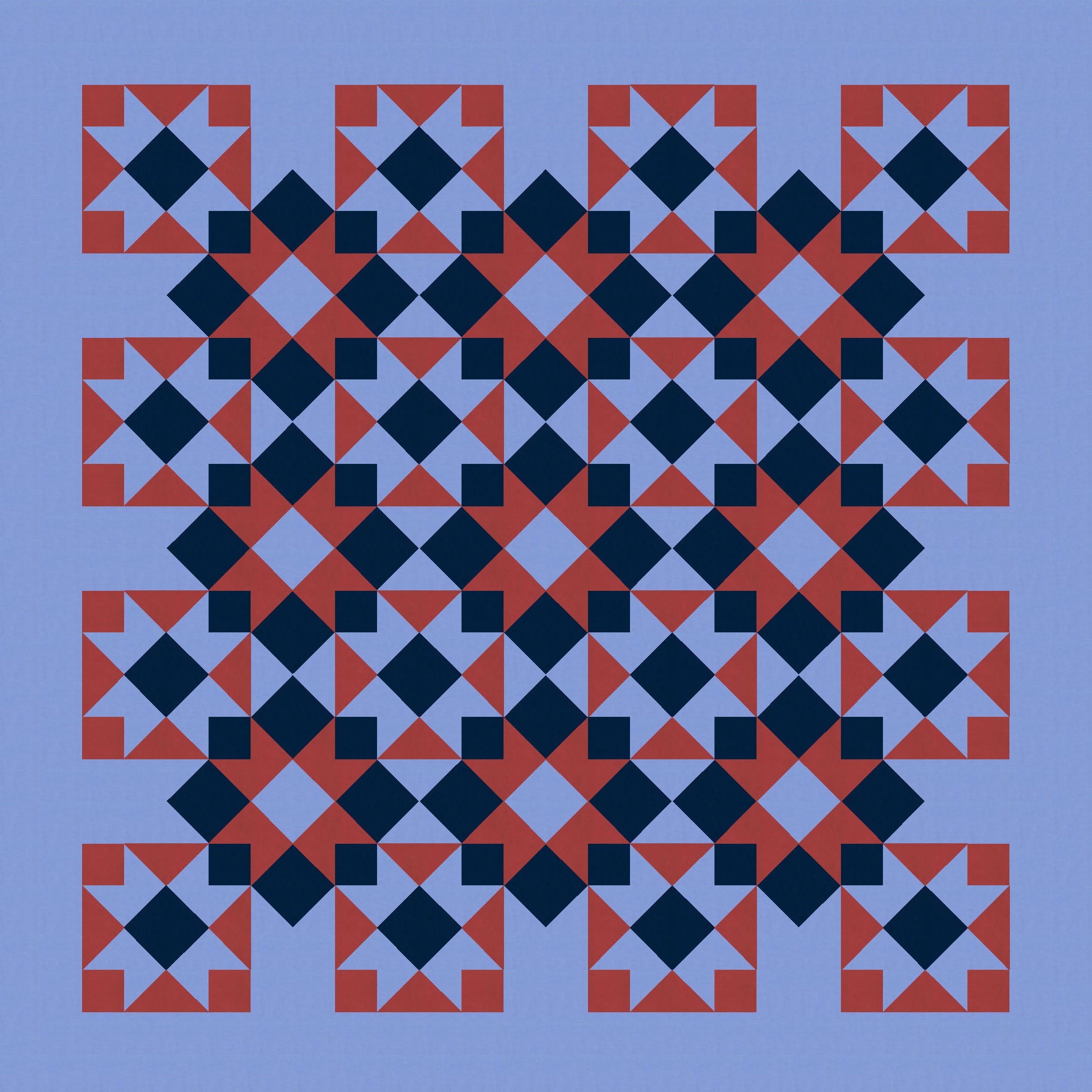
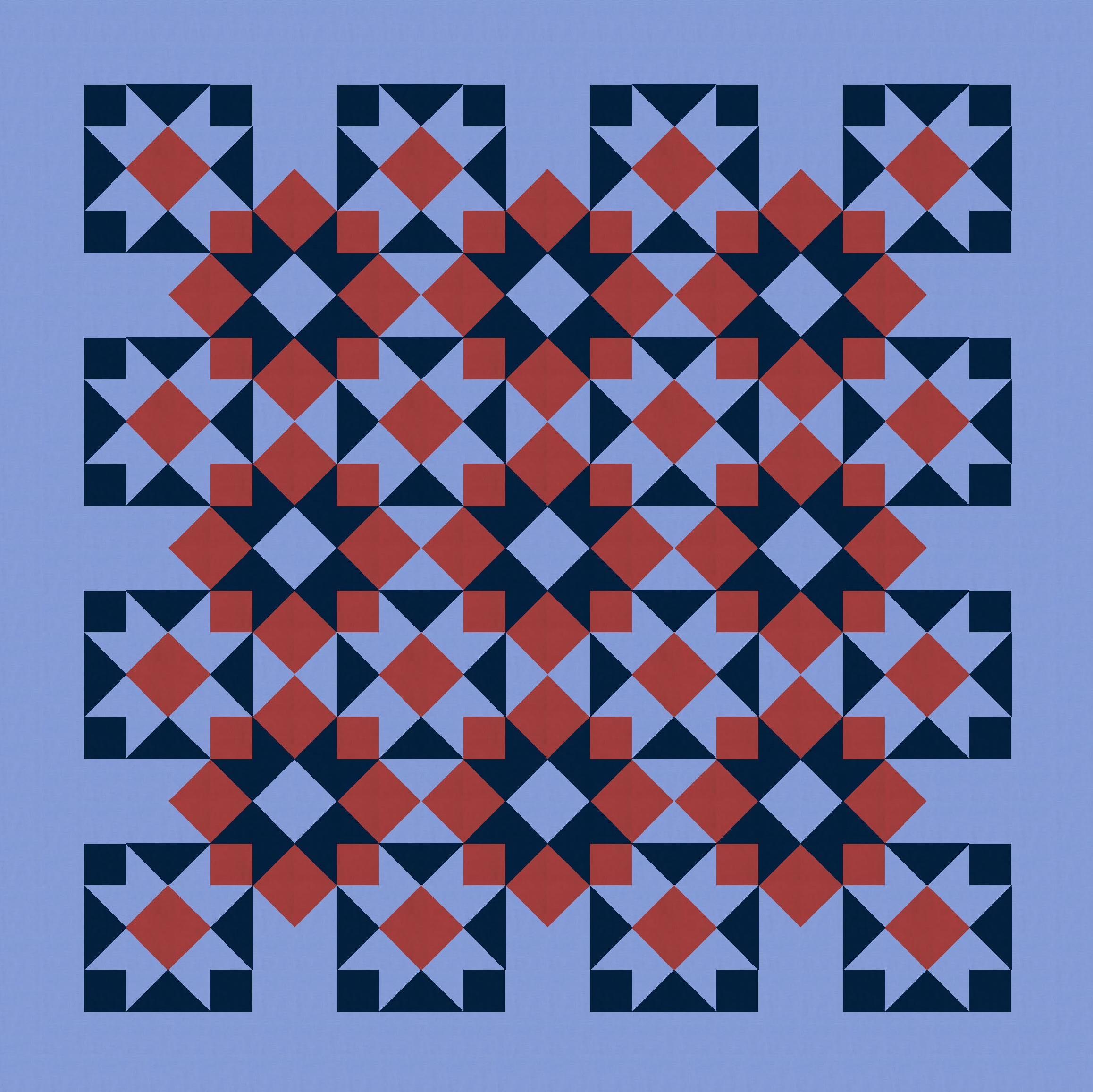
The gaps between the blocks are maybe a little empty? They contain squares on point (revisit last week’s sketch to see them; I haven’t coloured them in much in this week’s design, but they’re still lurking there). I can also change the colour of the matching squares inside the sawtooth stars, to emphasise or de-emphasise other parts of the design.


And so on, and so forth.
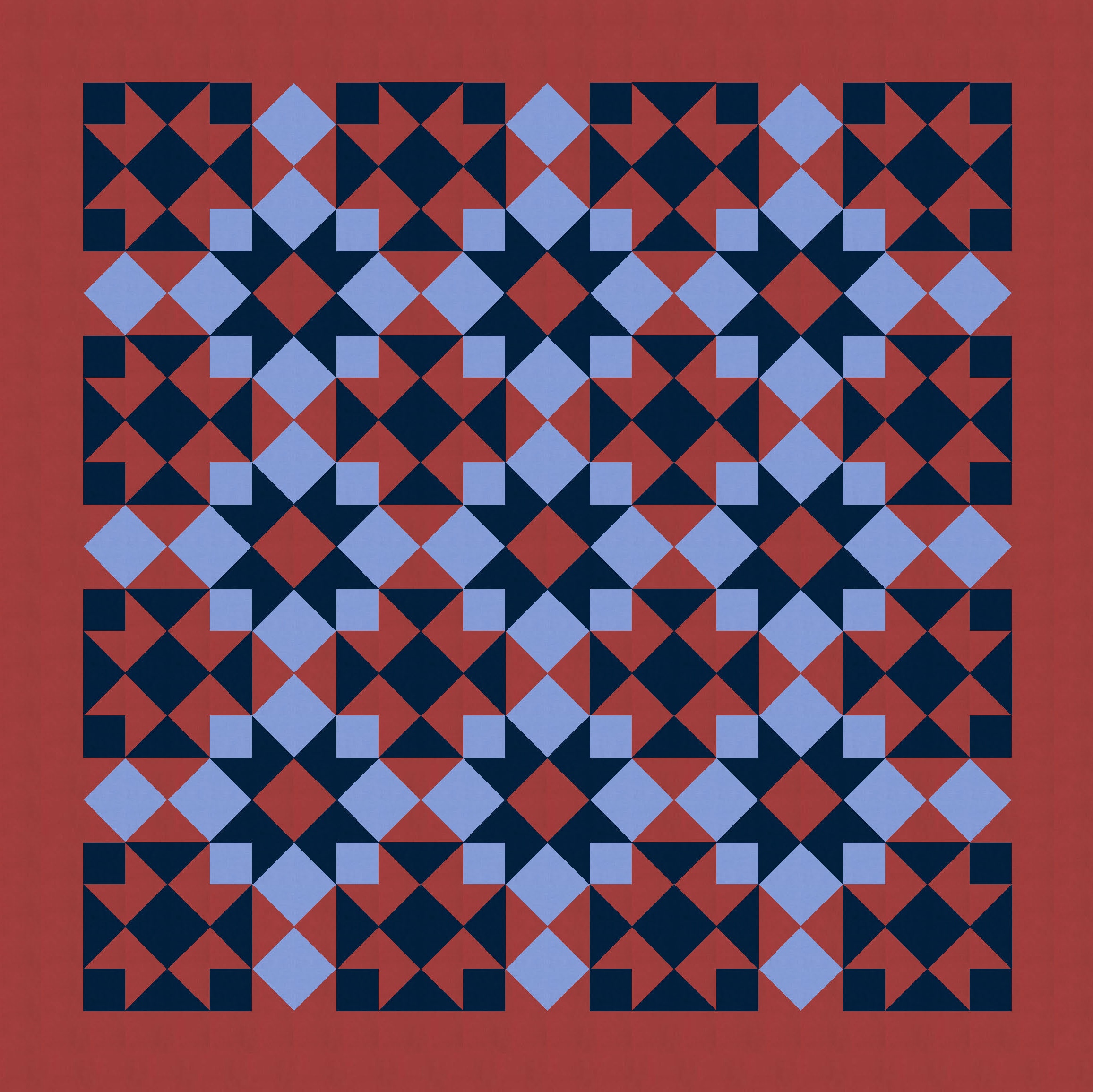
(I’m still using colours from issue 9 of Curated Colour from Tara Glastonbury / Stitch & Yarn. Don’t you just love that rich red and blue combo? The blue really pops!)
I like this idea of treating some blocks slightly differently in a block-based design. I used a similar approach with Sunday sketch #456 (and a little bit with #454). It creates a bit of visual impact and draws your eye in. I really must try it more.
So, making this design into a quilt would require the same basic blocks as last week: squares, square-in-a-square units, half-square triangles, flying geese. I think it would be a fairly straightforward make. I guess it’s a fairly traditional design, although perhaps it would tick some of the boxes of a ‘modern’ quilt? I never really know, to be honest. I don’t think about that so much when designing; only really when making quilts for modern shows! This might work as ‘modern traditional’?
Discover more from Geometriquilt
Subscribe to get the latest posts sent to your email.
