
Category: Sunday sketch
Sunday sketch #303
One of the most fun (funnest?) parts of quilt designing – for me, at least – is creating designs with interesting or unexpected secondary shapes. They’re the shapes that emerge in the spaces between the main (primary) shapes.
In this week’s designs, I just started with a circle and replaced one quadrant with something different – in this case, a 9-patch block coloured to look like two steps.

There was no real reason or inspiration behind the choice of a 9-patch – I just needed something different, and that was the first idea that came to mind. As soon as I started rotating the block in Electric Quilt 8 though, I liked how those steps combined with the curves and steps of adjacent blocks to make interesting secondary shapes.
I tried using a limited colour palette to let the secondary shapes blend into the background as negative space…

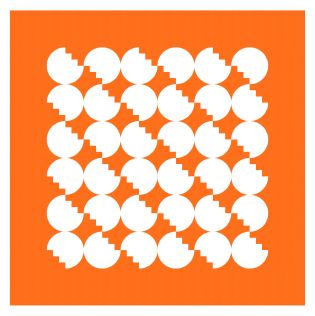
…and also tried colouring the primary and secondary shapes differently for emphasis.
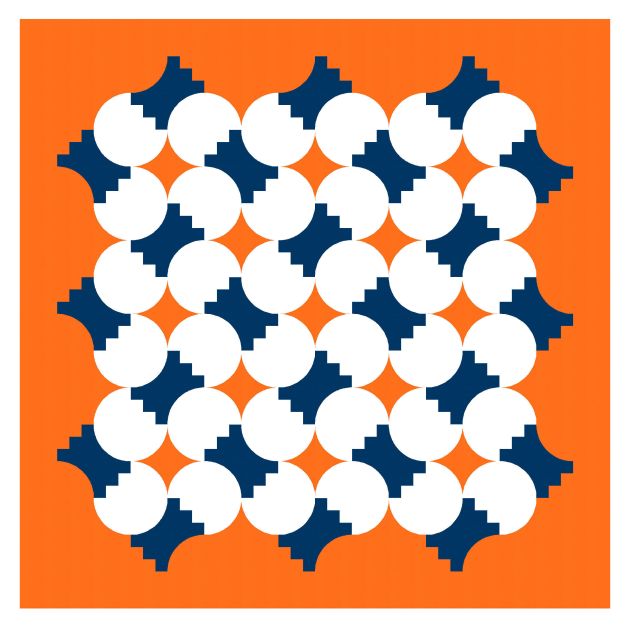
I also kept rotating the blocks to create new and interesting shapes. The version below led me off in a new direction for loads more sketches, some of which I’ll share next week.
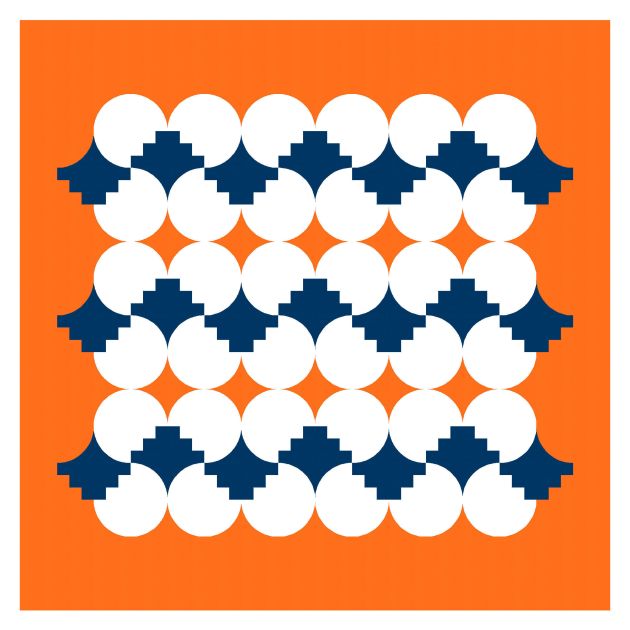
I love the feathery movement in this last one, and the balance between the undulating curves and the up/down steps. Definitely lots more potential in this design! Check in next week to see where I take it.
This week’s designs are just quarter-circles (drunkard’s path units) and 9-patches. Basic elements that combine to make more than the sum of their parts, I think.
Sunday sketch #302
I’ve used lots of hard angles lately, so let’s relax with some groovy curves this week!

This is a block-based design: the version above uses a 4 (across) x 6 (down) layout. (I liked the idea of stopping the design before the bottom edge of the frame, kinda like the design is dripping down the page.) Anyway, in the design above, the inner blocks each have four colours (with the tiniest of background colour in their corners), while the outer blocks have three colours plus background. I’ve coloured the blocks to create those big S shapes that extend between blocks.
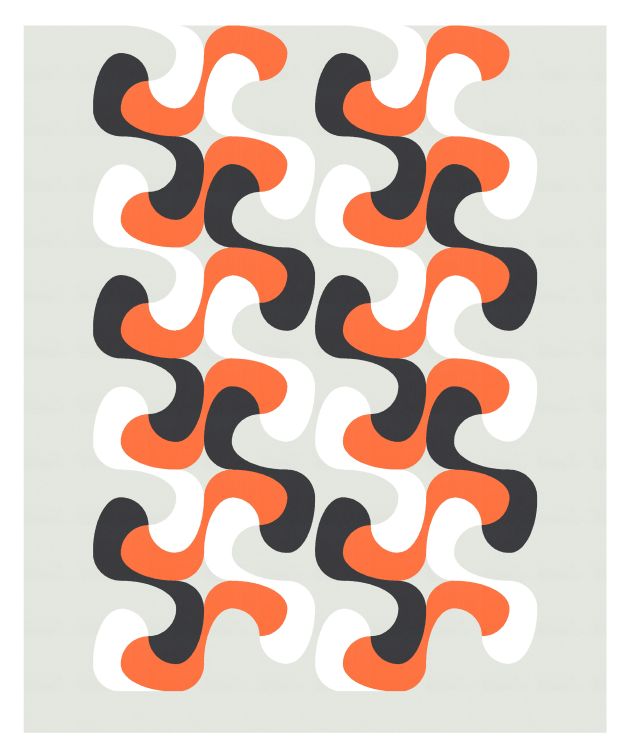
The S shapes are made from two types of curves: quarter-circles (or drunkard’s paths) and elongated 2:1 curves (twice as long as they are wide – which I first encountered using the long drunkard’s path templates from Jenny Haynes of Papper, Sax, Sten).
Combining these two shapes gives some really organic, flowing movement across the entire quilt design. You can put your finger down, trace along a curve, and it’ll just keep meandering round the page. I love it.
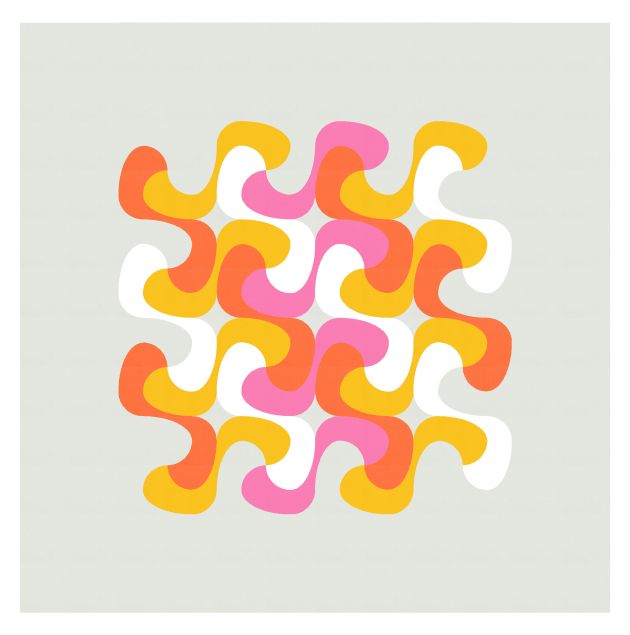
I also love how the use of colour can suggest transparency, just because of how the curves seemingly overlap.

All those swirly, globular shapes remind me of a lava lamp.
This design could be made into a quilt using just curves (and some borders). I use templates for curves: for cutting the pieces and for trimming the final units. I like Jenny’s templates because they’re oversized, so you can be a little off with your sewing and still trim down to a perfect drunkard’s path or long oval drunkard’s path unit. (I don’t get anything from Jenny for spruiking her awesome templates! I just like telling people about products I like 🙂 )
Sunday sketch #301
The similarities between this week’s design and last week’s Sunday sketch are probably pretty obvious. Those square-within-a-square motifs are still there, but now connected by triangles instead of small squares.
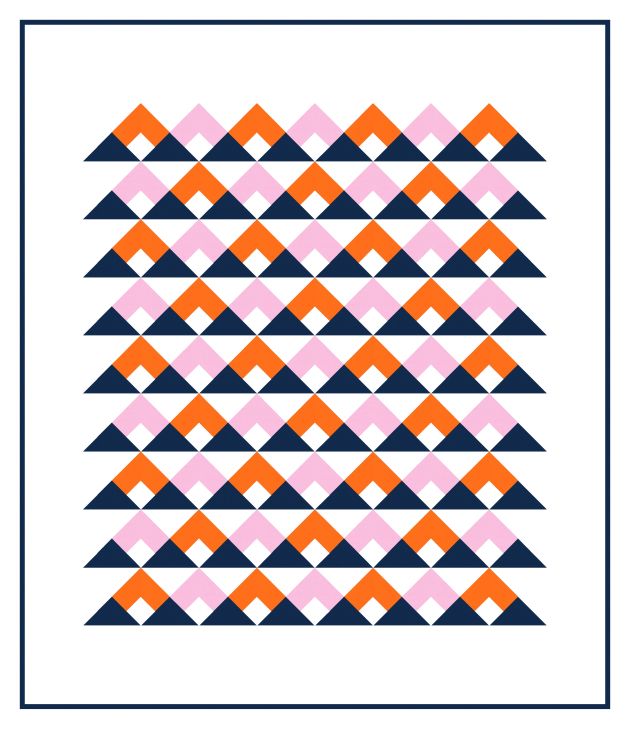
The added angles from the triangles lend more movement to the design. And they present more opportunities for interesting block placement.
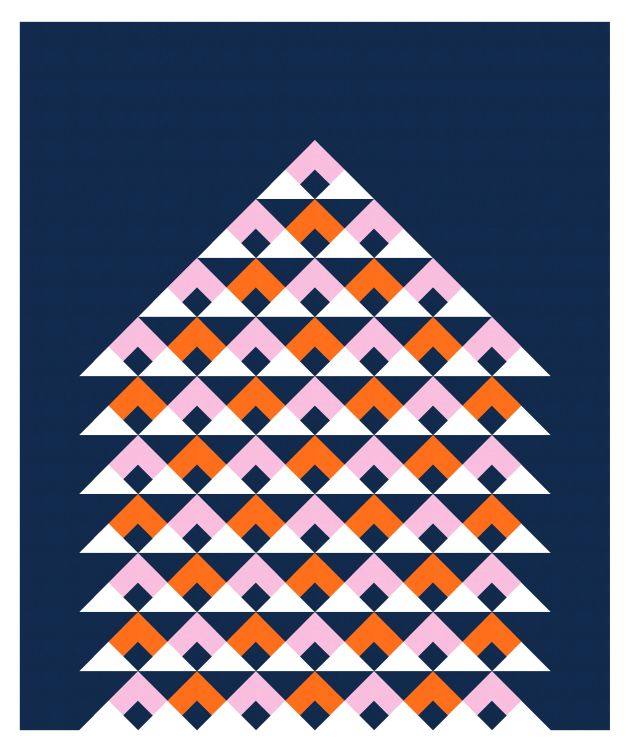
I like a dark background, but I also prefer the darker triangles – so back to a white background it is!
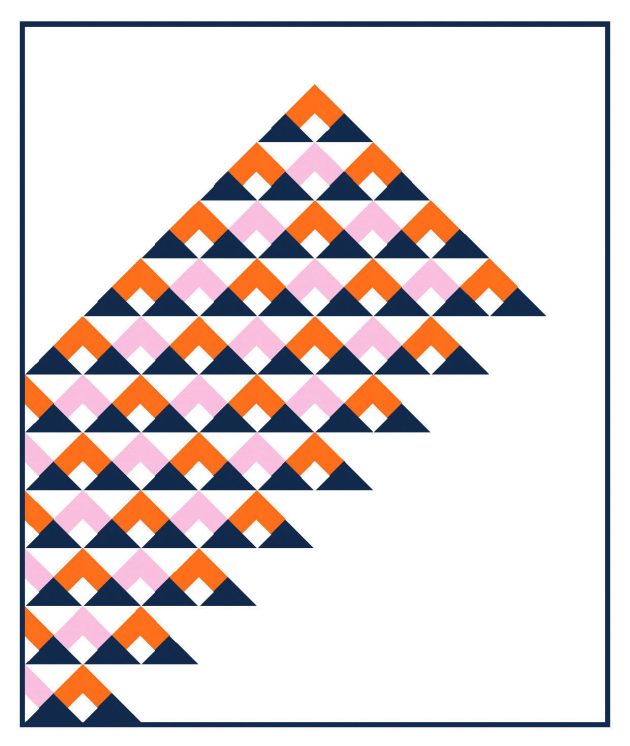
I like the balance between the straight edges on one side of the design, and the staggered, overhanging triangles on the other side.
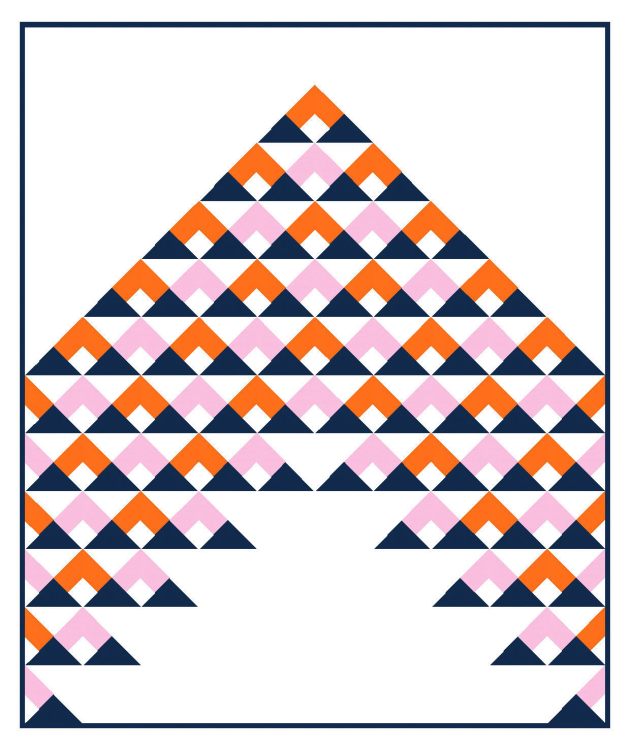
This week’s design is a fairly straightforward one – just alternating blocks, set on point. Half of the blocks are square-within-a-square units, and the other half are half-square triangles. I’ve only used three colours here, but you could probably get away with more. I reckon a scrappy approach might work too. Try it and see? (Then let me know!)
