
Tagged: drunkard’s path
Sunday sketch #361
This week’s block is very similar to last week’s, but the foreground/background drips are a little further apart, and the two drips (in both directions) are the same length. I’ve also added some curved corners to the blocks, which help to create little stars at the corners of four adjacent blocks.
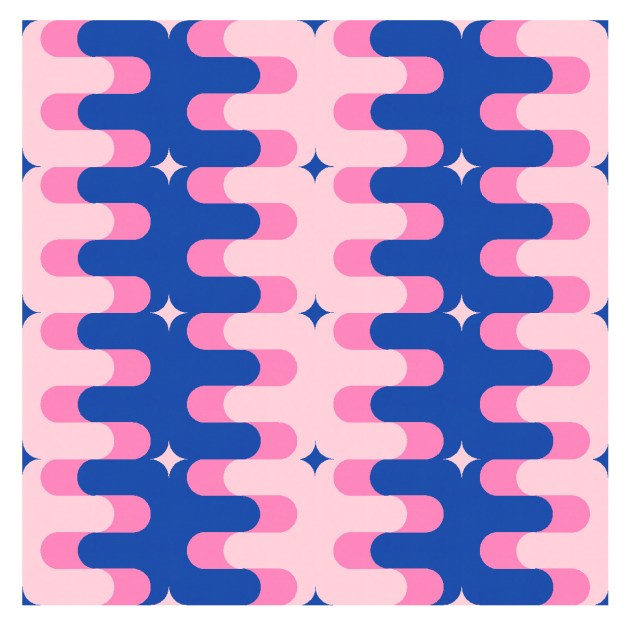
Isn’t this a cute palette, too? Here’s the design showing two full pink squiggles and rotated to show them running horizontally.
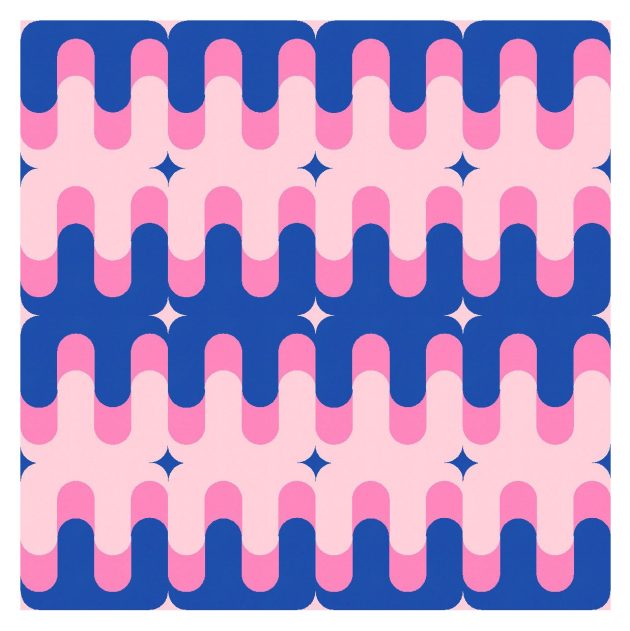
I prefer the first orientation, I think. Even though I’m calling it ‘drippy’, and drips tend to run vertically… it feels more fun in the first layout where the drips go horizontally.
Like last week’s block, this week’s design is all about curves (half-circles, or drunkard’s path), squares and rectangles. I think it’d be a fun one to make!
Sunday sketch #359
This week’s sketch(es) remind me a little of Sunday sketch #296 – they’re both tessellations of a curvy shape with a star in the middle.
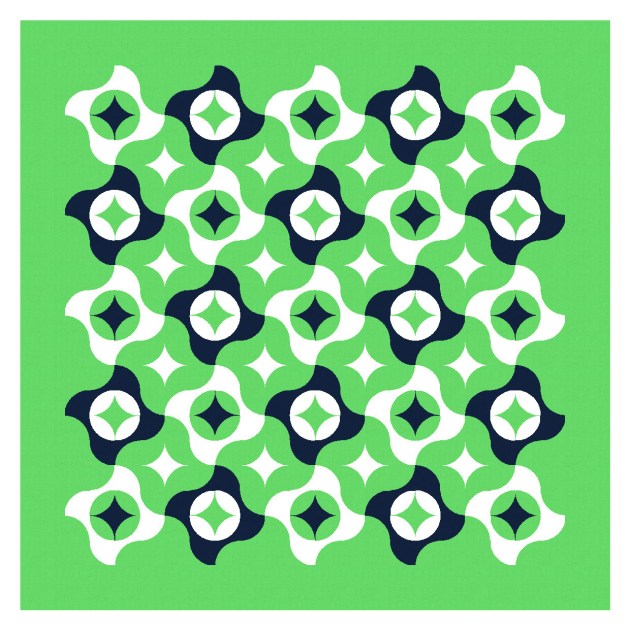
Whereas Sunday sketch #296 relied mostly on half-circles, this week’s shape uses quarter-circles or drunkard’s path units. Here I’ve used palette of three colours.
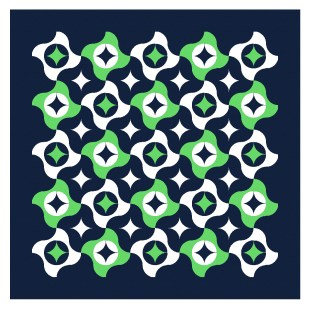
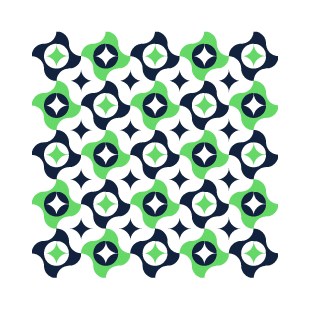
But two also works….

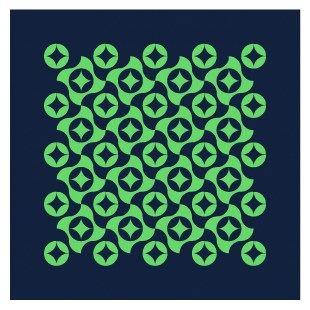
Or more than two. (With a busier palette, I often like to use one colour for a single element of all the blocks for a bit of consistency: here I’ve used white.)

You can get a better idea of the basic building block from this next version, where I’ve used a single colour (plus background colour) per block. The ‘reverse’ tessellated shapes (the ones that are mostly background colour) are made from the corner elements of 4 adjacent blocks.

This week’s designs use a 4 × 4 block in a standard layout, and each block is made up of quarter-circle/drunkard’s path units, plus a few orange peel units. The precise number would depend on your preferred layout, of course.
This is by no means a completely original shape; I’m sure it’s out there already in quilt land. I haven’t saved anything like it on my Pinterest board of curvy quilts, but that doesn’t mean it’s not out there. If you know of a quilt pattern based on this shape, let me know and I’ll update this post!
Sunday sketch #356
OK, this week’s sketch is admittedly a bit wacky, but it’s just one variation of a block-based design that I thought was worth sharing.
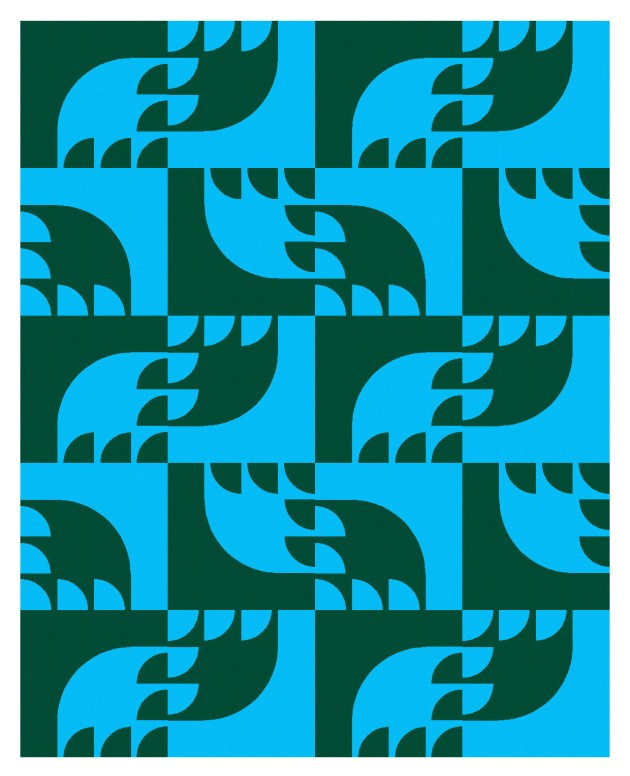
The block itself is made up of one large and five small drunkard’s path units. On its own, it looks a bit like a UFO or some kind of sea creature (although it also reminds me a bit of the Shine Dome. Or maybe Thing from the Addams family!). But when one block is positioned next to another block, those drunkard’s path units combine to create interlocking crochet-hook-like shapes. Can you see them?
Rotating the blocks creates a different kind of movement, but those interlocking hooks are still there.
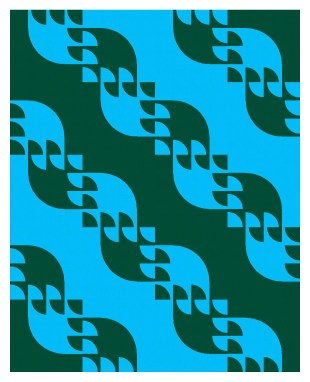
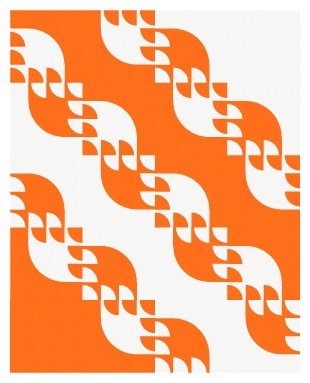
I simplified the design to highlight those hook shapes, although I don’t like this version as much; the balance of the small and large drunkard’s path units adds to the design, I think.
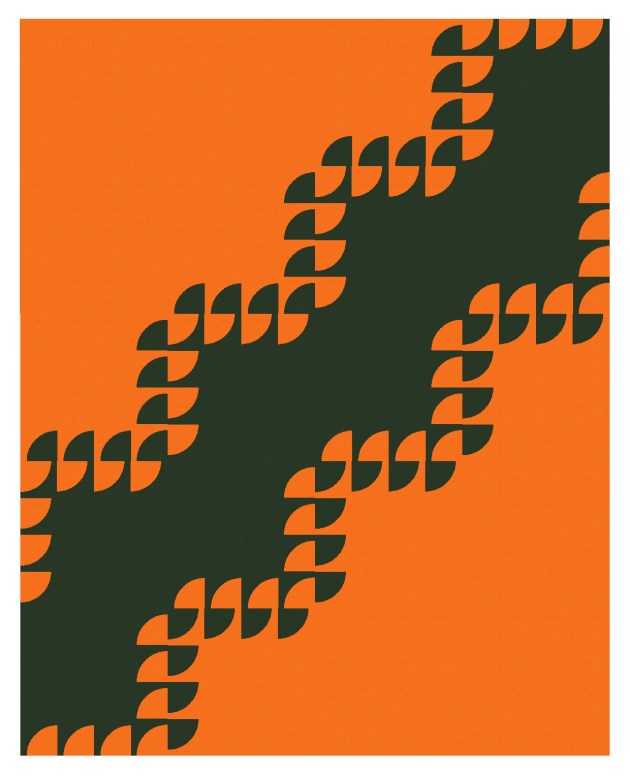
I do have a soft spot for two-colour designs where the same motif or shape appears in both colours.
This week’s design could be made using lots of drunkard’s path units – not quarter-circles, but the ones where there’s a bit of a gap between the curve and the edges of the square.
