
Sunday sketch #488
One of the quilts I’m making at the moment combines traditional quilt blocks (nine patches and rail-fence sashing blocks) with circles. It’s a funny mix of old and new, prints and solids… it’s a way to use up fabric from my stash while trying out a new design approach. At the same time, it’s been prompting me to add new or unexpected shapes into designs that were otherwise languishing. This week’s sketch is an example.
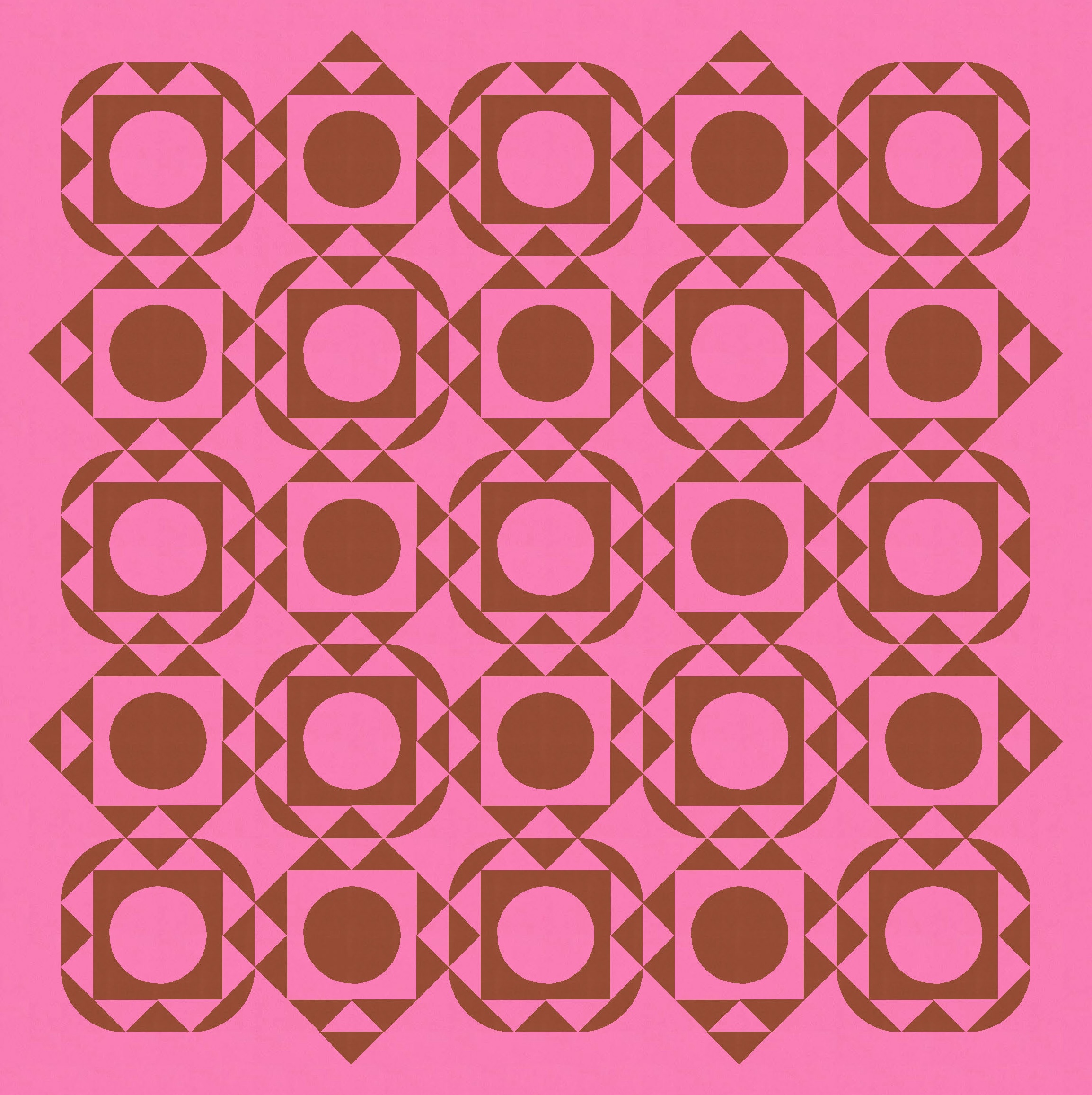
This design is a little reminiscent of Sunday sketches #481 and #482 (each block has got that main square with smaller squares at the top, bottom and sides) and #251 (which combines curvy edges with lots of straight lines and 45-degree angles), and has a hint of #467 too (which used curves that didn’t meet the edges of the square). The main block is also similar to one I used in Tectonic.
I started with a single block on repeat, with alternate blocks coloured in the opposite colourway to distinguish them from their neighbours. This is a standard layout; the blocks aren’t on point. I love how the diagonal lines in each block meet up with lines in its neighbours to draw your eye across, down and around the design. The circles are there just for something different. They’re maybe a little unexpected, but why not?
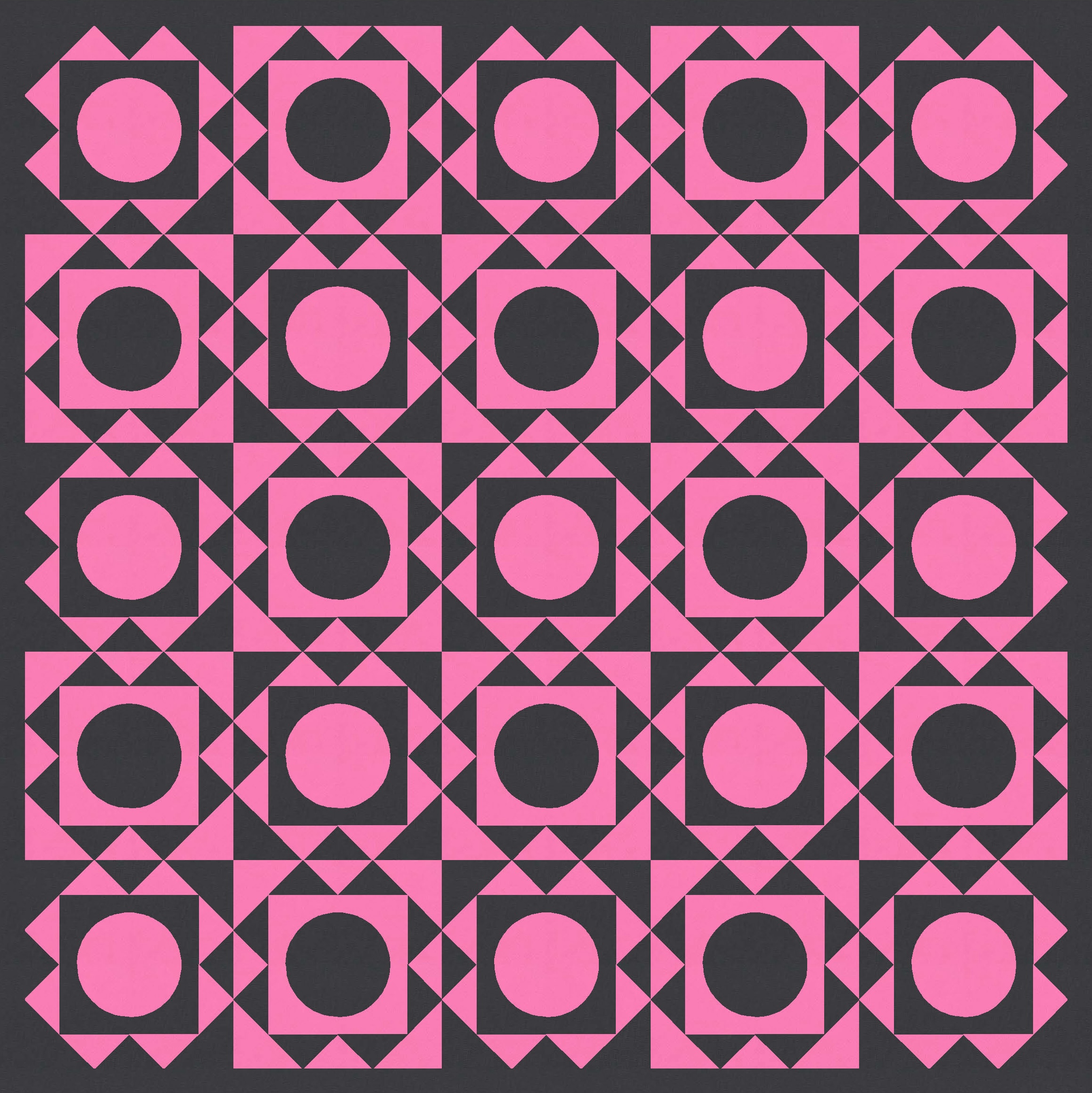
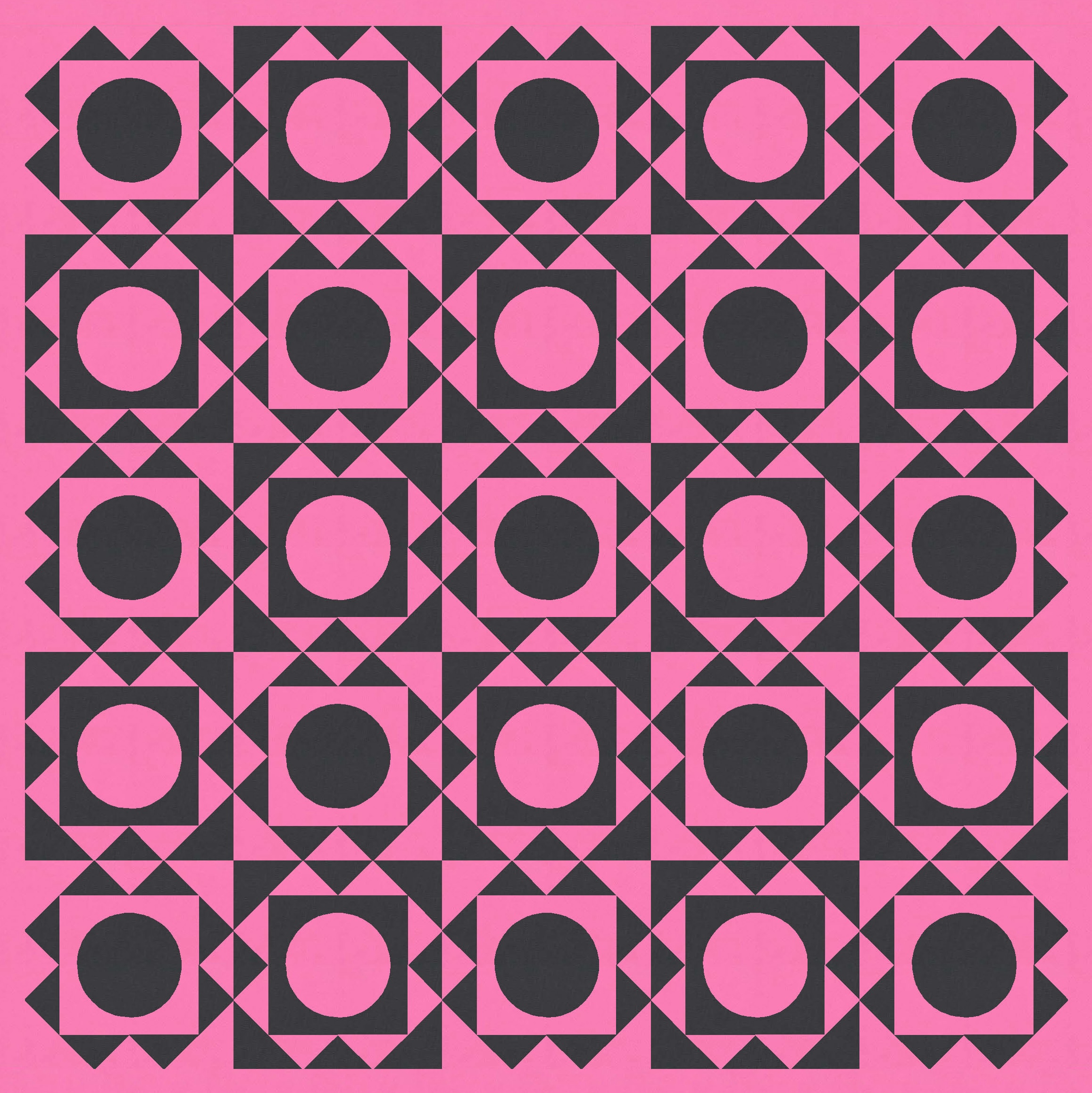
I like this design a lot, but I felt like it was maybe missing something. As much as I love those circles in the middle of the blocks, they feel a little incongruous – there are no curves anywhere else in the design. So I decided to add more curves to one of the block versions. Adding the same curves to both was just a little too much, but using them to further differentiate the two block versions seemed to do the trick.
The other thing I like about this design is how adjacent blocks interact (a favourite feature of mine*). The blocks are just squares in a standard layout, but they look like diamonds (or squares on point) that are overlapping each other. But in the two versions above, that effect stops abruptly at the border of the design because one side of the outer blocks doesn’t have an adjacent block. So I added a thin border that let me insert a triangle (like a flying geese shape) to complete the missing corners and maintain that effect.
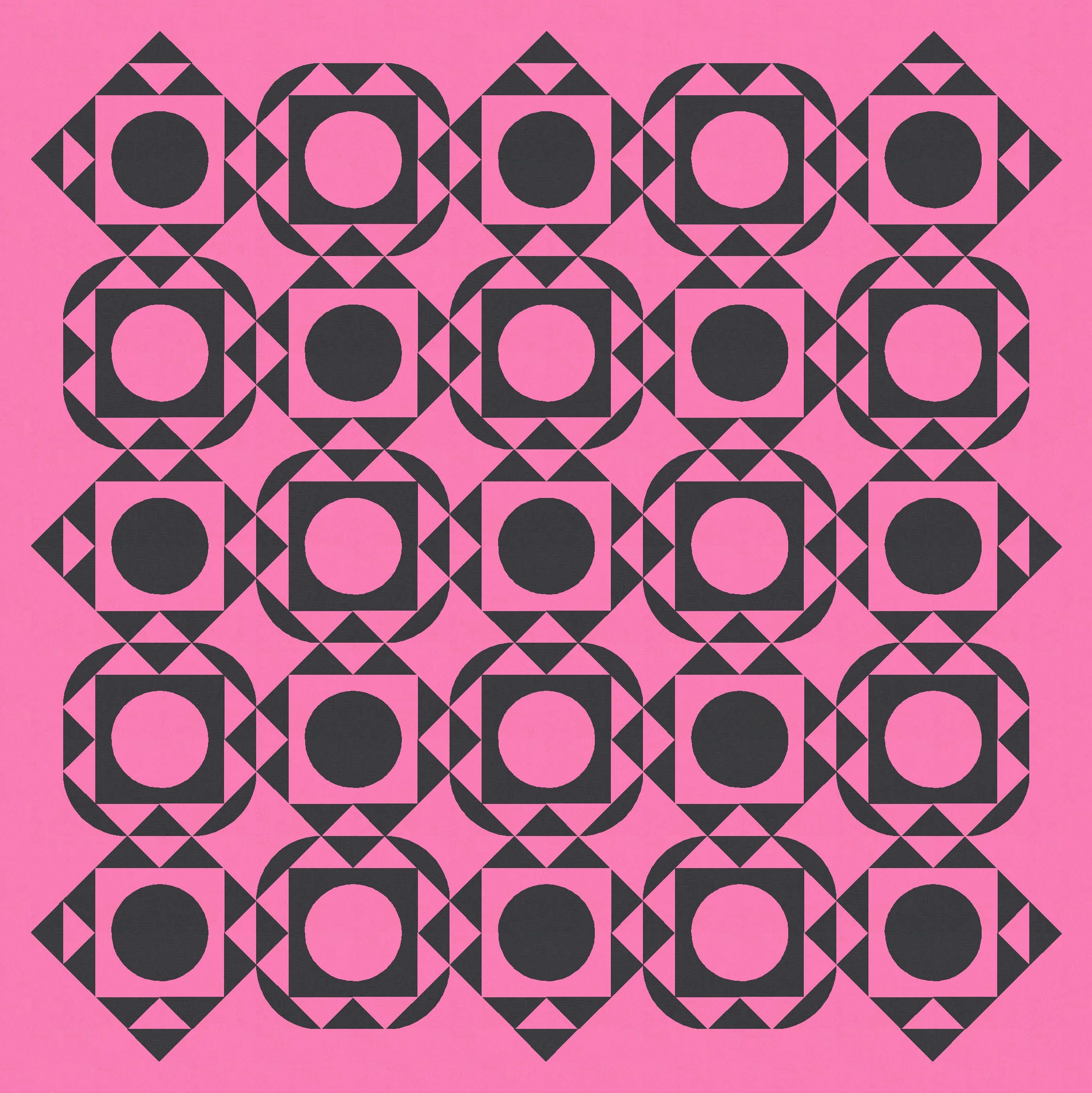
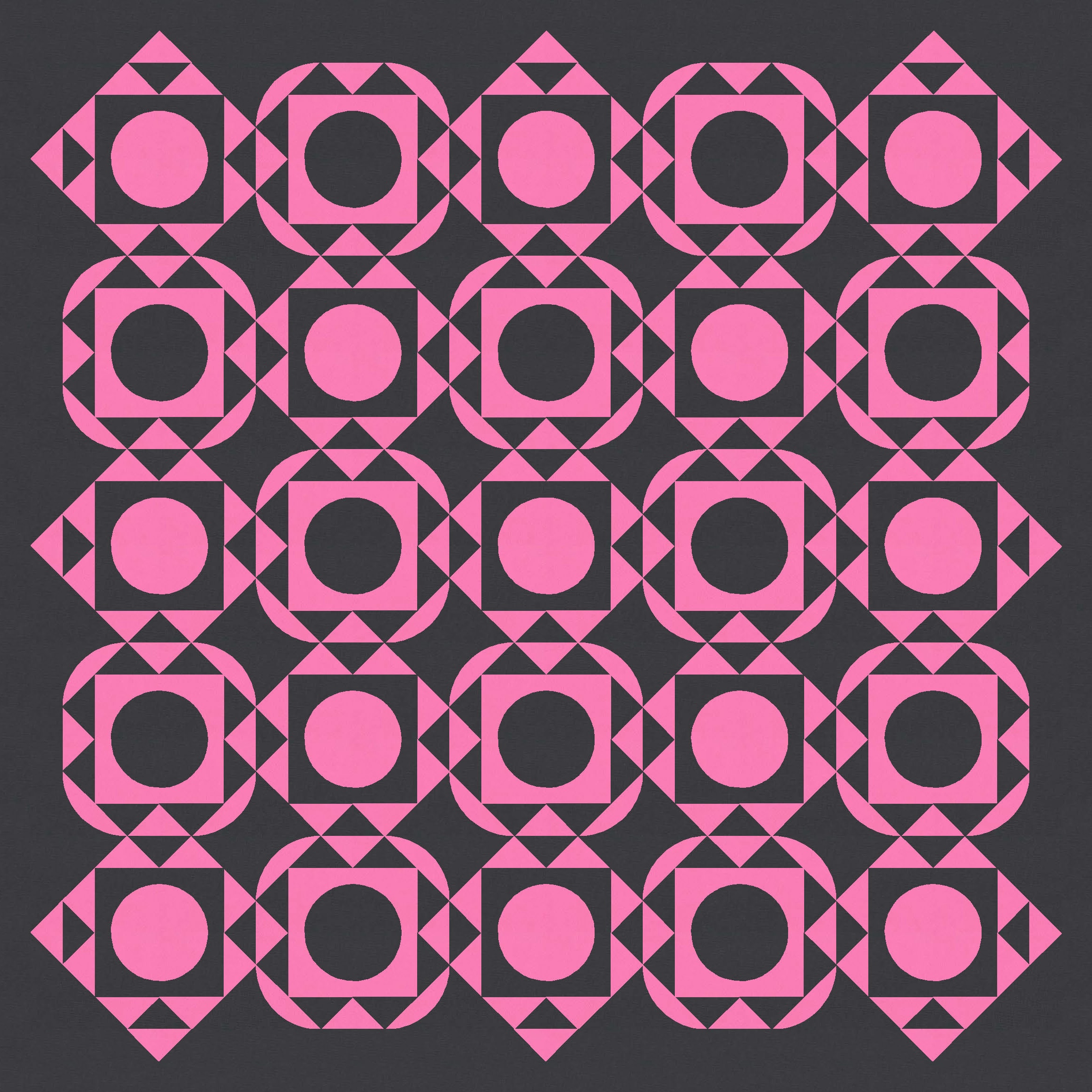
Then I decided to flip the arrangement of the blocks so the curved-edge blocks are in the corners. I just prefer it that way; I don’t really know why. That meant I had to move the position of the extra triangles in the border too.
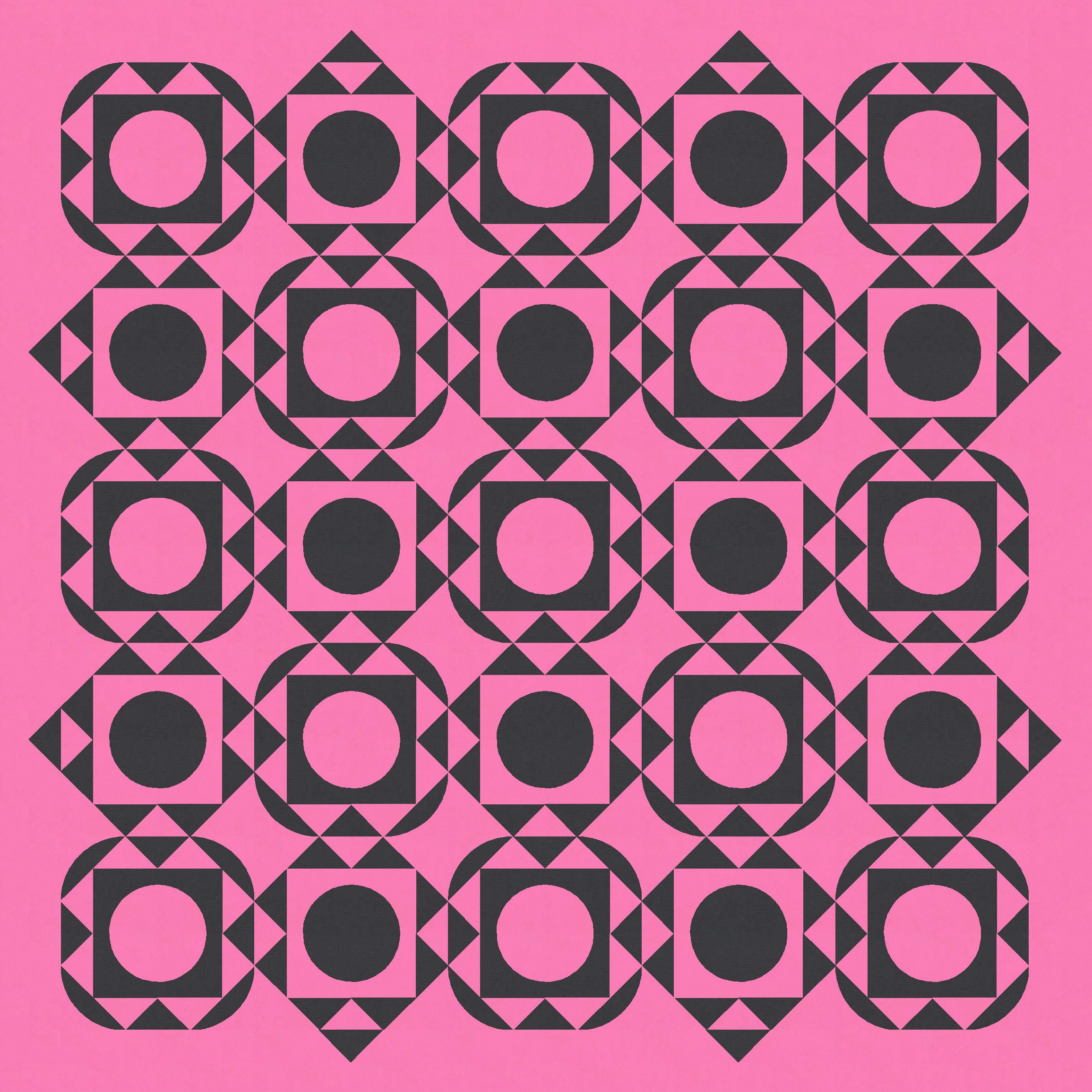
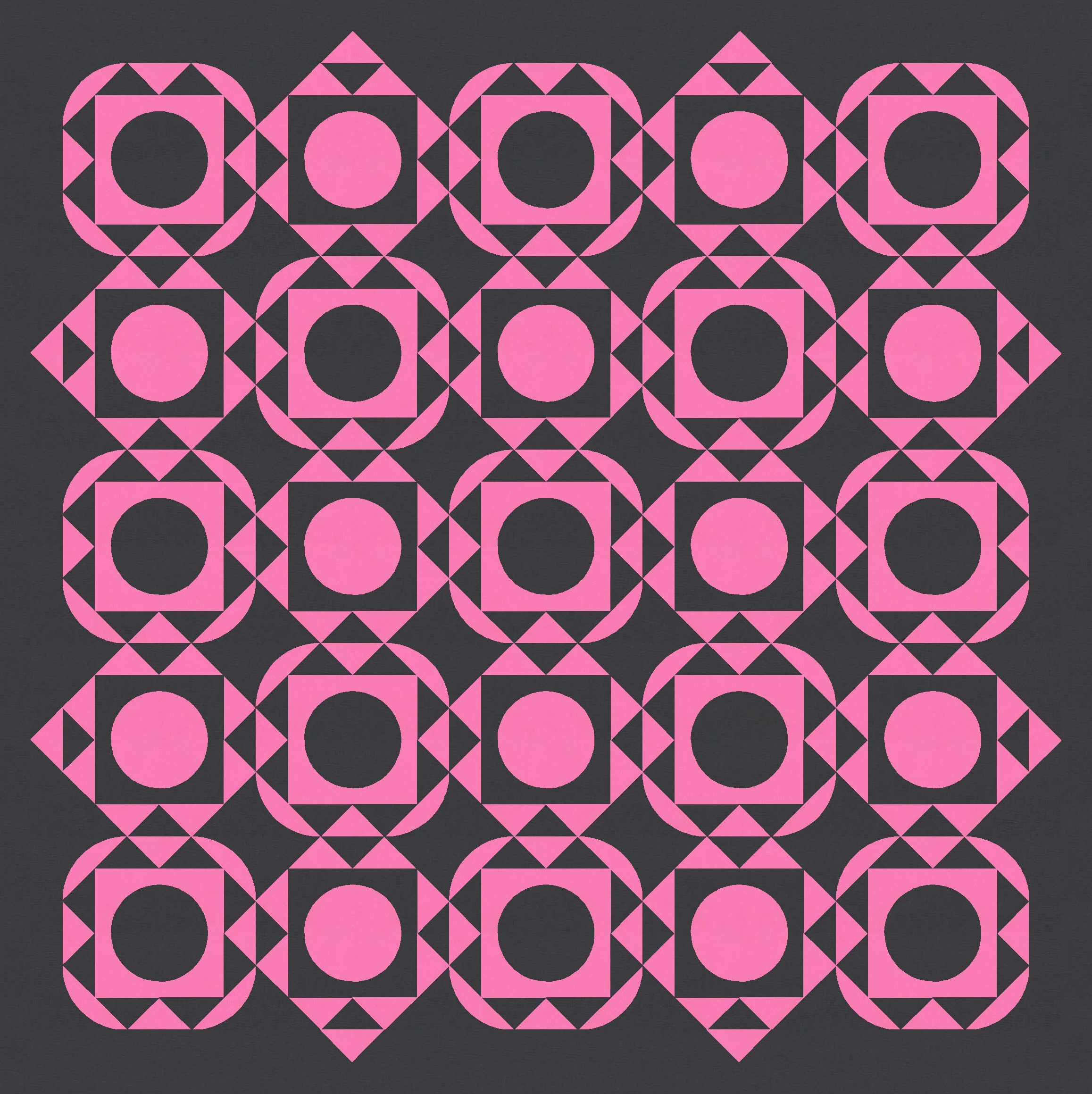
And then all that’s left to do is play with colour!
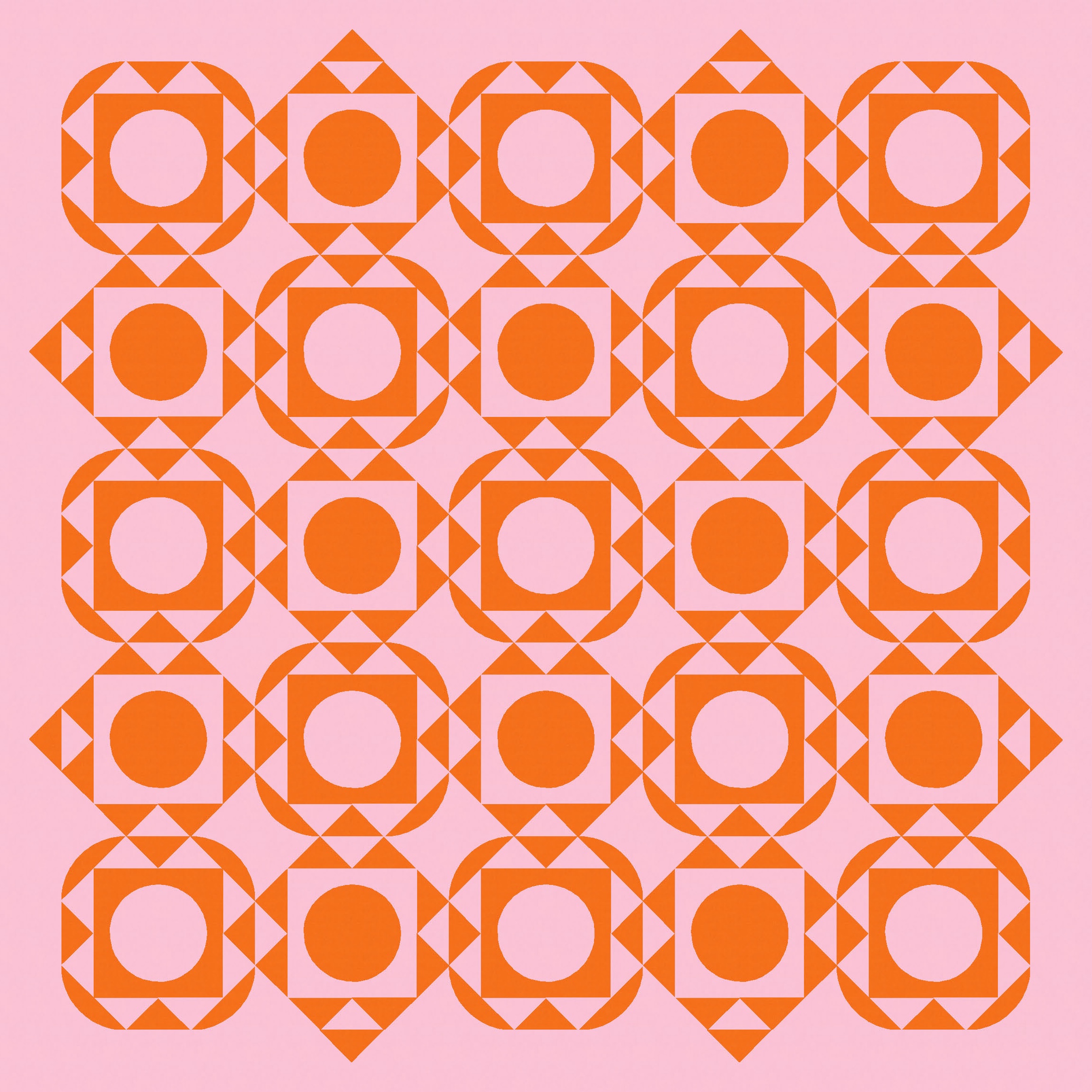
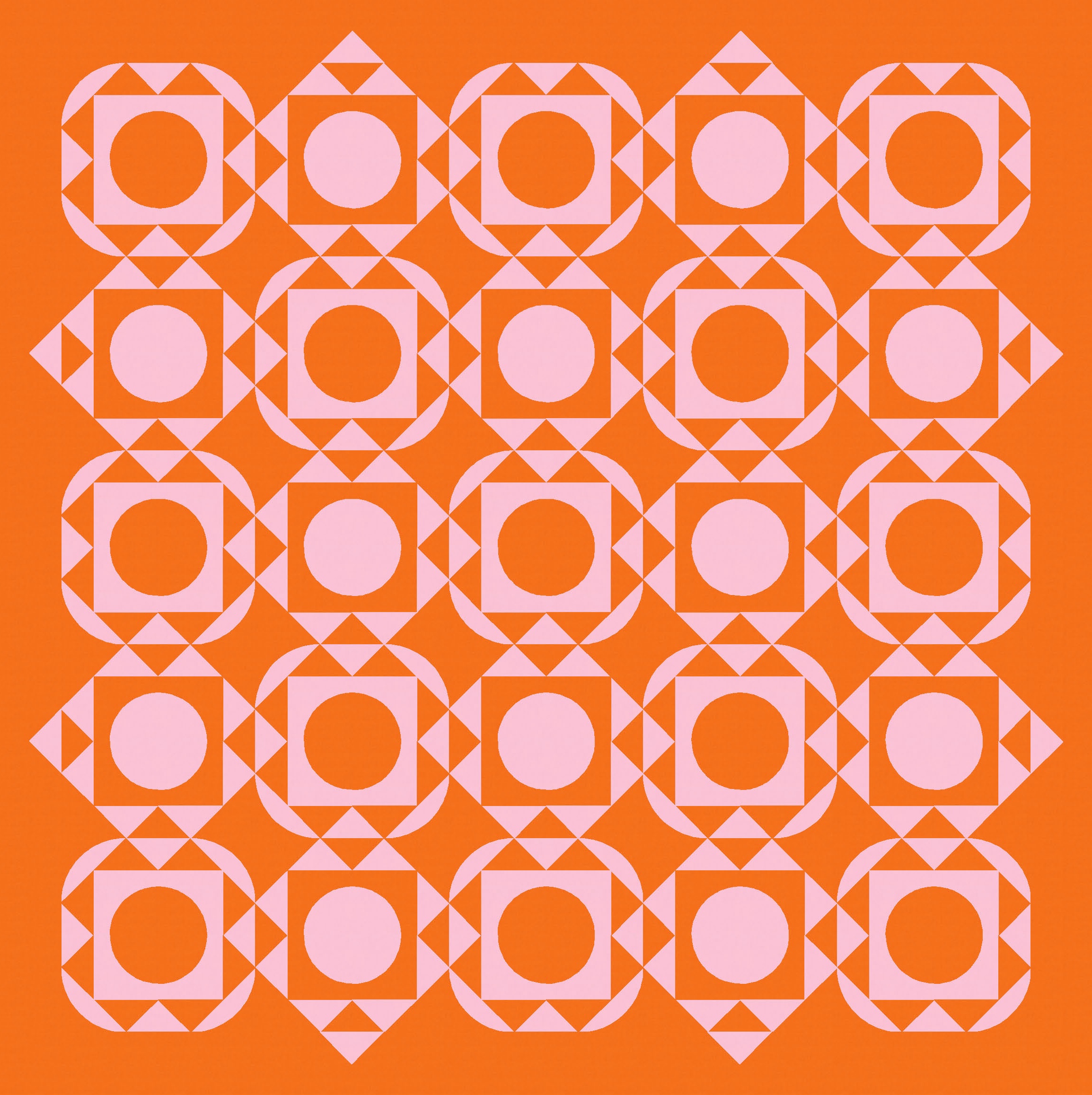
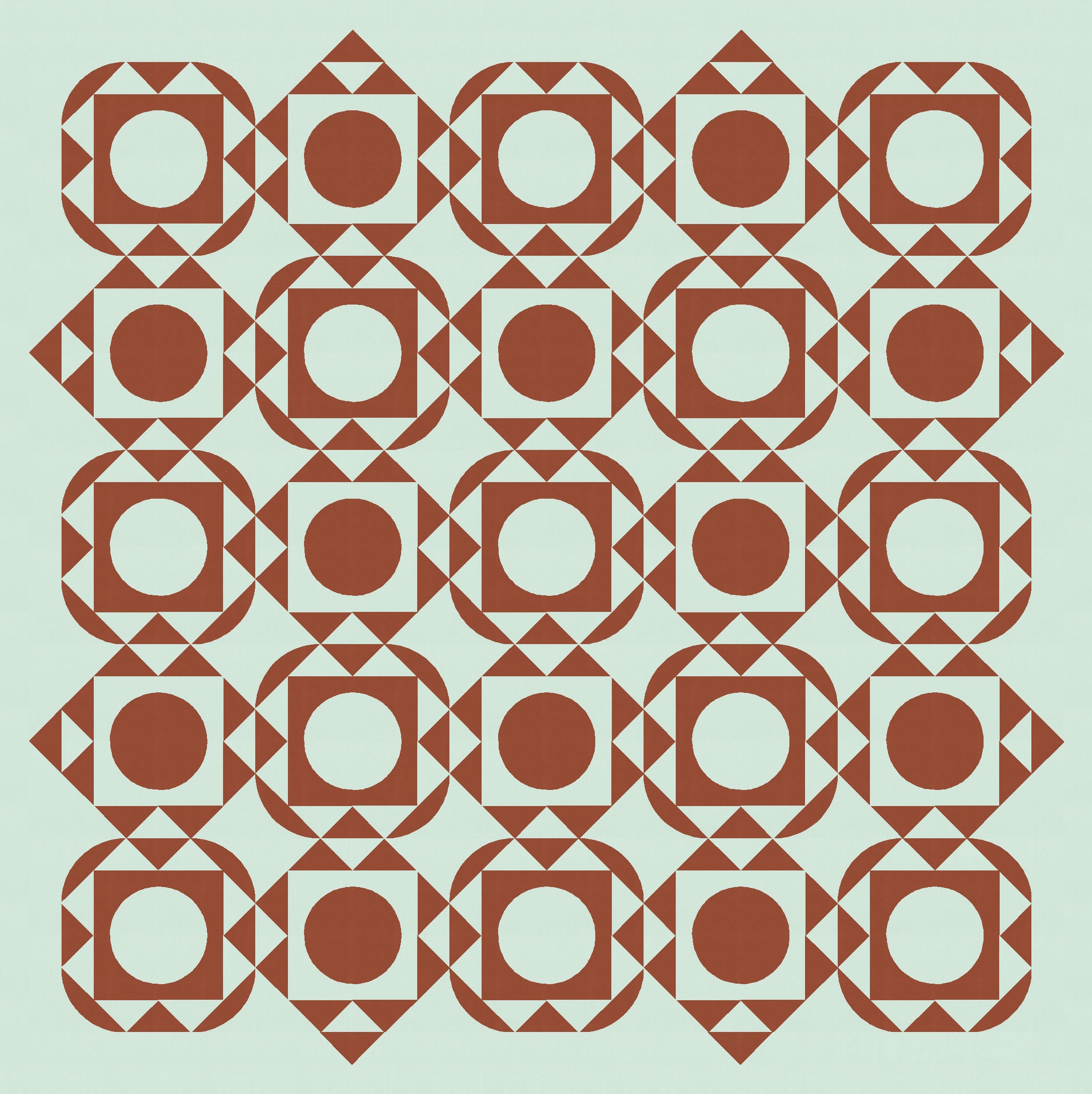
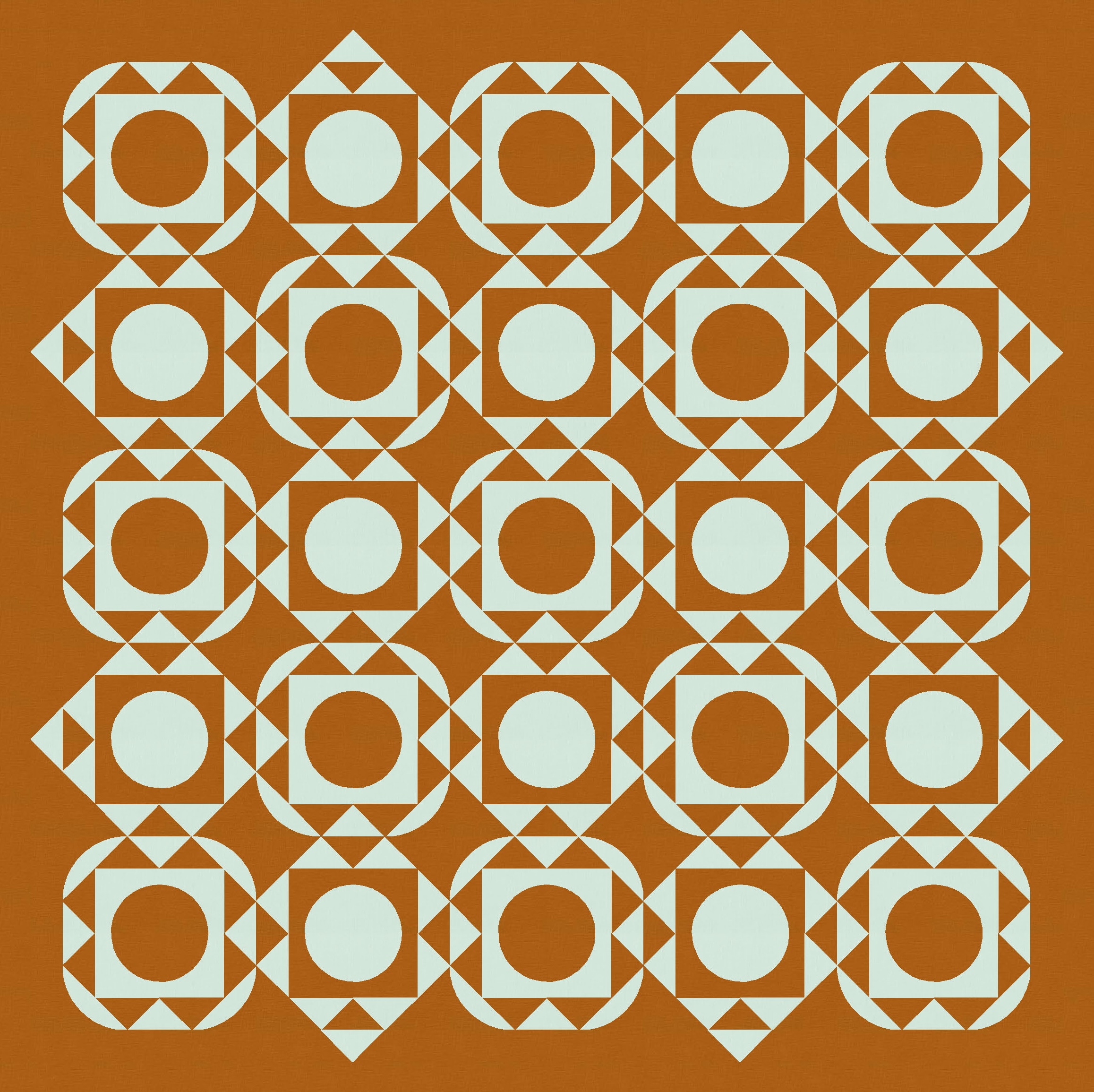
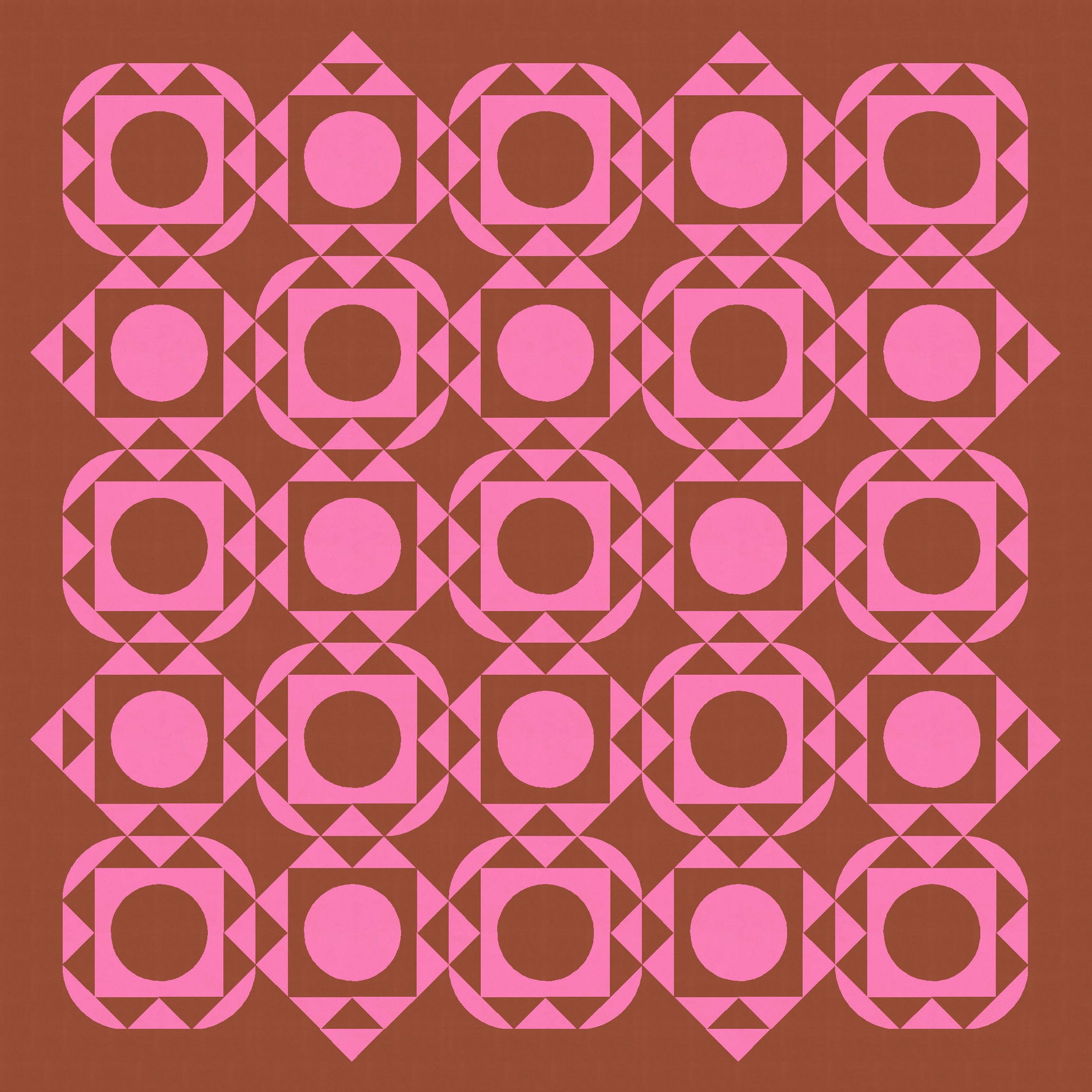
This palette was inspired by past issues of Curated Colour from Tara Glastonbury… not because Tara has used Kona Spice (the brownish colour I’ve used here) – yet – but because she’s opened my eyes to some of these reddish-brown-y Kona solids, which I’d previously never paid much attention to. I really like them, and like how they mix with things like hot pink and pale green. So it’s prompted me to move out of my comfort zone a little when choosing palettes. Yay!
This design would be easy to make into a quilt. You’d need to make a bunch of squares with inset circles (or make up the circles from four drunkard’s path blocks). Then you could just surround them with flying geese units or half-square triangles. Half of the blocks need those curved corners. I think that would require templates, as you’d essentially just need to add a sliver of a curve rather than the full quarter-circle. I’ve never used a partial curve like that, but I guess there’s no reason to think it wouldn’t be doable!
* More on the concept of adjacent blocks that interact: Basically, I mean any time where shapes from one block seem to extend into the block(s) next to it. I’ve use this effect in many Sunday sketches, and you can see it in many other quilt patterns from other makers as well. Sometimes it’s intentional, sometimes I’m sure it’s a happy accident – but I think it’s always a bonus!
Examples that come to mind include the Rosalia Quilt pattern from Sewspicious (see Vickeidy on Instagram), the Maggie Quilt pattern from Kitchen Table Quilting (which uses sashing to aid the effect; see Erica on Instagram), and the Star Spin Quilt pattern from Megan Collins Quilt Design (see Megan on Instagram). Now, I don’t know how any of these patterns are constructed, but at first glance they all seem to be block-based (with the caveat that the definition of a ‘block’ may vary…), and lines from one block extend in some way into neighbouring blocks to create new secondary shapes or interesting interactions. Let me know if you spot any other patterns that use this effect, and I’ll mention them next time! (Because yes, I will share more designs with this effect in future!)
Discover more from Geometriquilt
Subscribe to get the latest posts sent to your email.
