
Sunday sketch #428
This week’s sketch is actually the precursor of last week’s, but I shared them out of order so I could talk about transparency last week. There’s no transparency this week, but there are flowers and LEGO® and lots of bright colours!
I went down a rabbit hole after talking a while back to Tara Glastonbury about one of her upcoming designs (follow Tara on Instagram to see lots of her work, designs and patterns). I say ‘talking’, but really it was Tara showing me her design and me getting serious quilty tingles and saying “Ahhh that’s so #&@#$% awesome!!!” Don’t you love that feeling when you see art or design that just fills you with good energy?
Tara also mentioned LEGO® DOTS as an inspiration. Am I the last person out there to have heard of them? They seem to have been discontinued (or “retired”, in LEGO-speak), which is a shame. Anyway – they are/were essentially a bunch of flat pieces (circles, curves, squares, rectangles, etc.) in lots of fun colours that you could stick to a LEGO base plate to create interesting shapes and pictures. For quilters, basically a fun method for creating quilt designs!
So, that was enough to get me started. I played in Electric Quilt 8 to create these designs, but I’m not gonna lie… I also went out and bought a box of LEGO DOTS and a base plate too 🙂 More on that later.

You can probably see the similarities to last week’s sketch (particularly some of the other versions that I shared in the blog post) and how that one arose from this one. There’s the same four-petal flower shape, in a similar layout, and the same palette. The centres of the flowers are a bit different, but you can see the logical progression from one to the other.

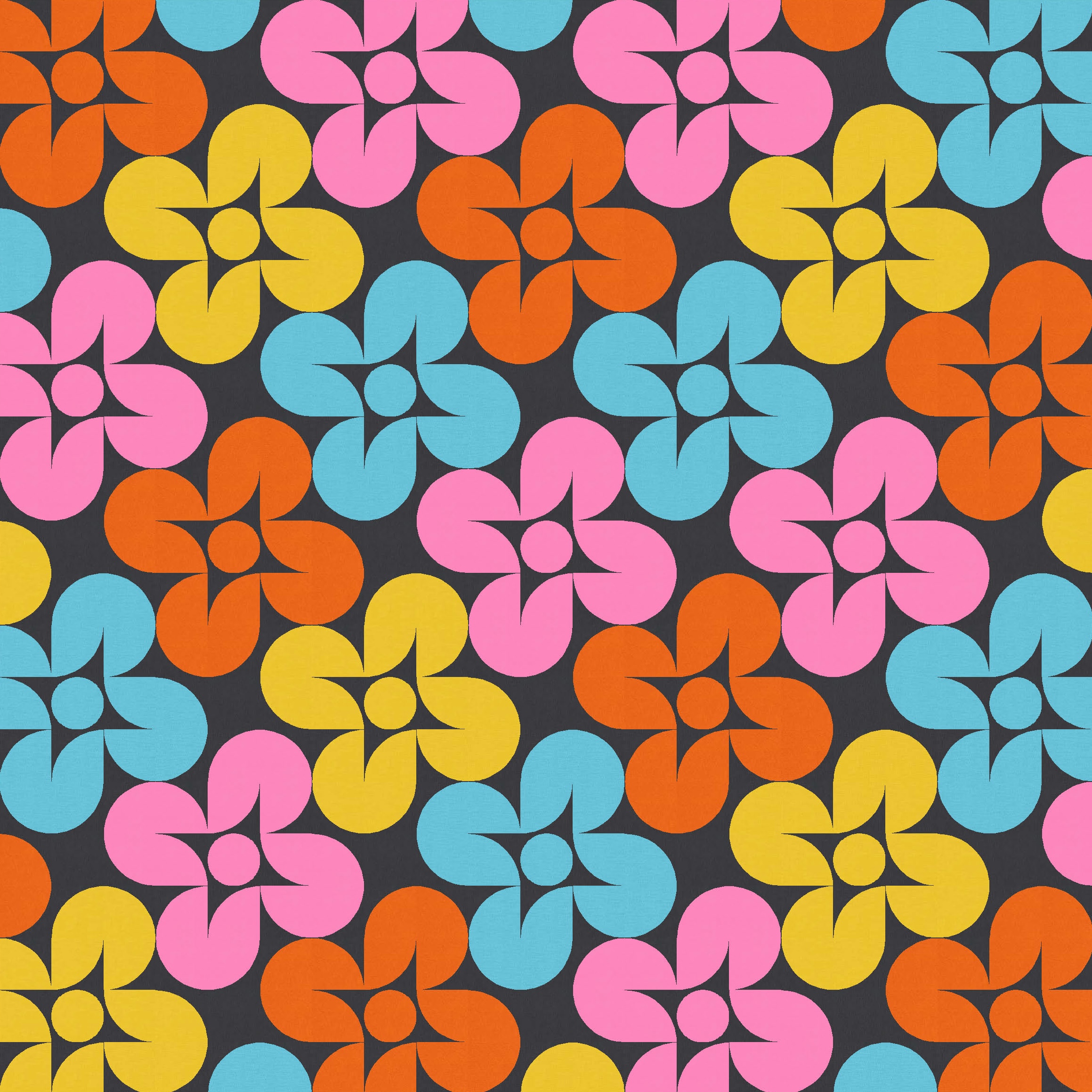

Even with only a few elements in the design, there’s lots of potential for colour placement. There’s the large flower shape, the inner four-pointed bit, the central circle, and also spaces between the flowers for an optional circle.
A bit of consistency in the colouring – such as using the same colour for the centre pieces in all the flowers, or for all the intervening shapes – helps to keep things manageable. Although, I’m not gonna lie, I do really love that multicoloured version above right, where the flower centres are all in mixed colours too.


And, of course, a more limited palette can work, too. In these next versions, I’ve also relaxed the block placement so the flowers have a little more breathing space. That gives those floating circles (which feel like pollen particles here!) a bit more room to attract attention.


I tried removing more elements, too. I like the idea of the pollen particles escaping and floating away. After a few unusually warm days in Melbourne recently, I’m definitely remembering how hayfever feels.

I cut back on the number of flowers (or pollen particles) too, just for something different.

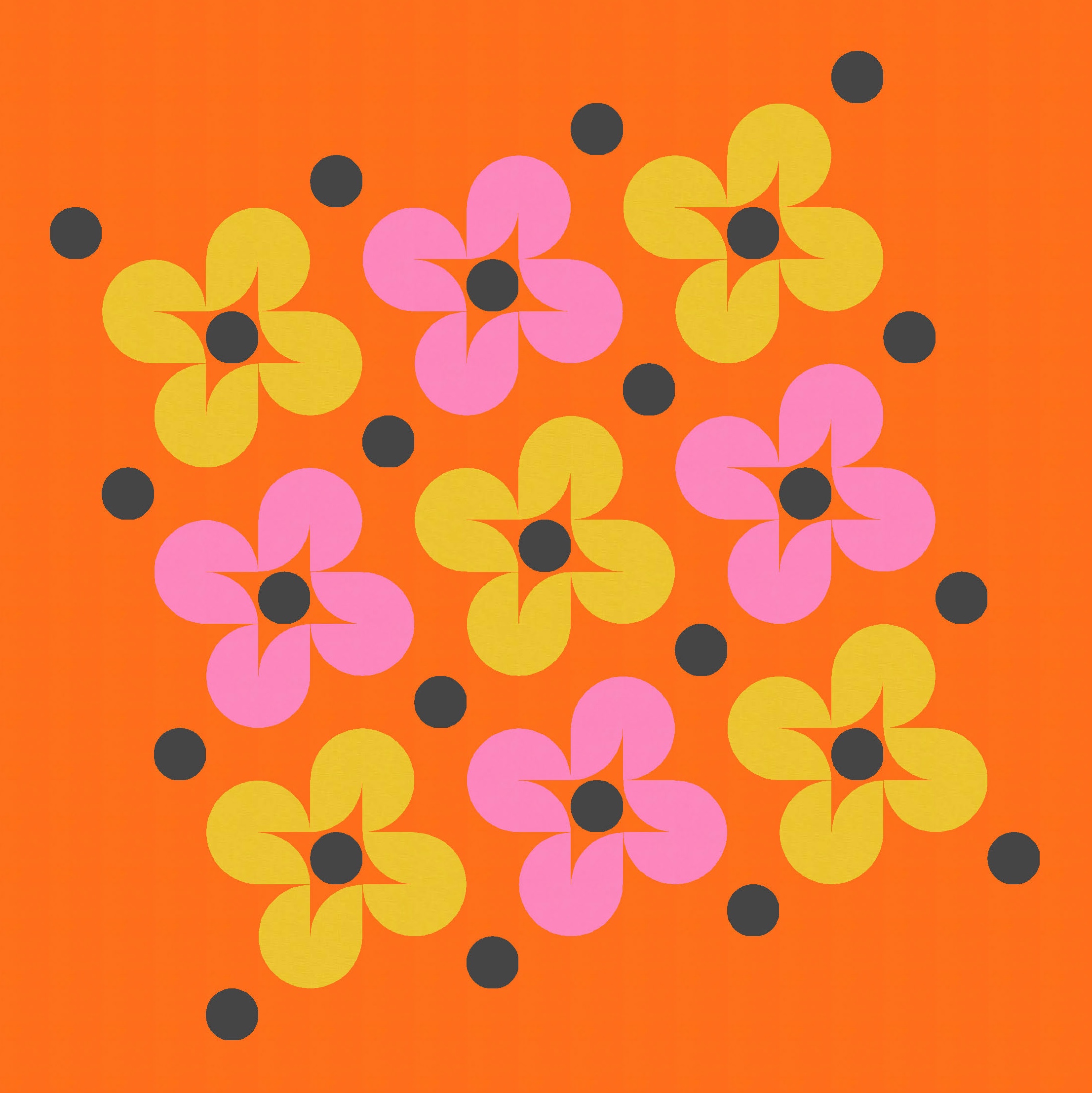

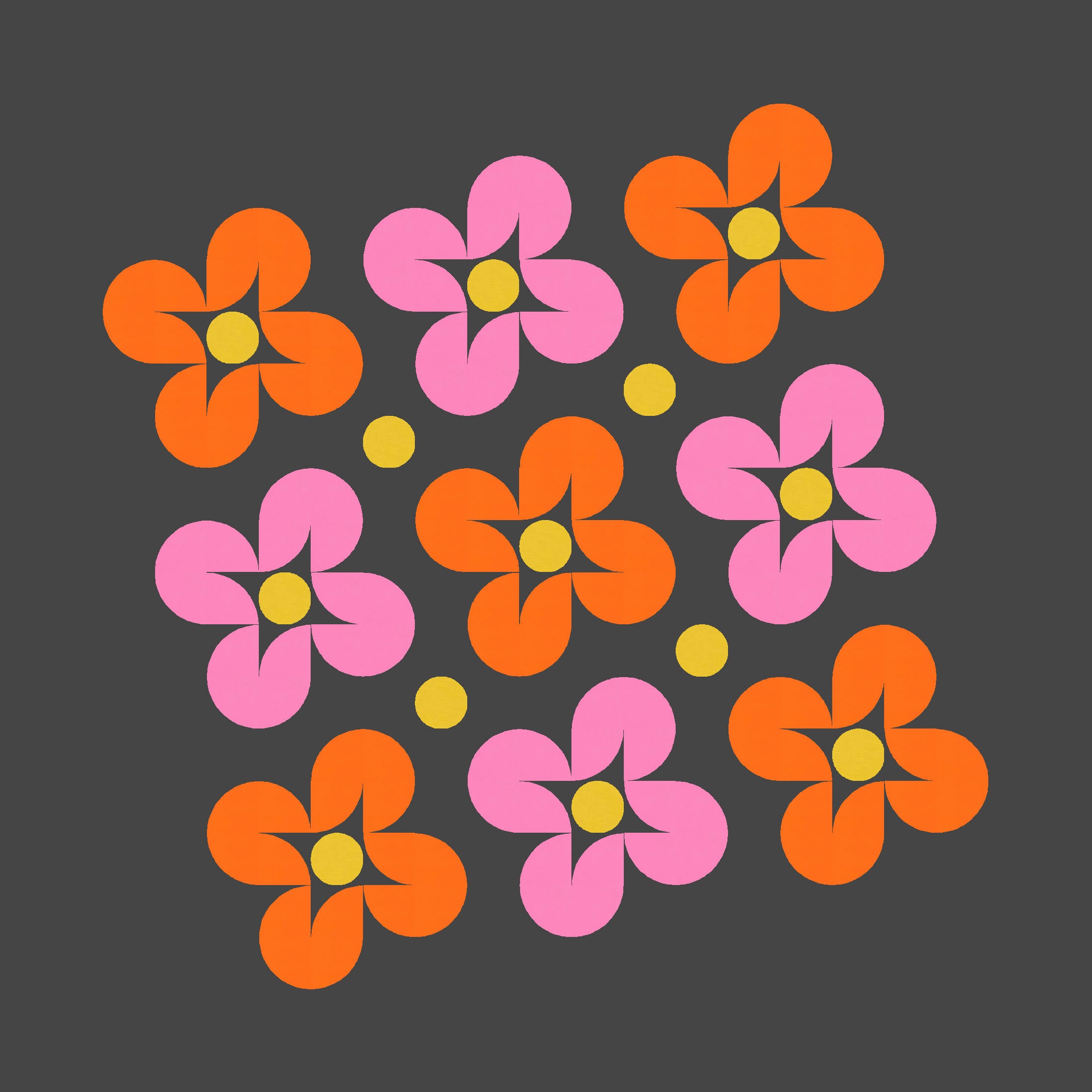
Like last week’s sketch, this week’s designs all use quarter-circles or half-circles (or drunkard’s path units) and squares and rectangles. Making a bunch of pieces and assembling them in rows or columns would probably be easier than creating separate blocks then joining them using partial seams (although partial seams don’t bother me).
After I designed these sketches, I ended up finding some LEGO DOTS in a local games store and then bought a base plate at another store. I also went looking for DOTS designs and found a bunch of fun ones on Instagram and Pinterest: a flower mosaic, spring flowers, a block-based flower design, lots of flowers, and lots more flowers. It’s funny how many people independently came up with the same flower shapes.
Because of the nature of the DOTS themselves (resembling many of the same shapes used in quilting) and the 2D layouts that are possible, they lend themselves well to quilt designs. It’s fun having a more hands-on method for creating sketches, so I’ll hopefully have more to show you eventually!
Discover more from Geometriquilt
Subscribe to get the latest posts sent to your email.

I’ve got those tingles for the very last one! And it’s so modern – negative space, repetition & diagonals