
Sunday sketch #418
When I first imagined this week’s sketch, I wasn’t expecting to like it as much as I do. I had an idea of how a single block would look, but I hadn’t really considered how it would interact with adjacent blocks. There’s so much movement and energy!
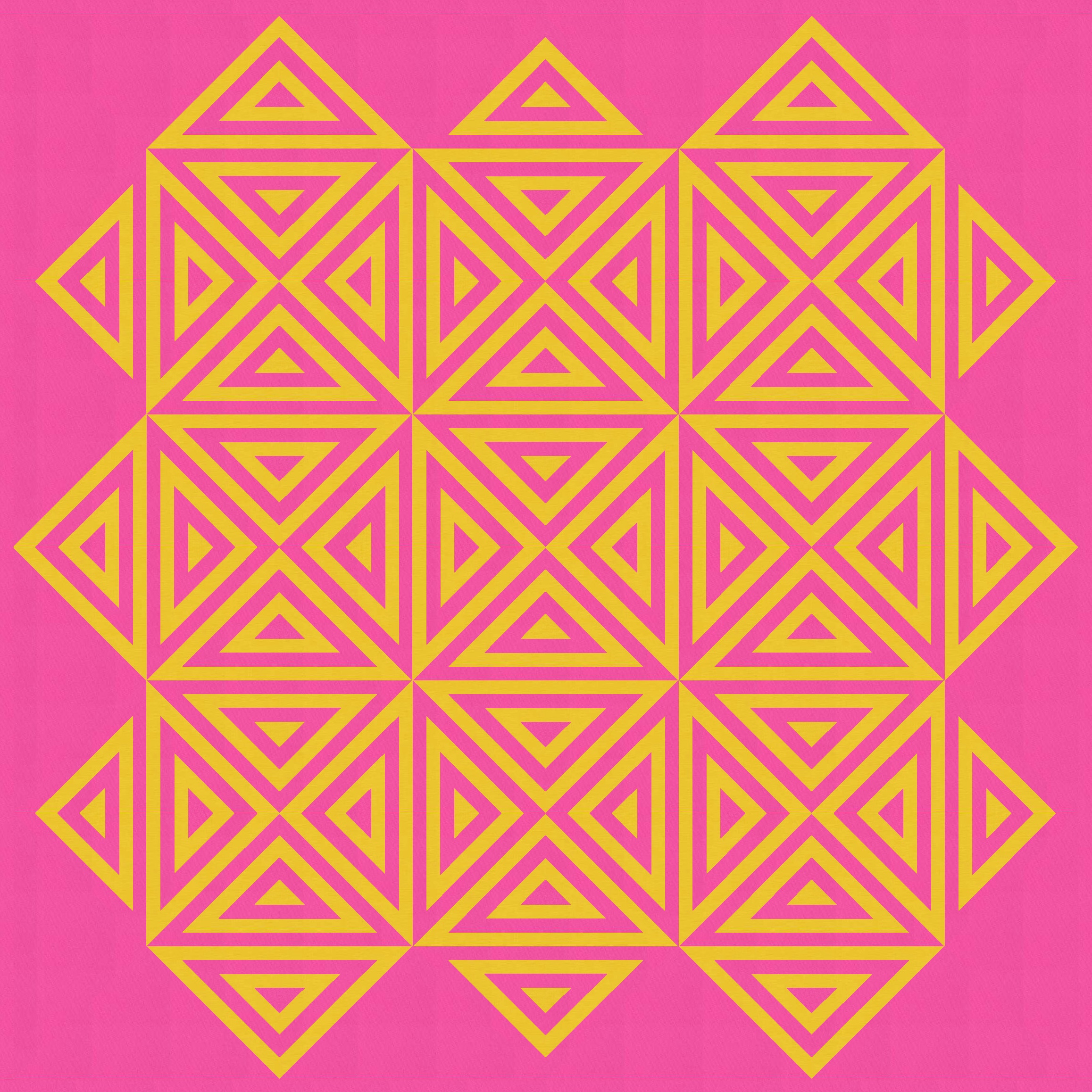
All the versions I’ve shown here use a single block that’s repeated, rotated and set on point. Each half of the block is a bit like a courthouse steps or log cabin block, but shaped as a triangle rather than a square. Two of these triangles make up a single square block.
I think this sketch works really well as a two-colour quilt design, so of course I tried it in a million different palettes. The hardest part is always choosing my favourite!

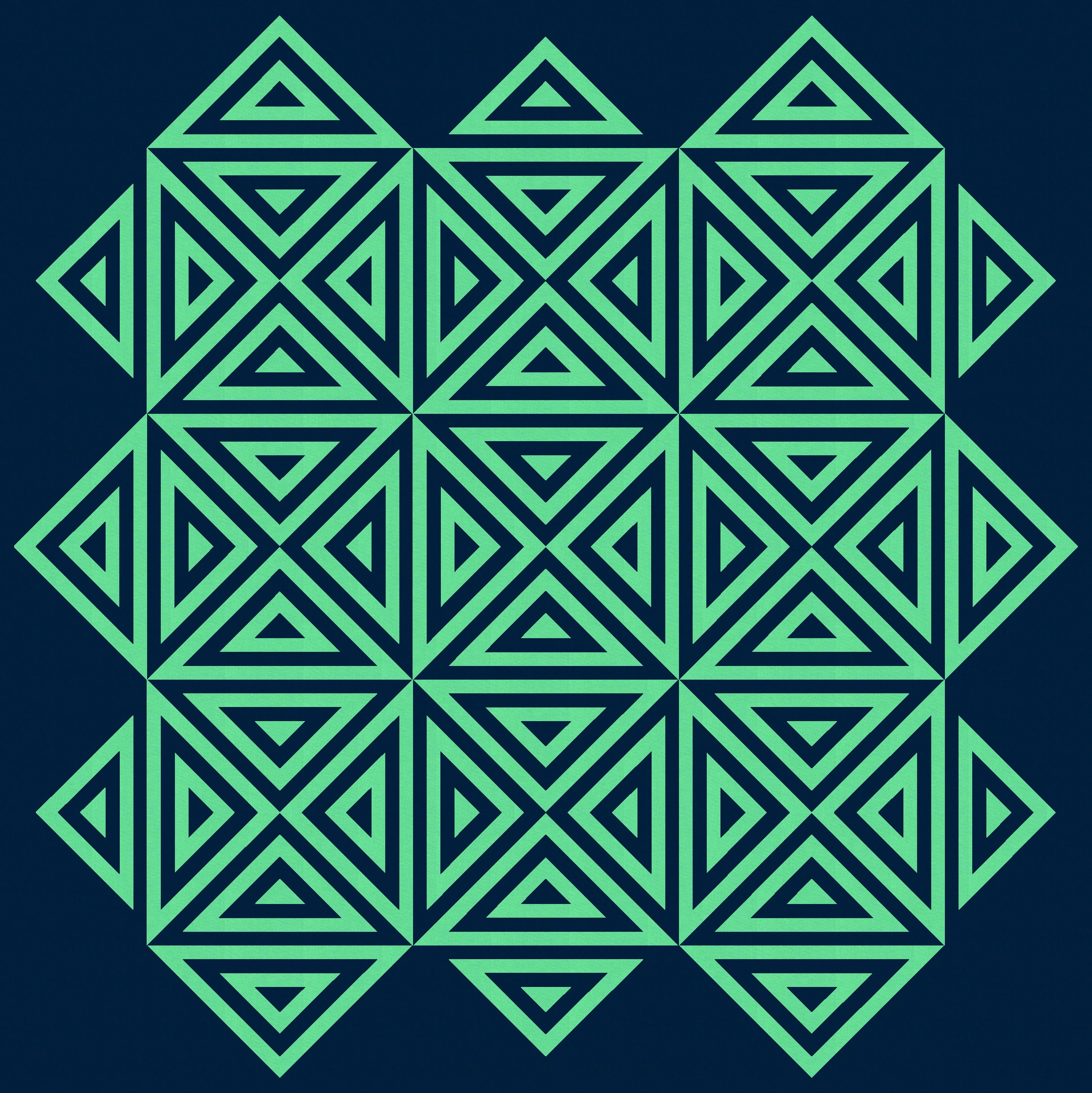

In the first few versions, I alternated the colour in the two halves of the block, so one half features a triangle with a dark outline and the other features a triangle with a light outline (which makes the latter look smaller against the light background). But colouring the two halves the same creates a thick internal diagonal line that adds a bit of visual interest and movement to the design. Alternated the colouring of the blocks produces solid or empty diagonals, and then rotating the blocks makes new secondary designs.


Adding another colour to the palette creates yet more opportunities. In this next version, each block has a pink half and an orange* half. (*This colour might read as red to you, but it’s a hot orange from the Kona palette in Electric Quilt 8.)
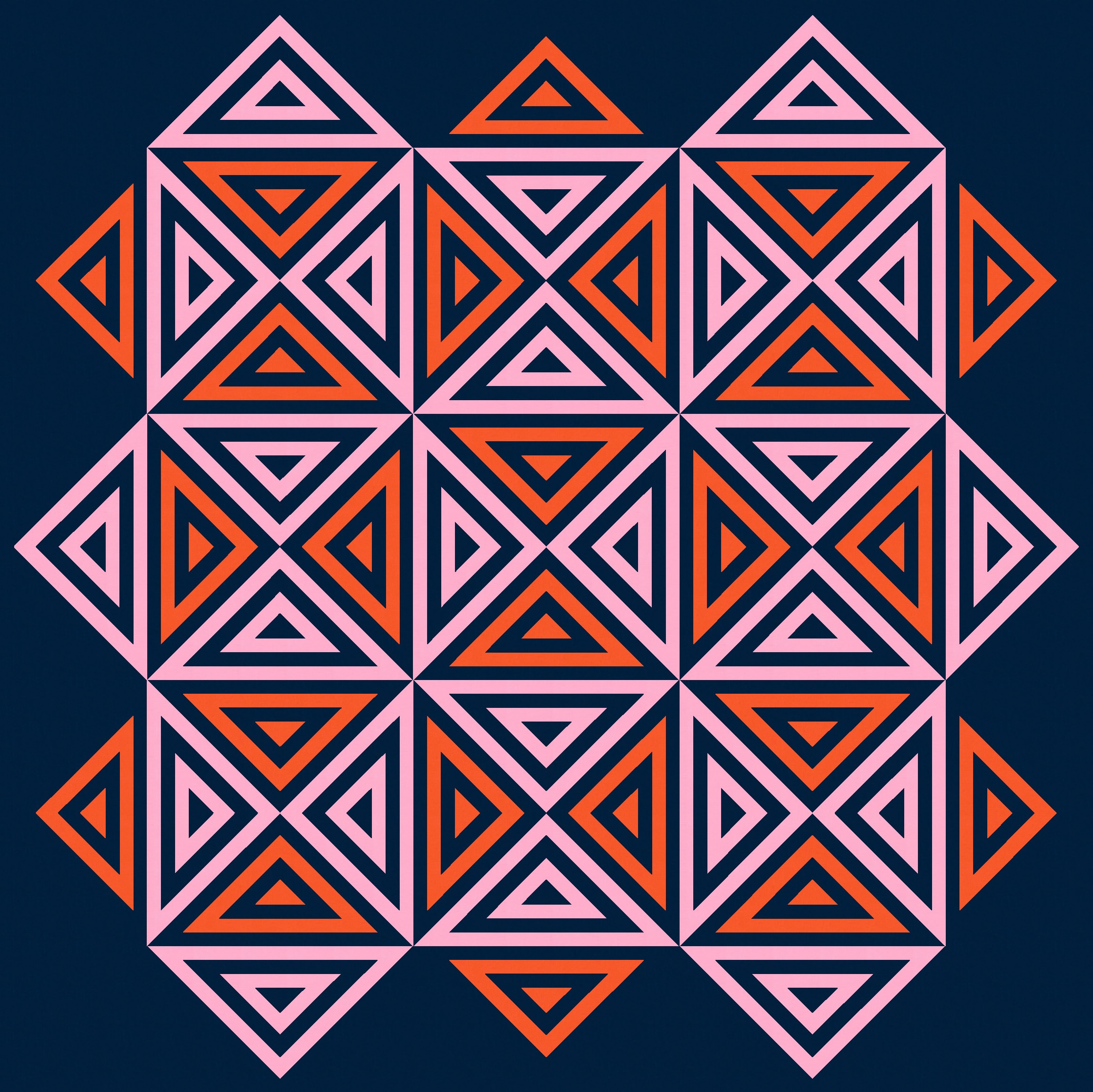
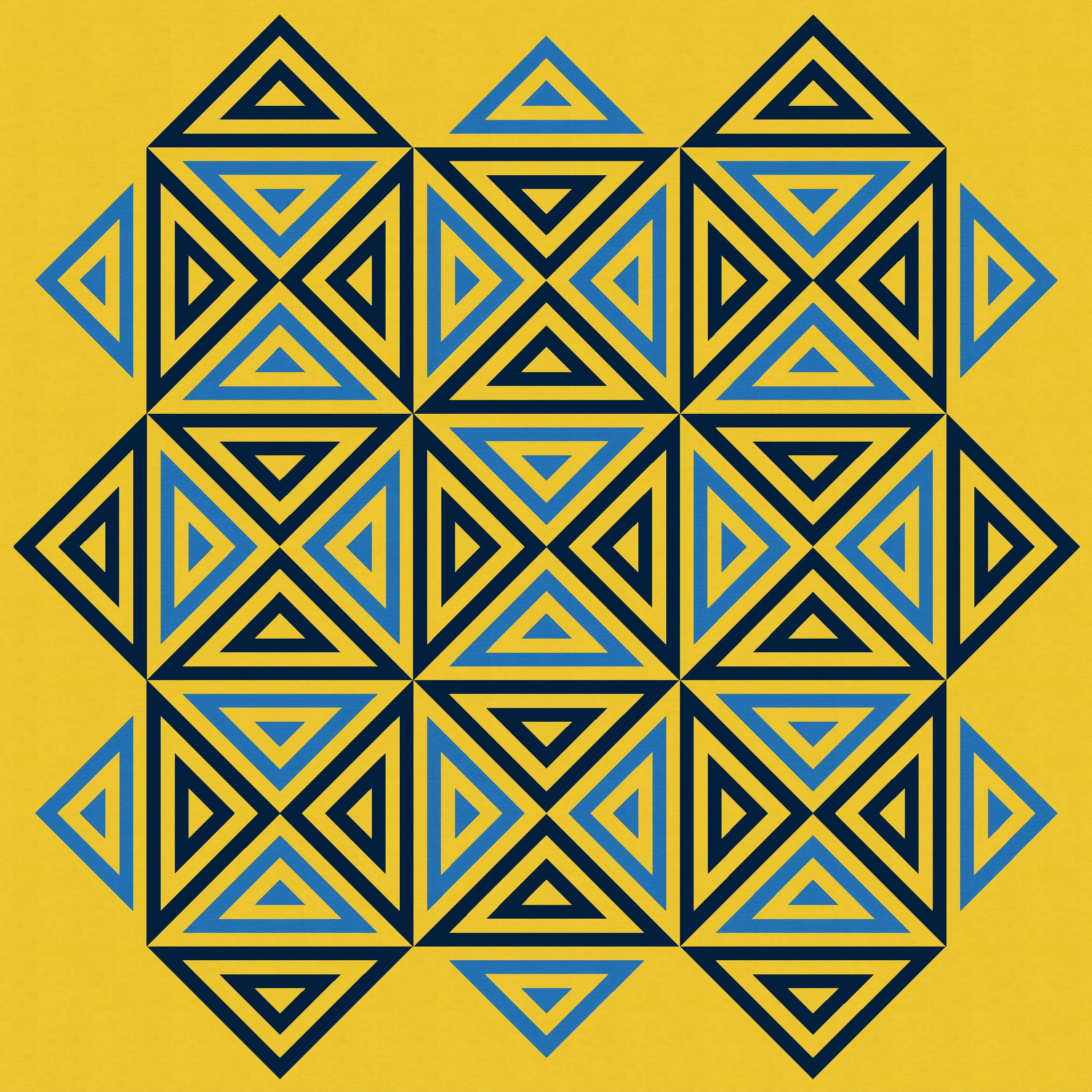
I had a hard time picking more than 3 colours that worked well together, although I tried a warm palette of contiguous colours. I don’t love yellow, orange and red together, but they do show off the potential of this design.


Here’s the same approach in a different palette. Ahh, that’s nicer.

And as much as I like the multicoloured versions, I think the simpler versions have the most impact.
I also tweaked the design by removing some of the triangles in each block. In the next 2 versions, I’ve only removed the smallest triangle on one half of each block, but it’s funny what a difference that makes.
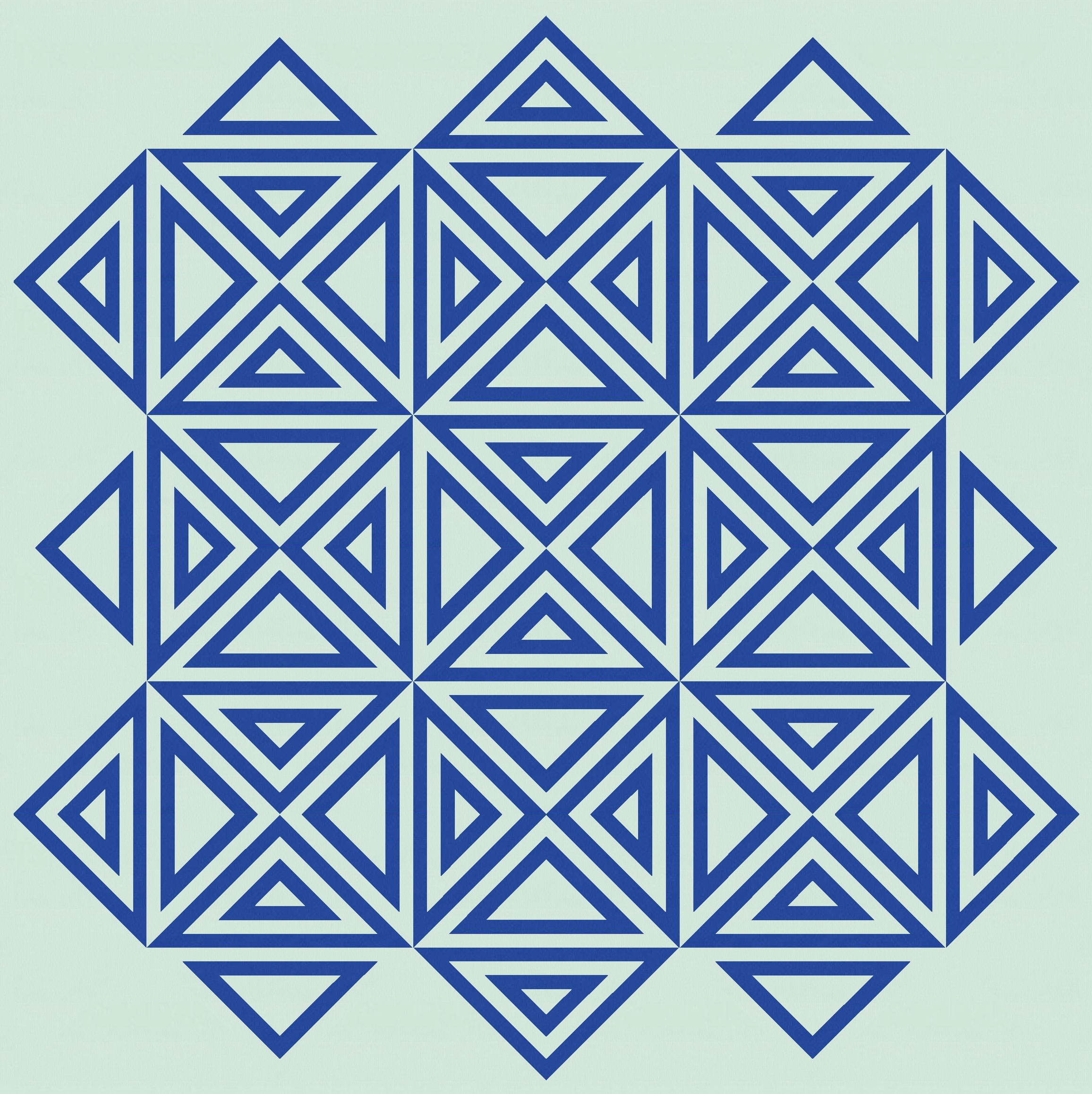
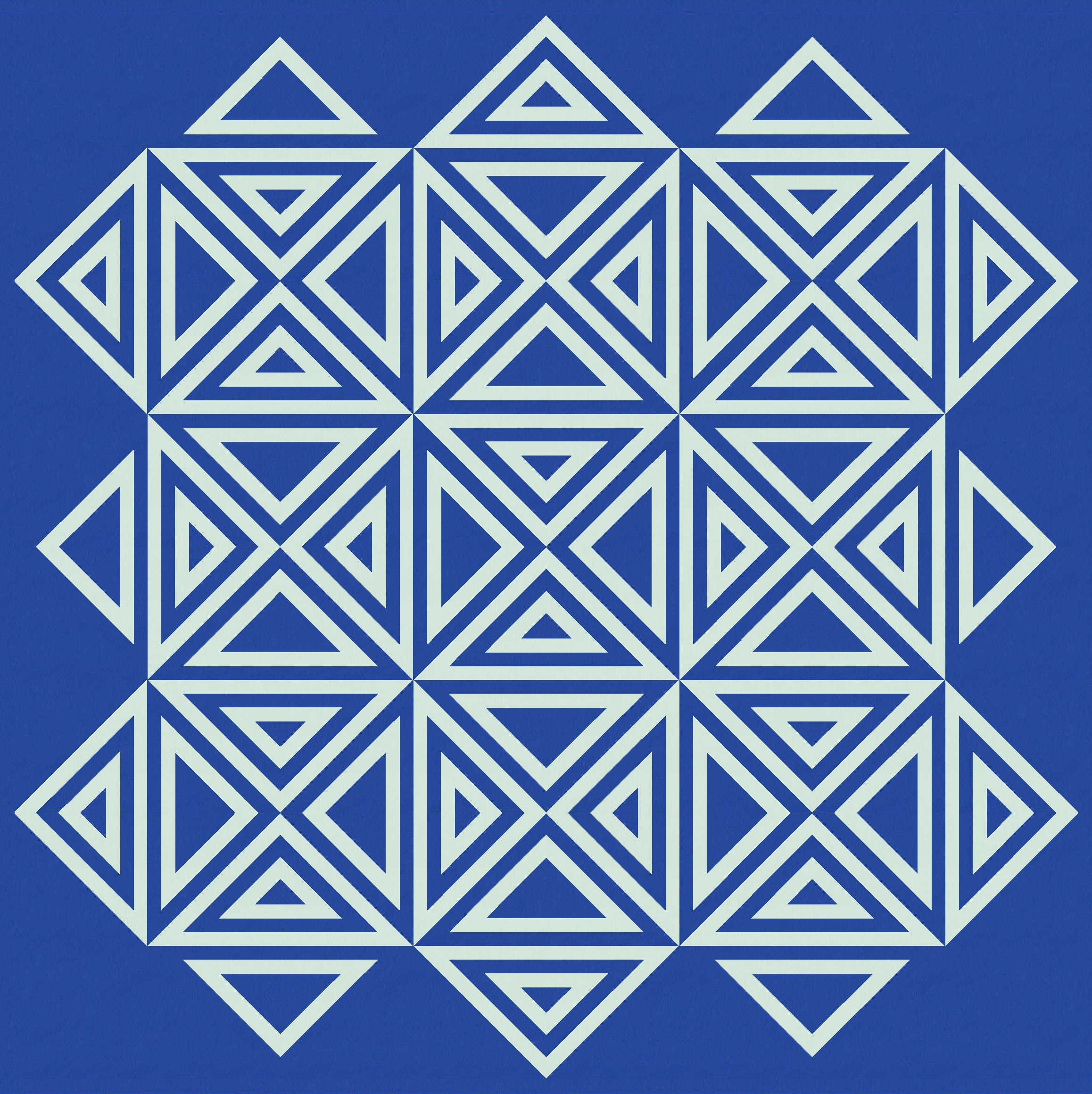
Removing one more inner triangle (by colouring it in) changes things up yet again.
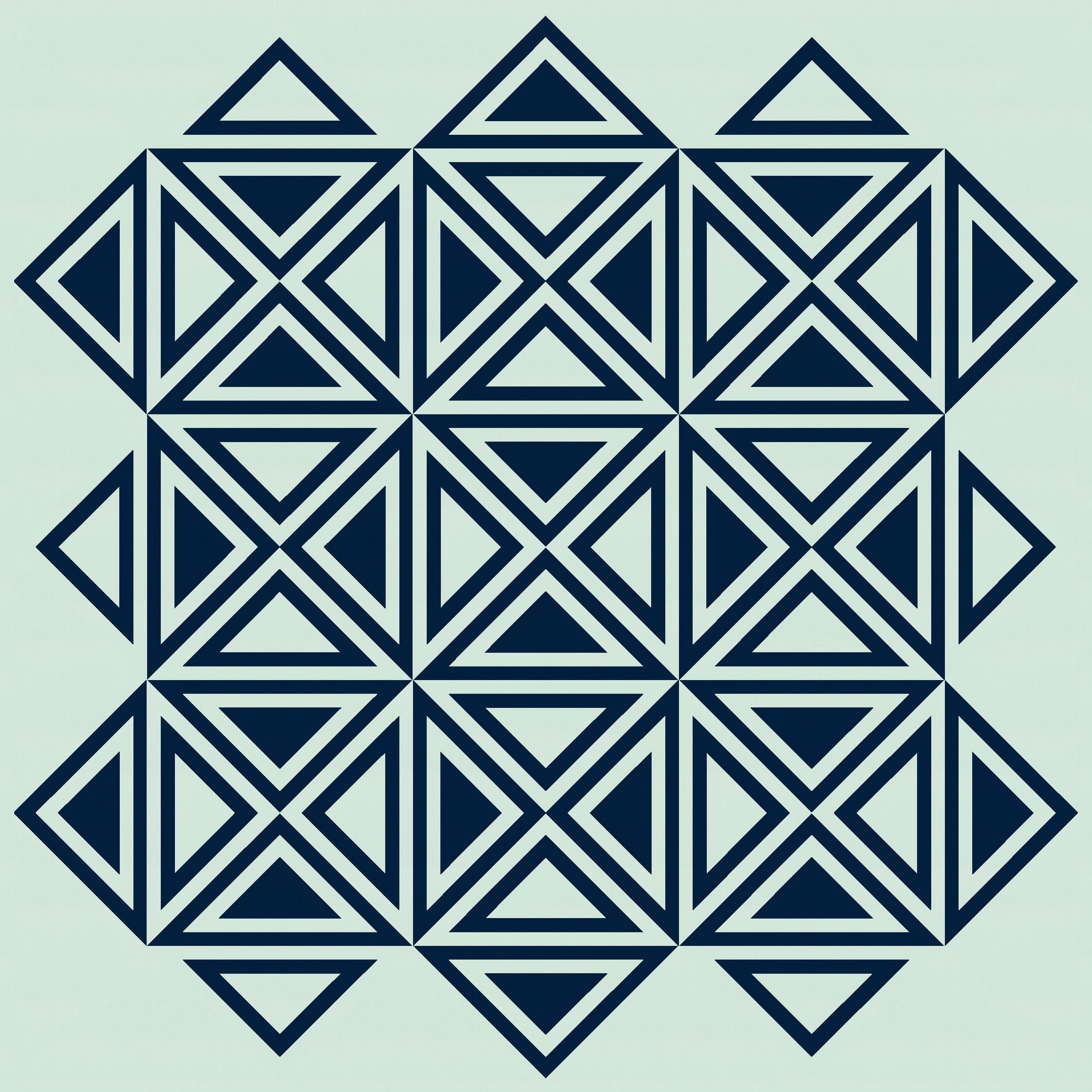
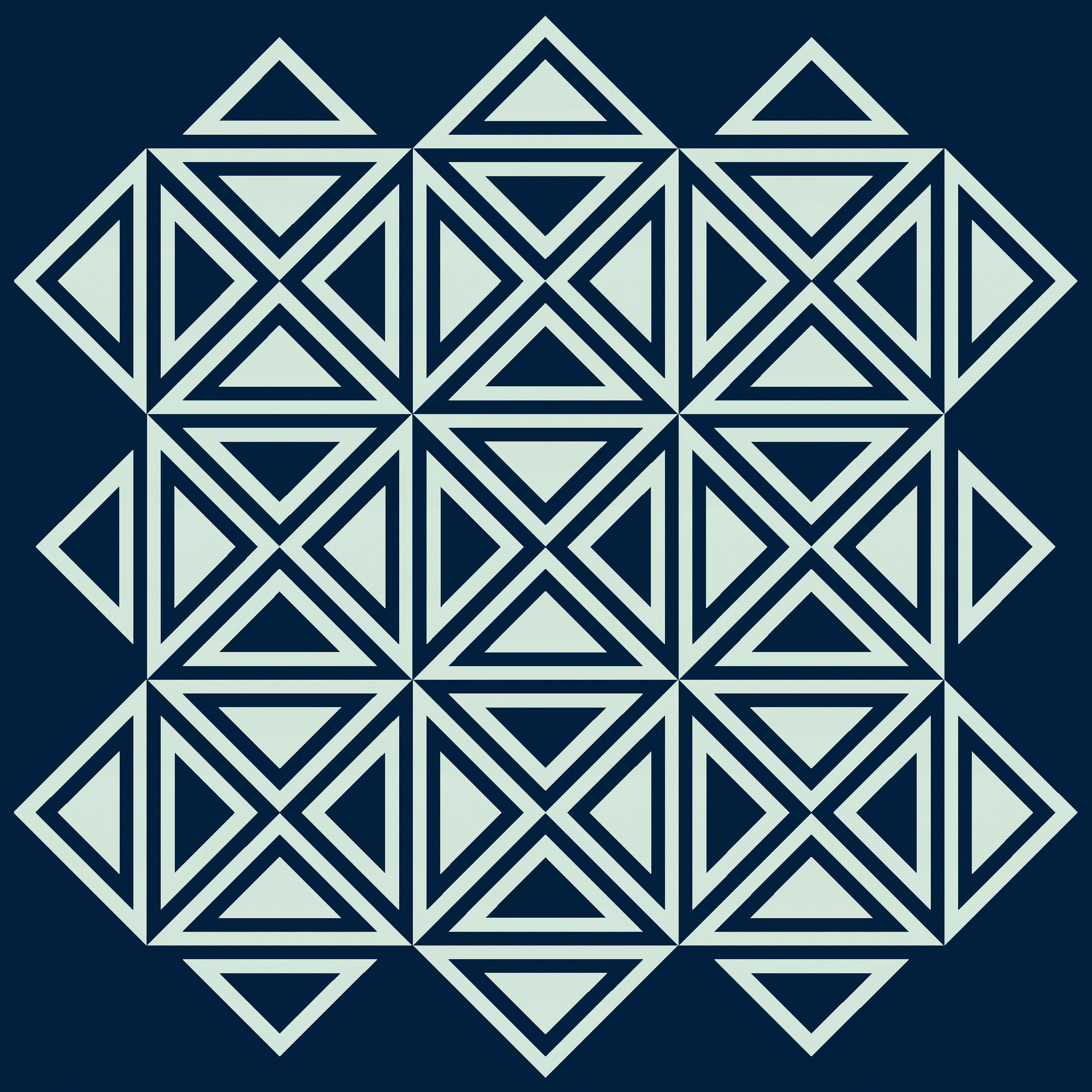
I really like those understated palettes, but I’m a sucker for hot pink and warm yellow too.

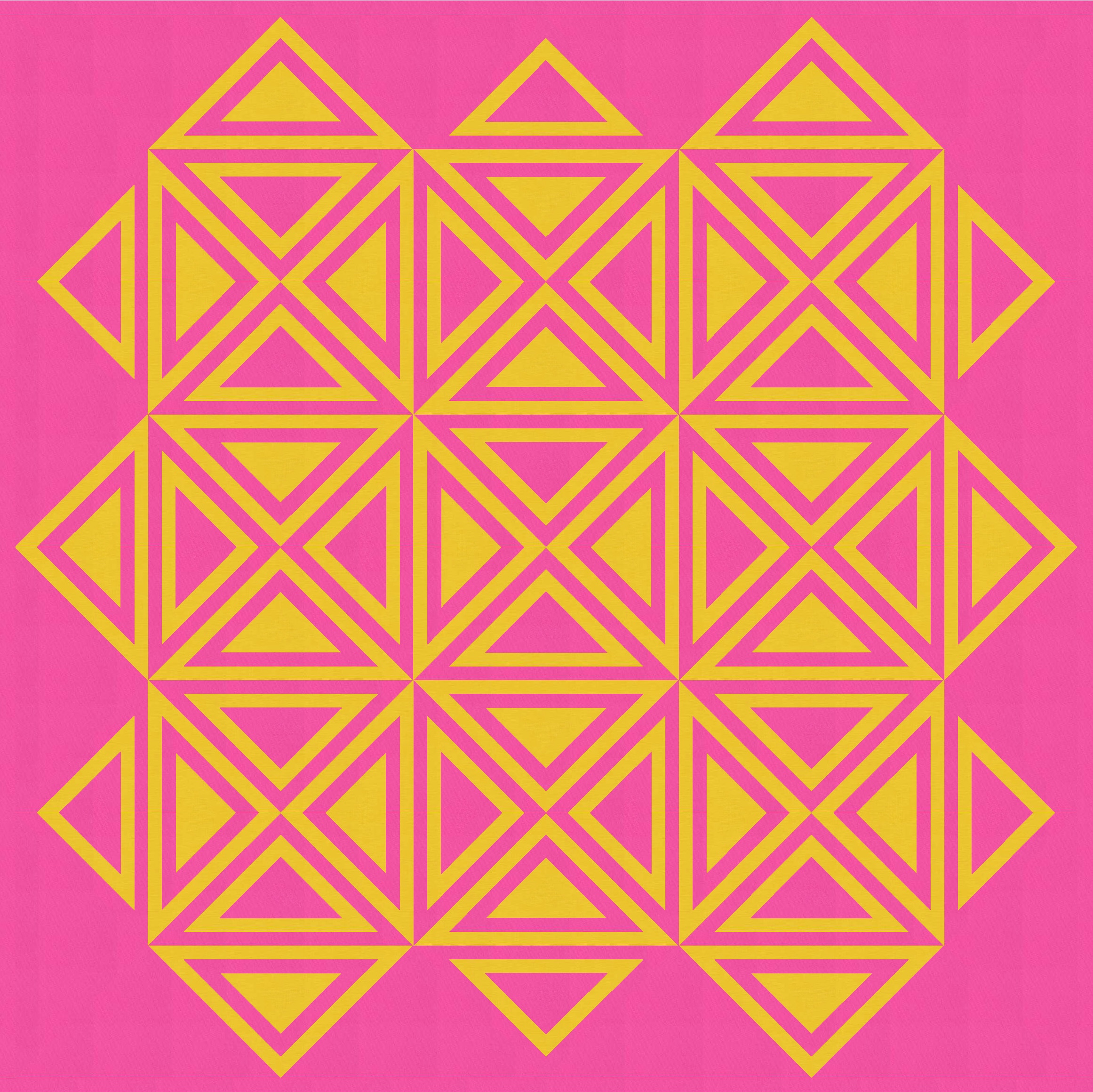
It would be difficult (for me at least!) to faithfully recreate any of these designs as a quilt without using templates or paper-piecing. I’d probably opt for the latter for nice clean lines. You could create a triangular paper-piecing template for each half-block, starting with the centre and adding strips as you work your way out to the edge. Make a bunch of those, then sew two triangles together to make a full block, and so on and so forth.
Up to 8 seams meet at the junctions between blocks, but nesting and spinning the seams would help to reduce the bulk. (There are different ways of doing this; just google ‘nesting quilt seams’ ‘spinning quilt seams’ to find tutorials in your preferred format.)
I’m definitely adding this to my list of (possible) makes. (I say ‘possible’, because the list is always changing!)
Discover more from Geometriquilt
Subscribe to get the latest posts sent to your email.

I love this one!
Amazing!!
They are ALL amazing and 🩵
Love this design. I think the simple 2-color variety is an opportunity to go wild with color combinations.
What a cool design study! xo