
Tagged: orange peel
Sunday sketch #351
The colour palette this week makes me so happy that I found it really difficult to pare down the list of designs to share. I’ll walk you through the slight variations between each one, and you can decide which one(s) you prefer!
This is a fairly simple block-based design that looks like it’s set on point but isn’t. I’ve never sewn an orange peel block before, but I can do drunkard’s path units (quarter-circles), so I figure it’s just one more step, right?
In this first version, I’ve used colour for the circles and either white or dark blue for the inner four-pointed concave stars.
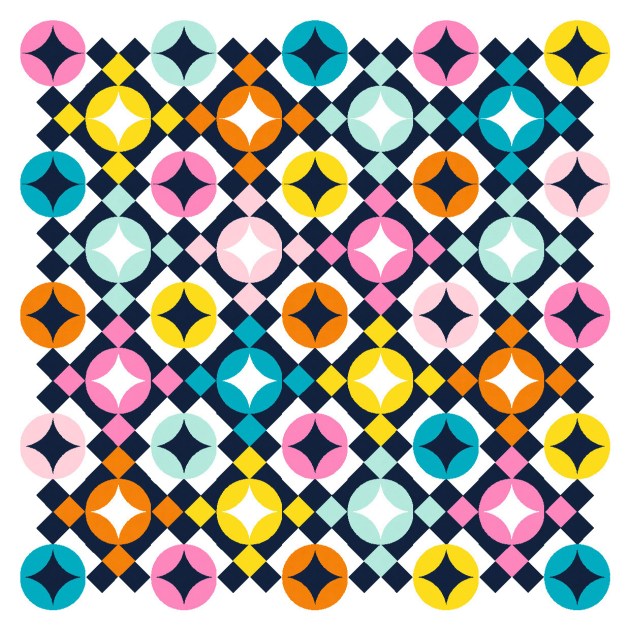
I can mix those colours around though, to produce slight variations that feel heavier or lighter. On the left, the coloured circles that previously had inner dark stars are now dark circles with inner coloured stars. On the right, I’ve stripped colour out from alternate blocks.

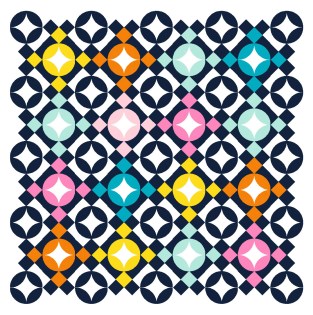
Or I can darken those stars in the coloured circles instead.

I often like changing up the outside edges of designs. Instead of colouring those outer circles, I’ve opted here to focus on the stars. I love this effect. Other minor changes in colour placement help to lighten the overall design.
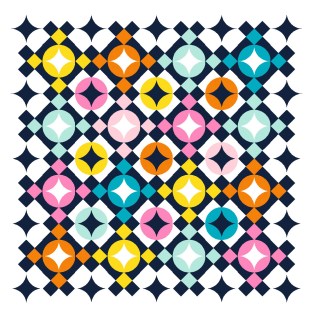

And then I removed the stars from the outer edges, to focus on that blocky checkerboard pattern instead. I like this one too!

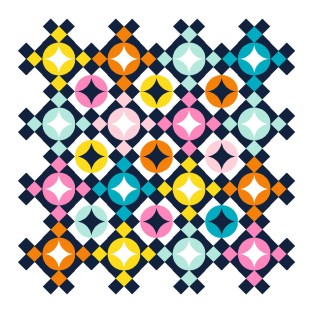
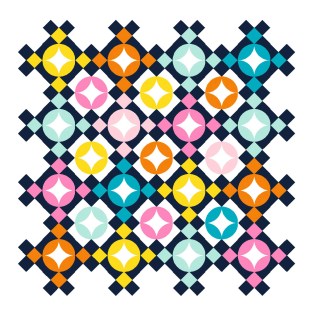
And finally, removing the outermost dark squares smoothes the edges of the blocks, making the design look like square blocks on point (which it actually isn’t). This is probably my least favourite version of the design, but I still like it enough to include!
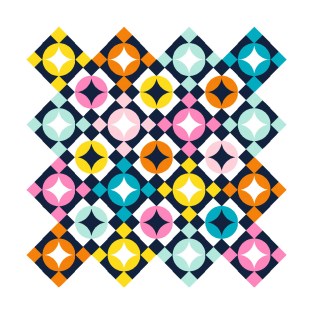
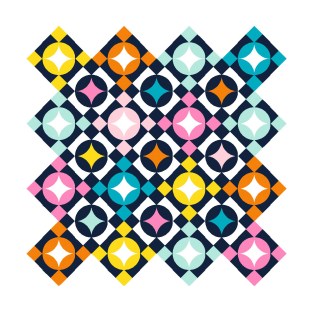
This week’s designs are made using orange peel units, squares and triangles (which could be made from quarter-square triangles too). As always, I think the hardest part would be deciding which version to make, and then settling on a colour palette!
Sunday sketch #339
OK, so this week’s sketch is almost identical to a variation of Sunday sketch #338, but I’ve changed the colour palette to show how colour placement can create new effects – in this case, ’emptying’ out some of the orange peels by using the background colour. That creates some interesting movement at the outside vertical edges.

Even though the outside columns have only half-peels, the surrounding lines complete the shapes in your brain.
I like highlighting those hints of a curve, without revealing the whole orange peel shape.
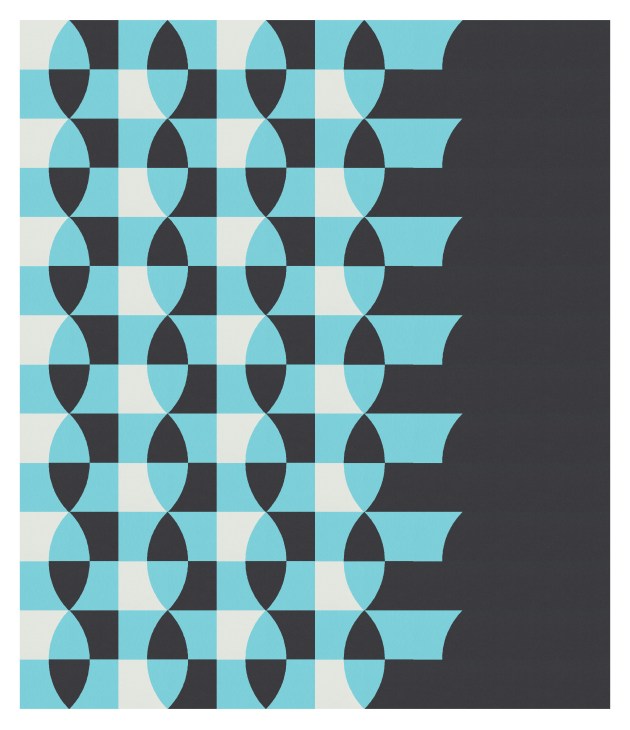
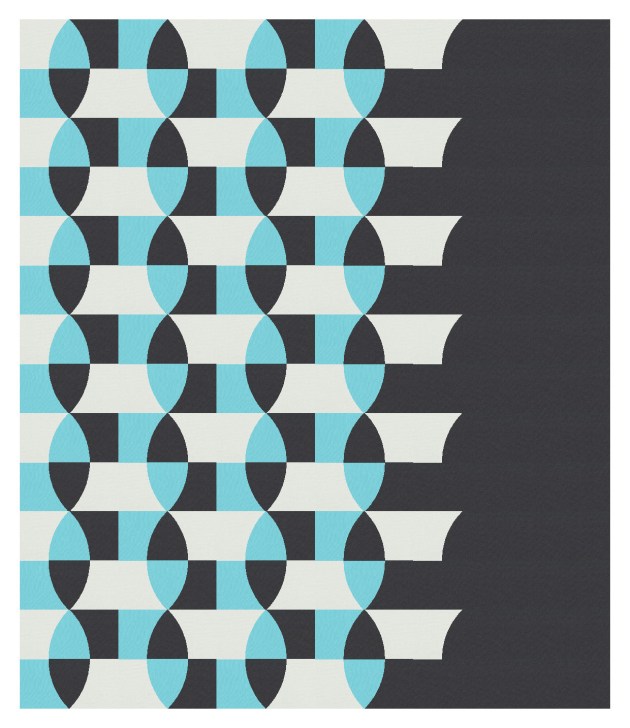
The main block this week is the same as last week’s: an orange peel positioned vertically in the middle of a block, bisected horizontally by a line that cuts the whole block into two rectangles. Of course, the block can also be flipped so the orange peel lies horizontally. (I’ve also added sashing between the columns in this next version.)
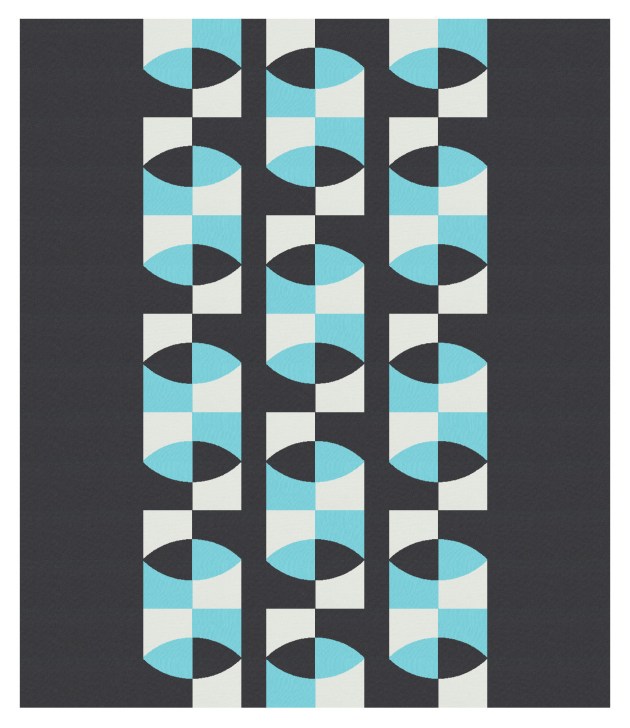
I like the added movement that those hard corners and rounded edges bring. Different colouring can introduce even more movement. In the next version, the horizontal lines created by the block borders trace back and forth down the page like a snake, echoed by the path that the orange peels take. A bit ‘snakes and ladders’, if you like!

These designs could be made into quilts using the same approach as last week; templates would probably be the easiest way to go. I’ve never tried sewing these shapes before, but the curve would be gentler than a drunkard’s path curve, so possibly easier? I’ll have to try it and find out.
Sunday sketch #338
I was telling someone recently that I’d never designed with an orange peel shape, cos I’ve also never sewn an orange peel shape, and the next time I sat down to sketch something, guess what shape came up?
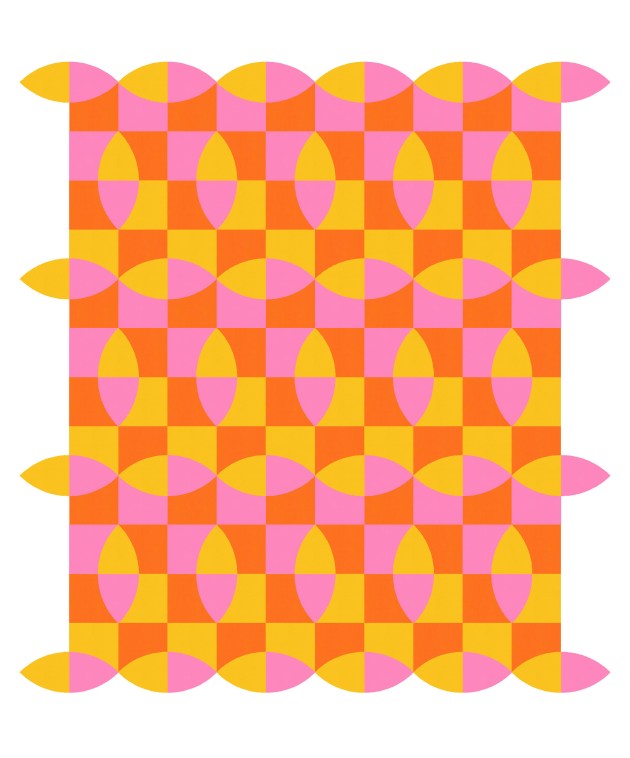
It’s maybe not being used in the way that you’d normally expect to see an orange peel, but I think it works. It’s certainly fun in this colour palette (one of my all-time favourites). The checkerboard colouring helps to keep it fun too.
The main block in these designs has the orange peel in the middle, bisected by a straight line that also cuts the square block into two rectangles. But colouring some of the block in the same colour as the background lets the orange peels hang off the edge in some cases, or give a nice curvy edge at the top and bottom.
Here’s a simpler version (same design but less ‘busy’ colouring) – this one might be my favourite.

It works in the other direction too. I feel like those orange peels in the middle are giving me the side-eye 🙂

Here’s a more regular layout, where you might be able to see the basic block more clearly. Placing blocks in the middle of the design and then using one of the block colours as the background helps to ‘float’ the shapes a bit.
I also like colouring the edge blocks so that there are no hard vertical lines showing the outside borders of the block – just the curves of the orange peels undulating down the page.

On looking at the blocks now, I can see hourglass shapes too. I should’ve tried a design that echoed that shape. Here’s one with just a large diagonal instead.

These designs could be made into a quilt using templates of some sort (I’d probably just make my own). Once you got the hang of sewing these curvy shapes (and when I say “you”, I mean “I” 🙂 ), I think the quilt would come together pretty quickly.
I’m going to use these shapes in more designs, so keep an eye out for related sketches next week.
