
Sunday sketch #462
Remember the 25-patch of half-square triangles from a few weeks ago? This week’s sketch uses that block to create a fairly traditional yet versatile quilt design.

Sunday sketch #458 included three blocks with half-square triangles of different sizes: a 9-patch, a 16-patch and a 25-patch. I ended up playing with the 25-patch (essentially just a 5 × 5 layout of half-square triangles) a bit more: setting it on point and rotating alternate blocks.
I also played around with which half of the half-square triangles I coloured in; I chose a different direction in each half of the (diagonally bisected) block. That left some ’empty’ HSTs (now essentially squares) across the diagonal of each block, so I picked out the middle one in pink. This design’s one of the earlier ones I played with.
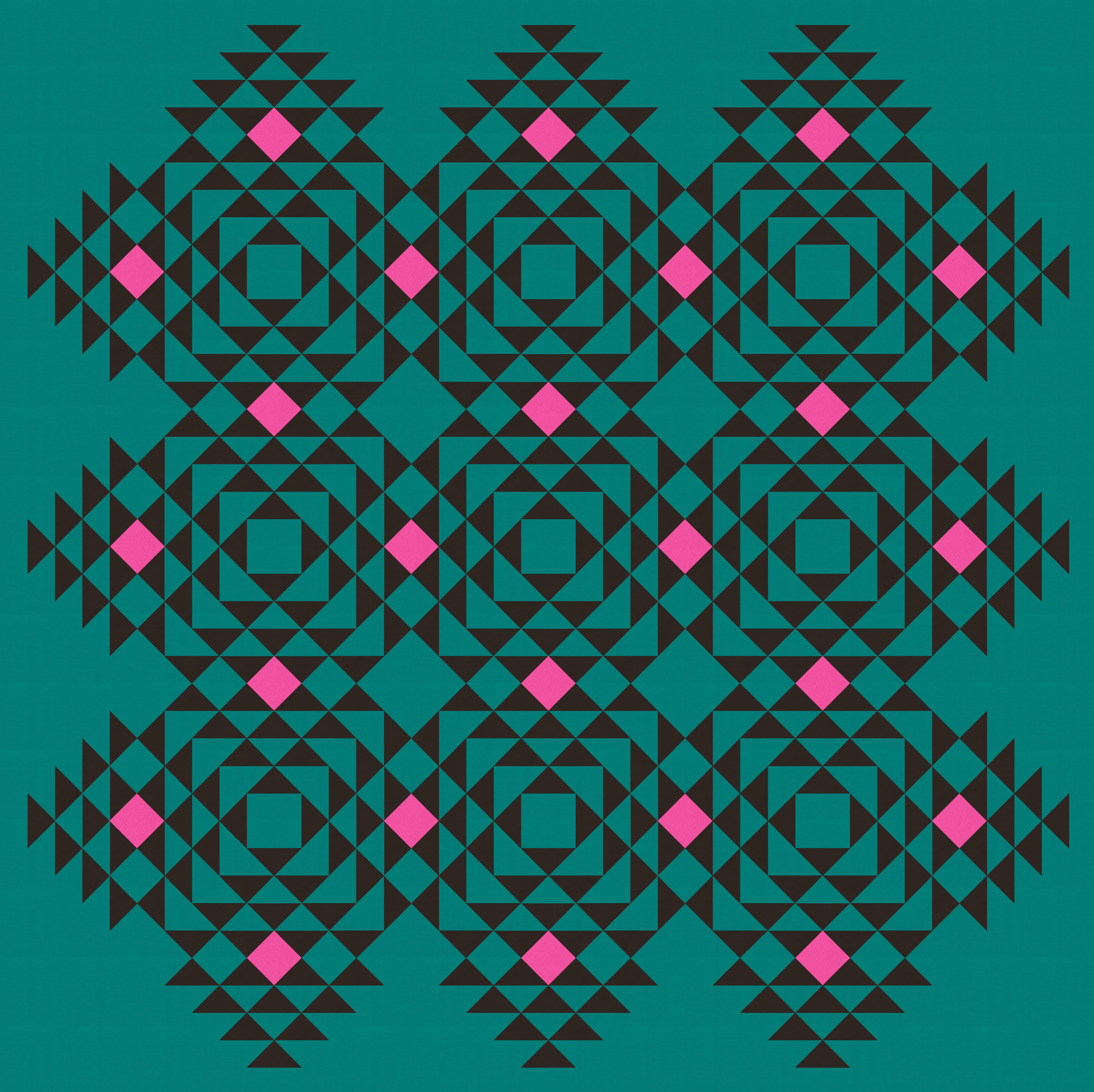
Looking at that first design for a bit, my eye was drawn to the small square shapes formed around those pink squares; they’re bordered on each side by a series of three flying geese. They seemed worth colouring in too.

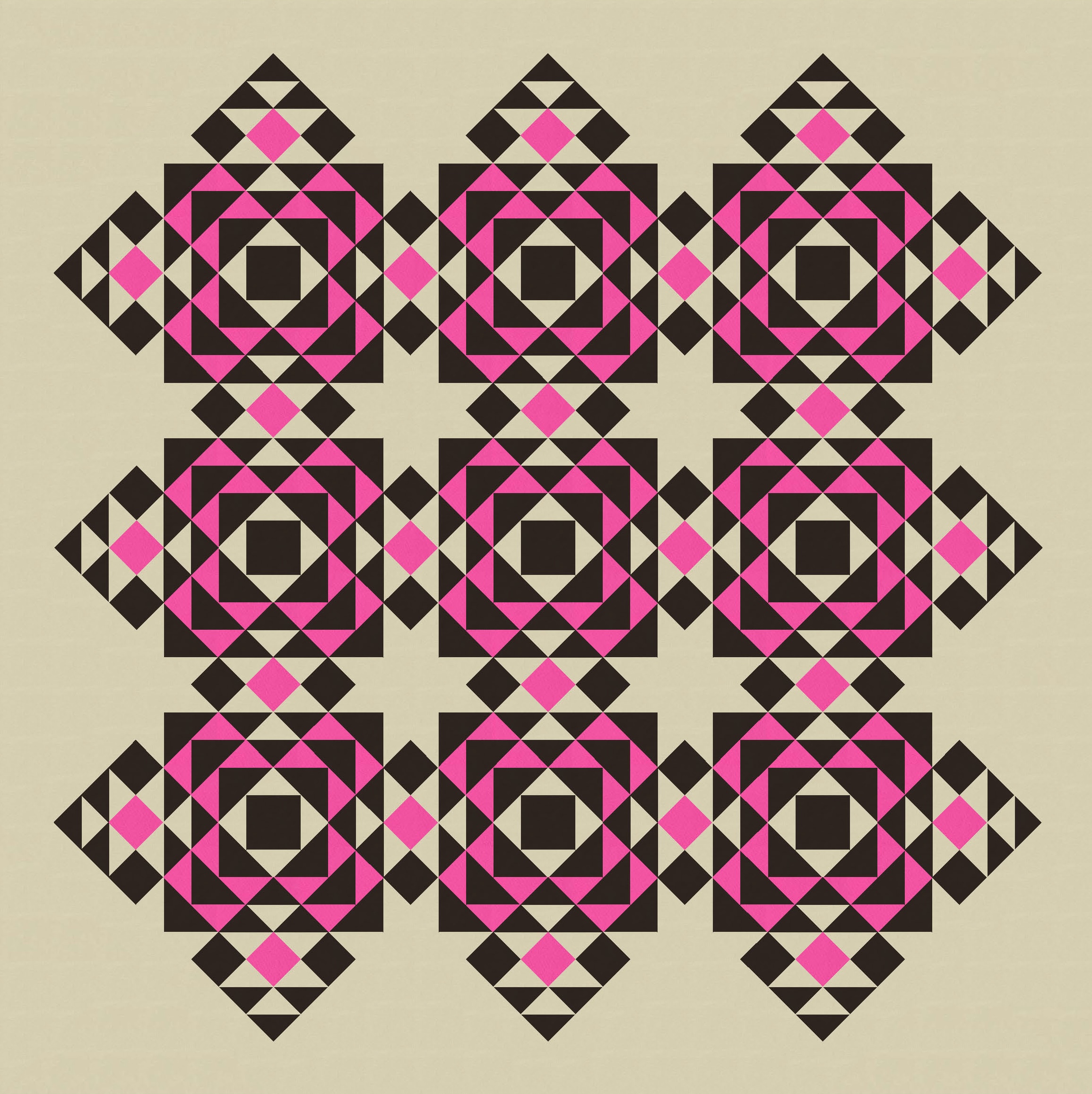
All the angles and edges make for lots of energy and movement – maybe too much? – so I tried paring things back a little. Note that in each of the two pairs of designs below, the block colouring is the same; only the background/border colour has changed. So in the designs on the left, those flying geese units have the centre/big triangles in the same colour as the background, with the outer/smaller triangles acting as borders. On the right, the outer/smaller triangles are the same colour as the background, so effectively disappear.


I think I prefer those flying geese to feel a bit more contained though, so I added in other elements to streamline the outer edges of the design.


I find it useful to switch to a monochrome palette so that I can focus on the design rather than the colour placement. This is a good way (for me, at least) to see what parts of the design might be pulled out or emphasised. It’s just an easy way to see what shapes are available to play with.
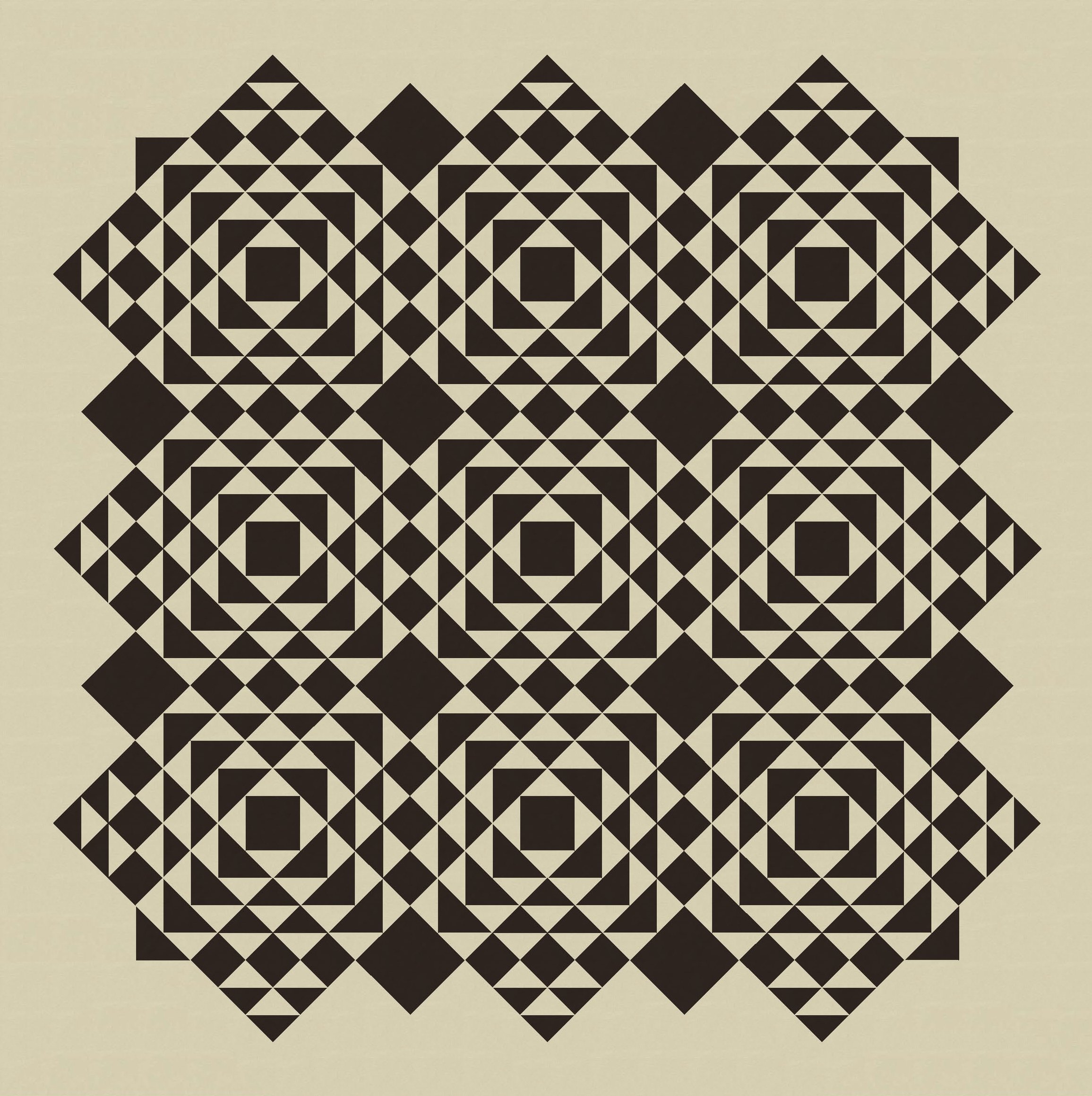

For example, I could pull out those strings of small squares that form borders between the nine larger block-like arrangements of flying geese. (I call them block-like because they’re not the blocks comprising this design; remember I’m using a 25-patch set on point.)
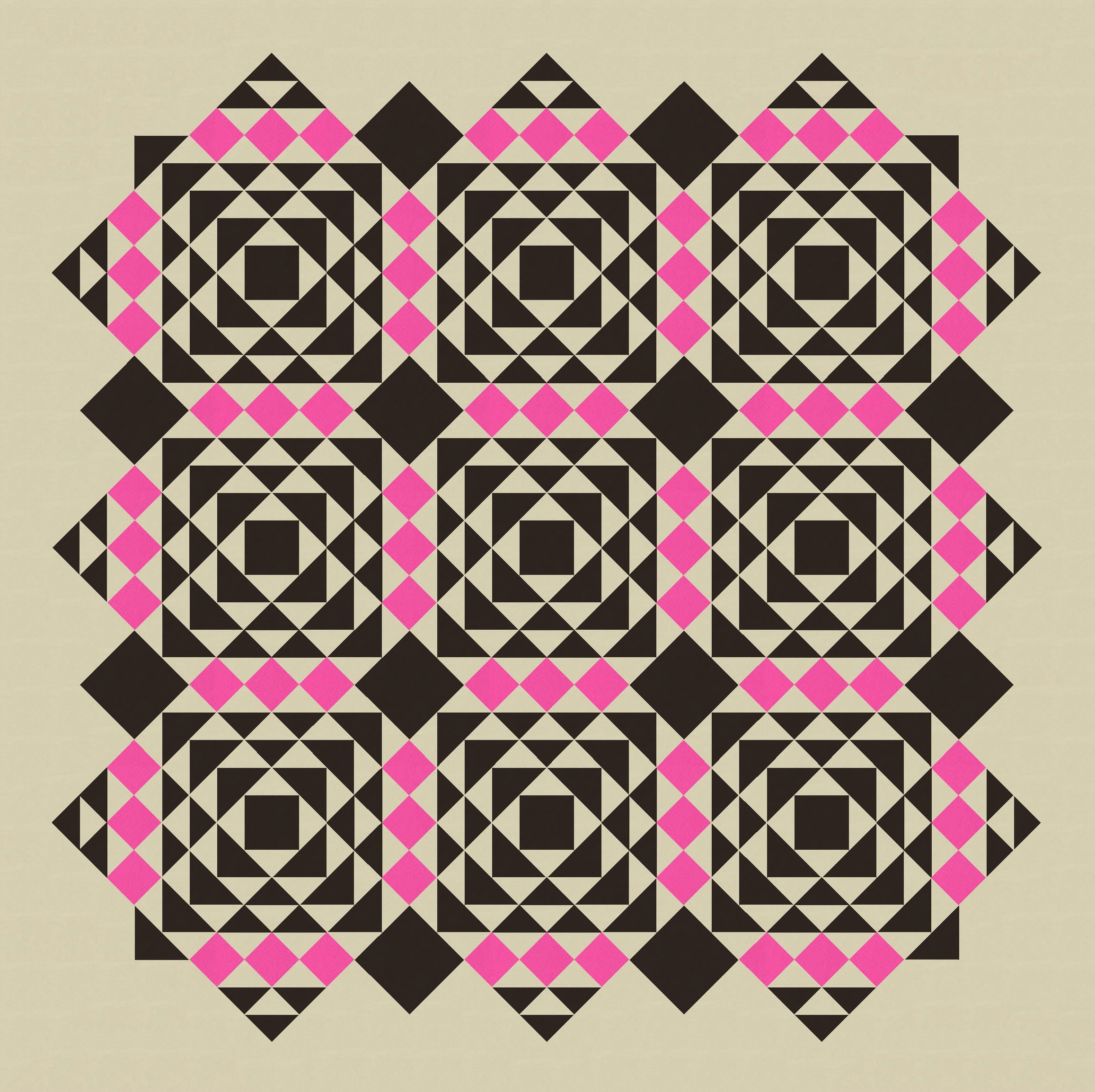

Although there’s lots of background colour mixed through this design, it might still feel a little heavy. I decided to subtract some of those larger squares to free up some space in the middle of the design. That also helps to emphasise those nine large block-like squares.
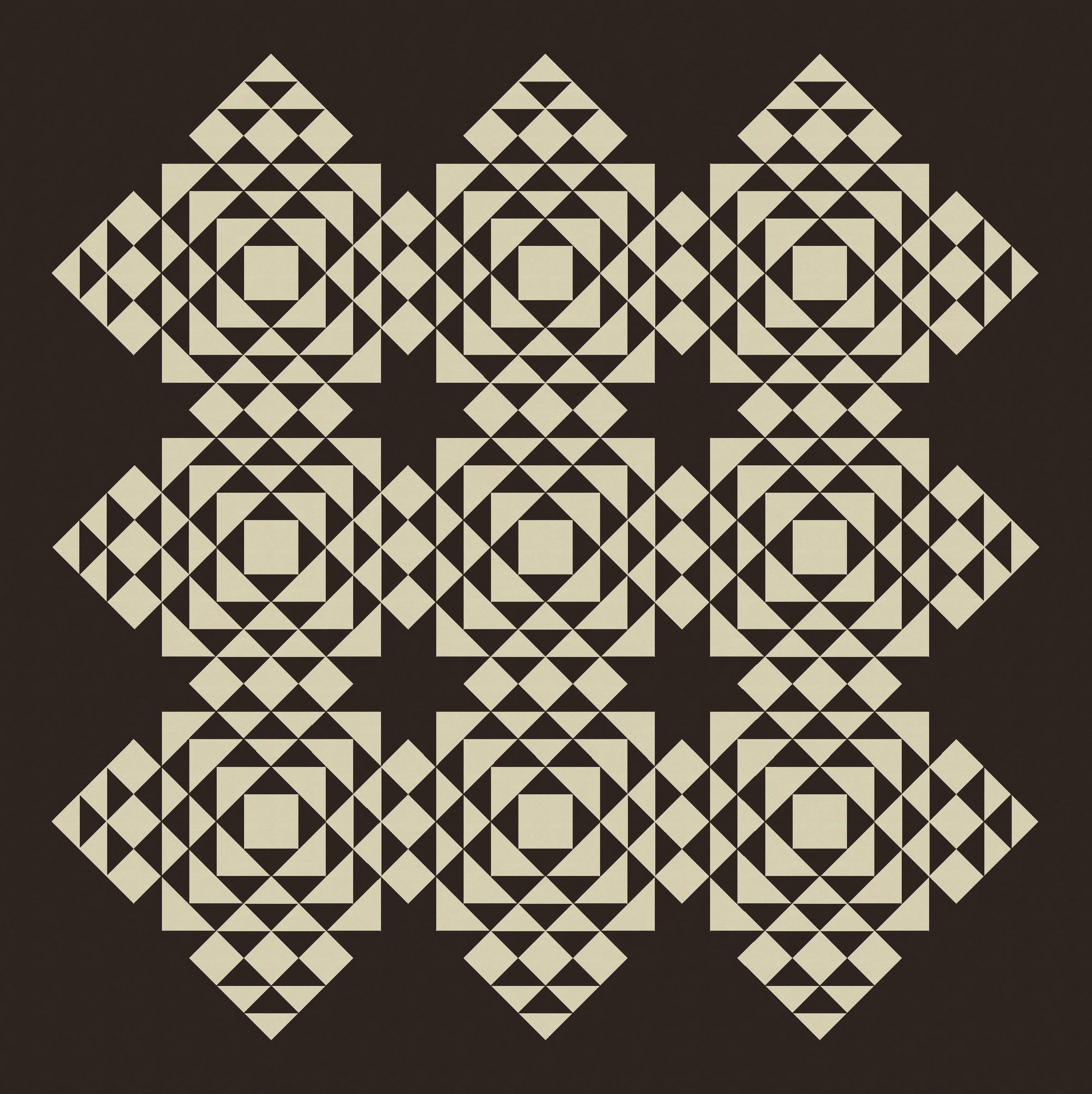
And then I went back to playing with colour palette and placement. I could bang on about all my design choices here, or I could just show you a million versions and let you consider the small decisions that can influence how a design (and the resulting quilt) looks and feels.



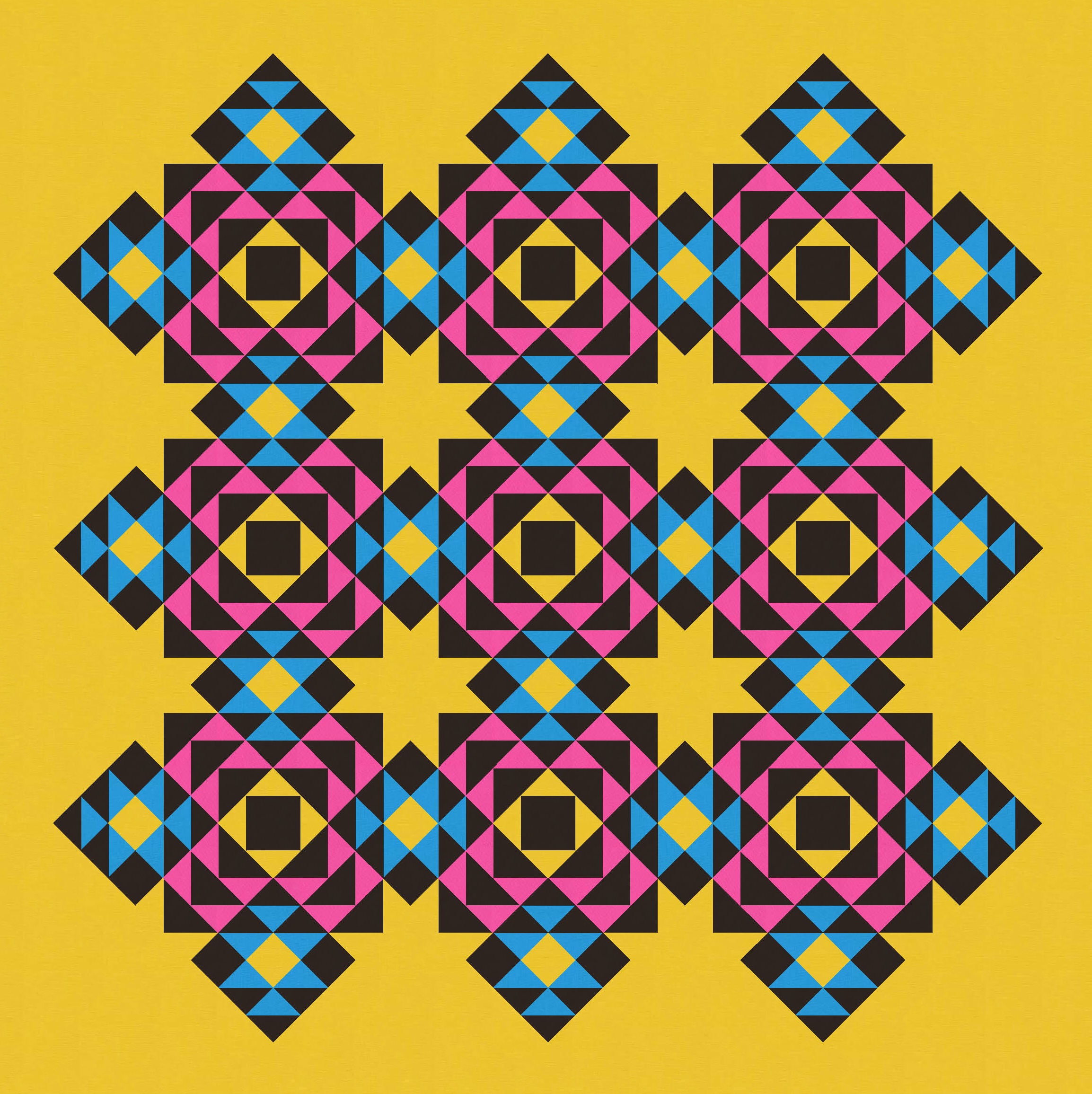
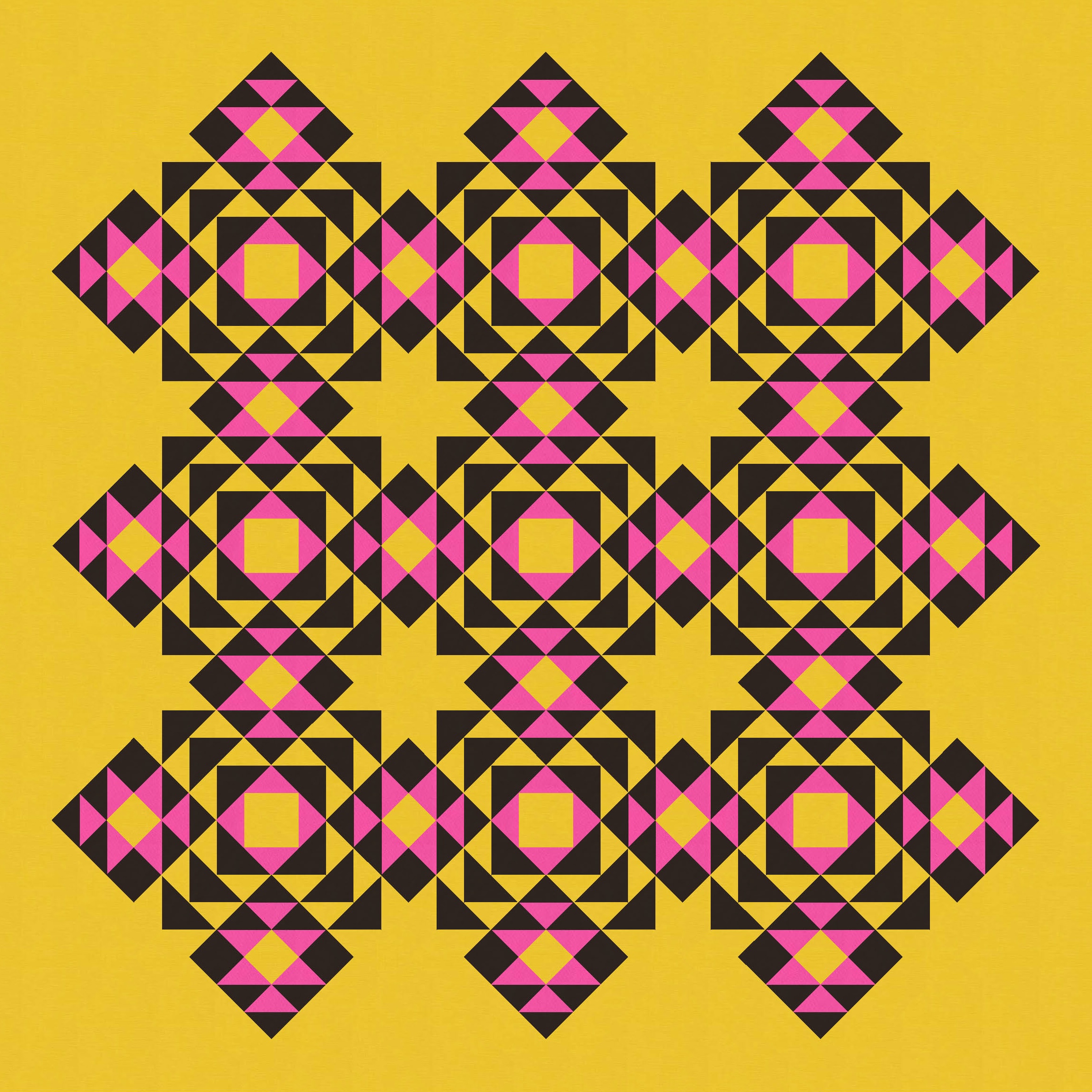
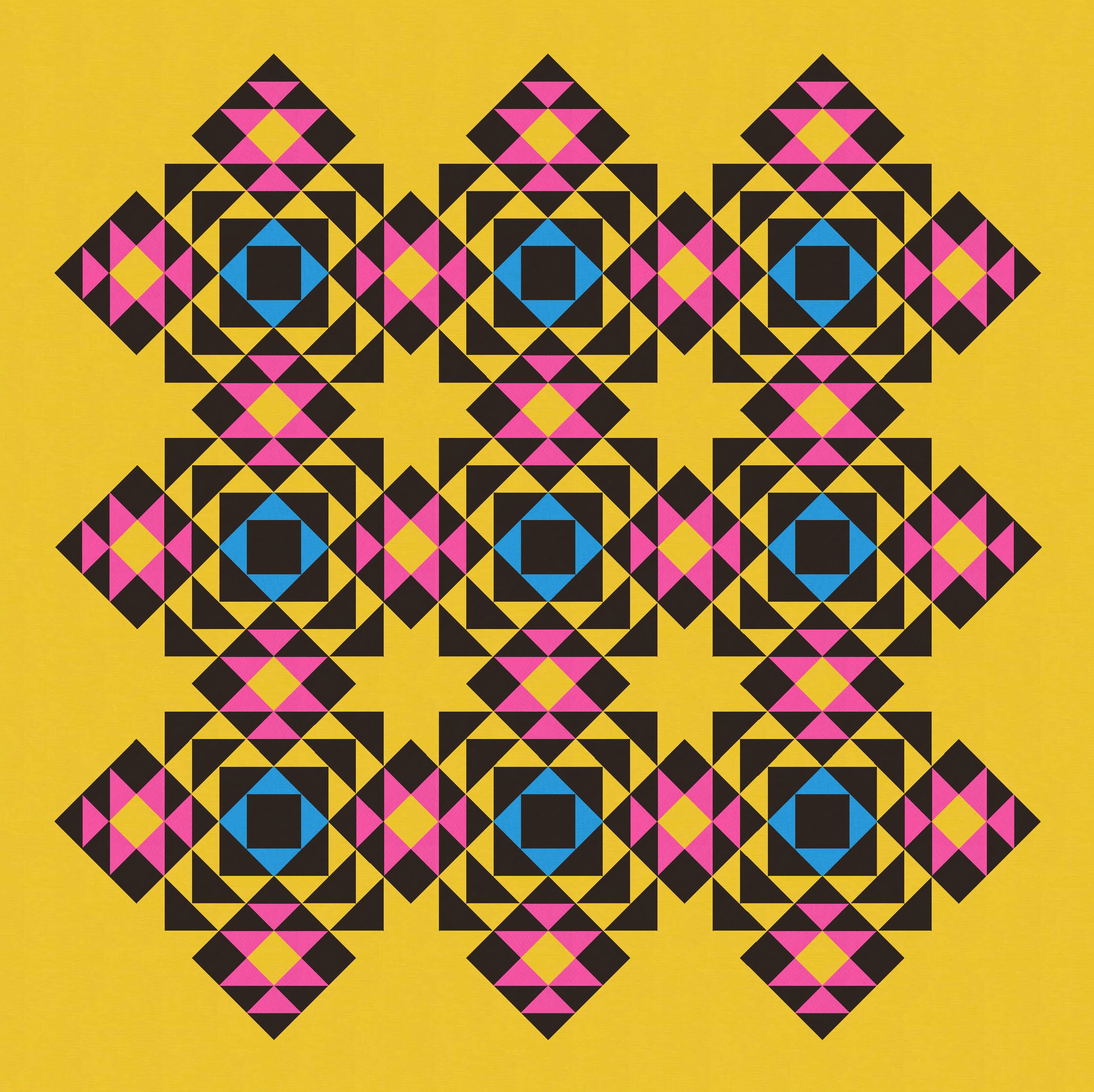

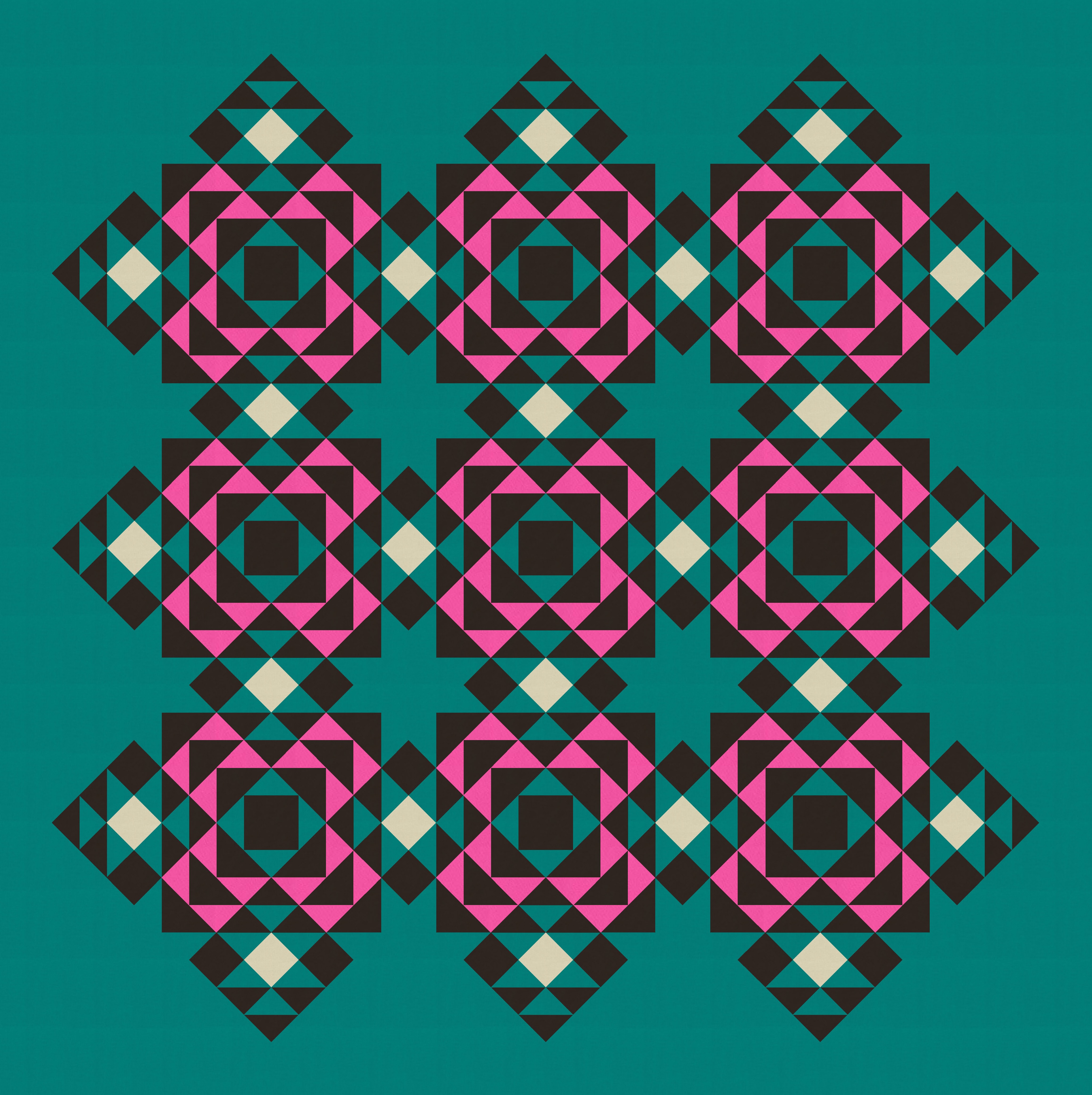
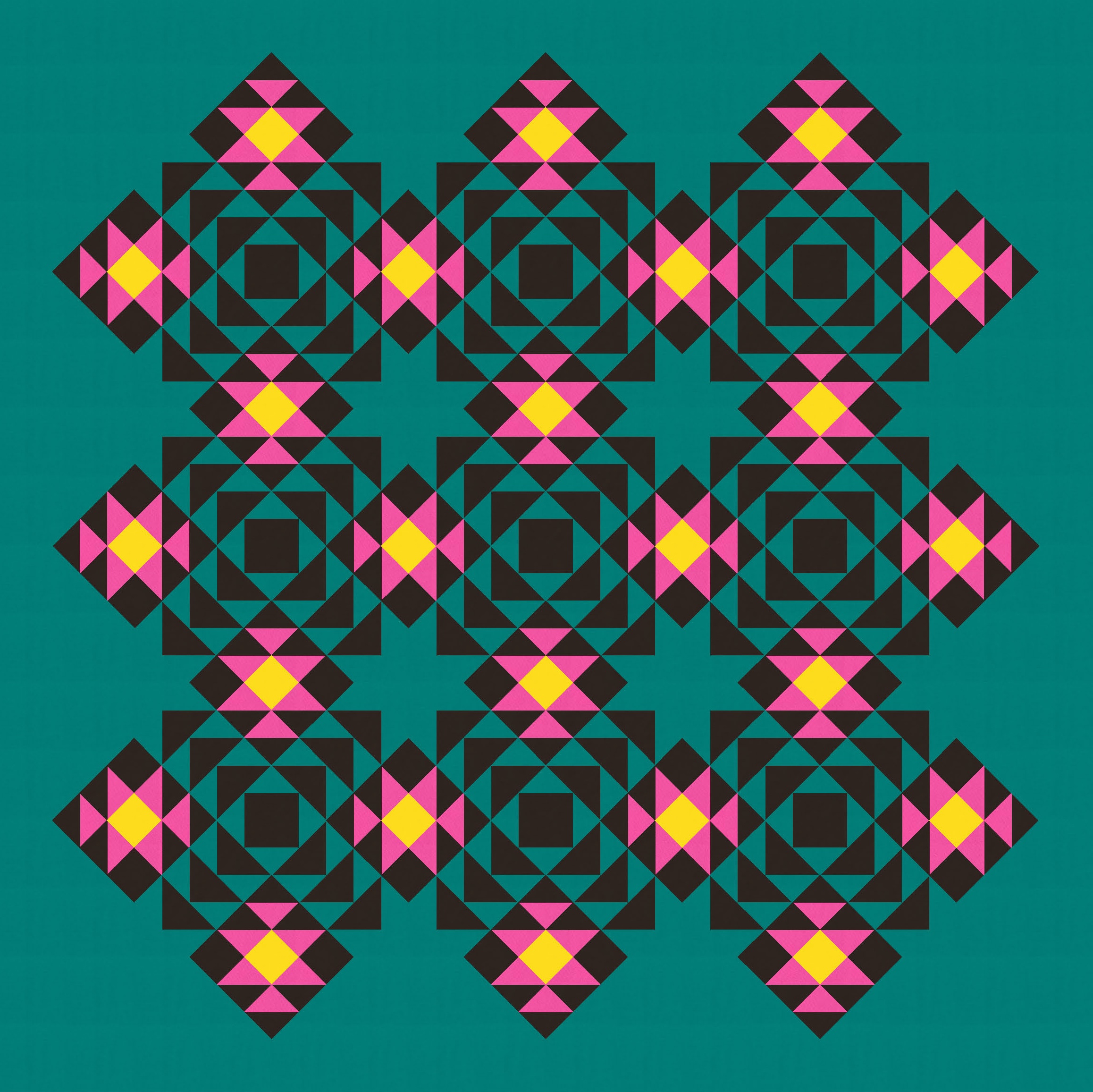
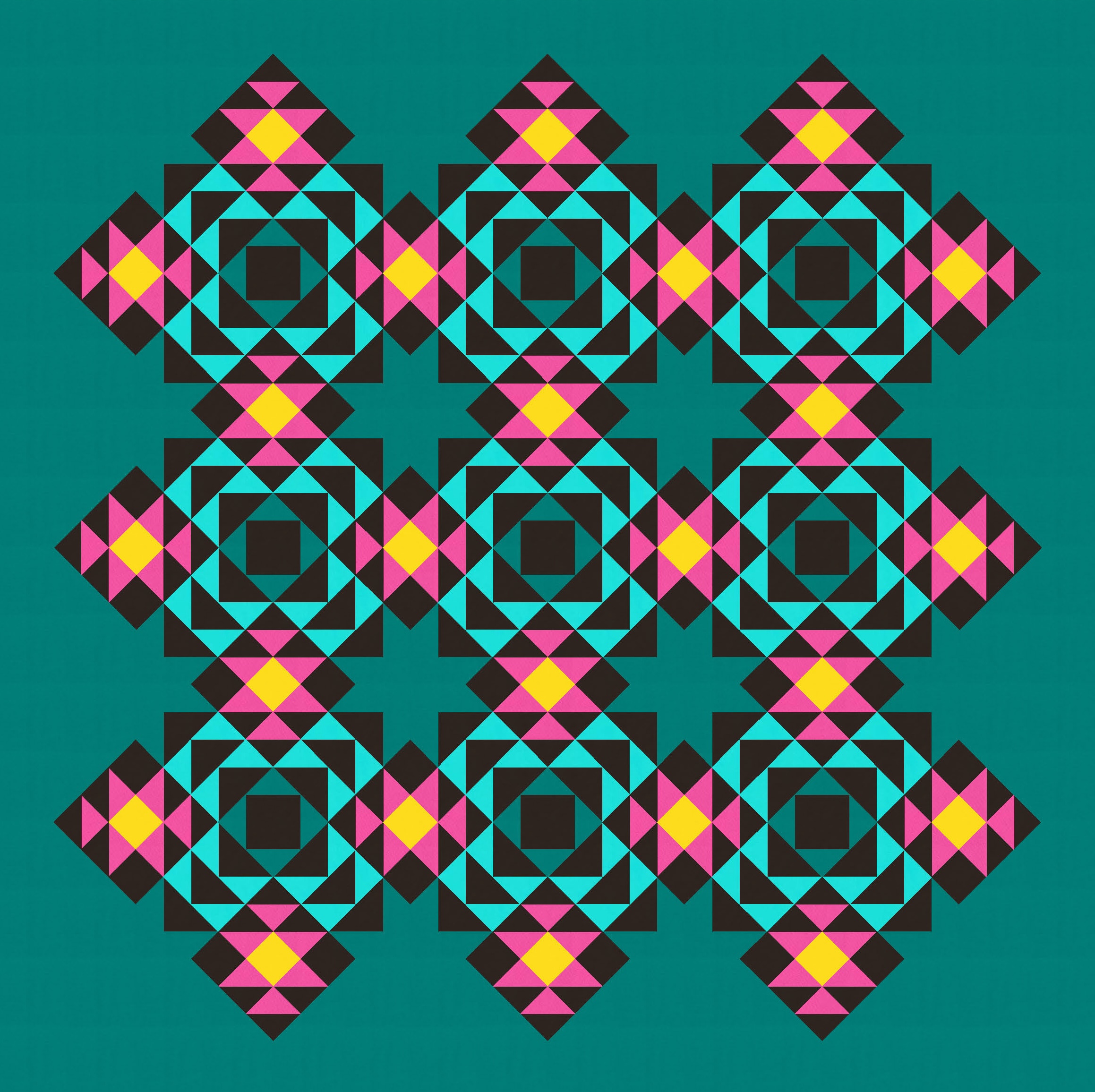

And, because issue #4 of Tara Glastonbury’s Curated Colour arrived in my inbox this week (available on Tara’s website or Etsy), here are a few more versions with selections from Tara’s palette. (Note that I probably always choose the most conservative/comfortable combinations from Tara’s palettes – there are loads more you can play with! If I’m remembering my maths correctly, her 12-colour palettes offer 11,880 combinations of 4 colours 🙂 ).


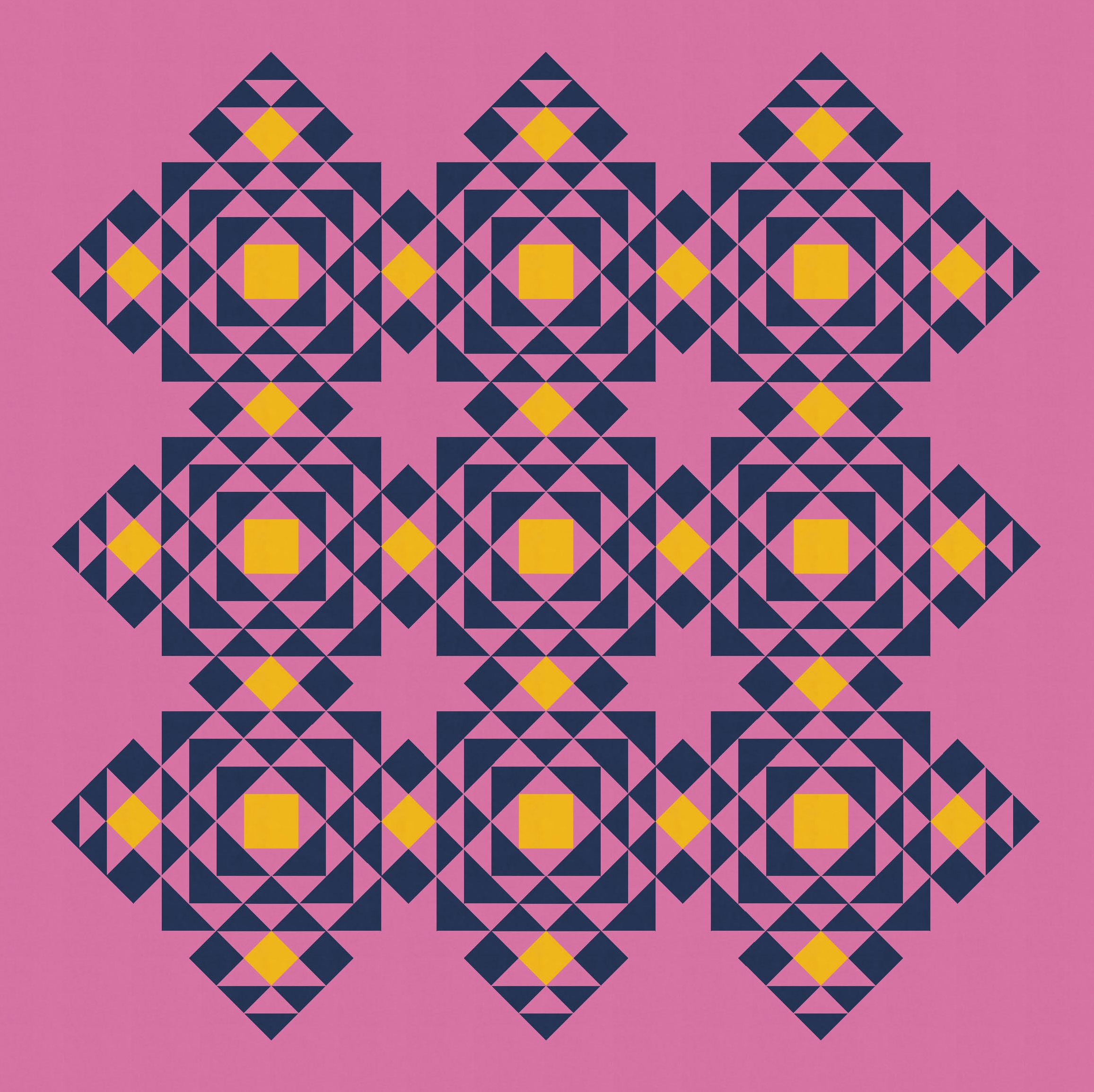
(The green one! And the last one!! Swoon)
I think the most colours I’ve used is five, but there’s room in this design to include a few more if you wanted to. I’ve been fairly conservative in the number of different components within the design that I’ve coloured (for example, treating all flying geese the same); but with so many parts in each block, there are many many more ways you could colour this design.
I kept iterating, of course. I tried replacing all the lone HSTs (those not involved in flying geese) with squares, which introduced some new 9-patches. These versions feel a bit chaotic, but in a fun way (it might feel less fun if I’d used more colour).
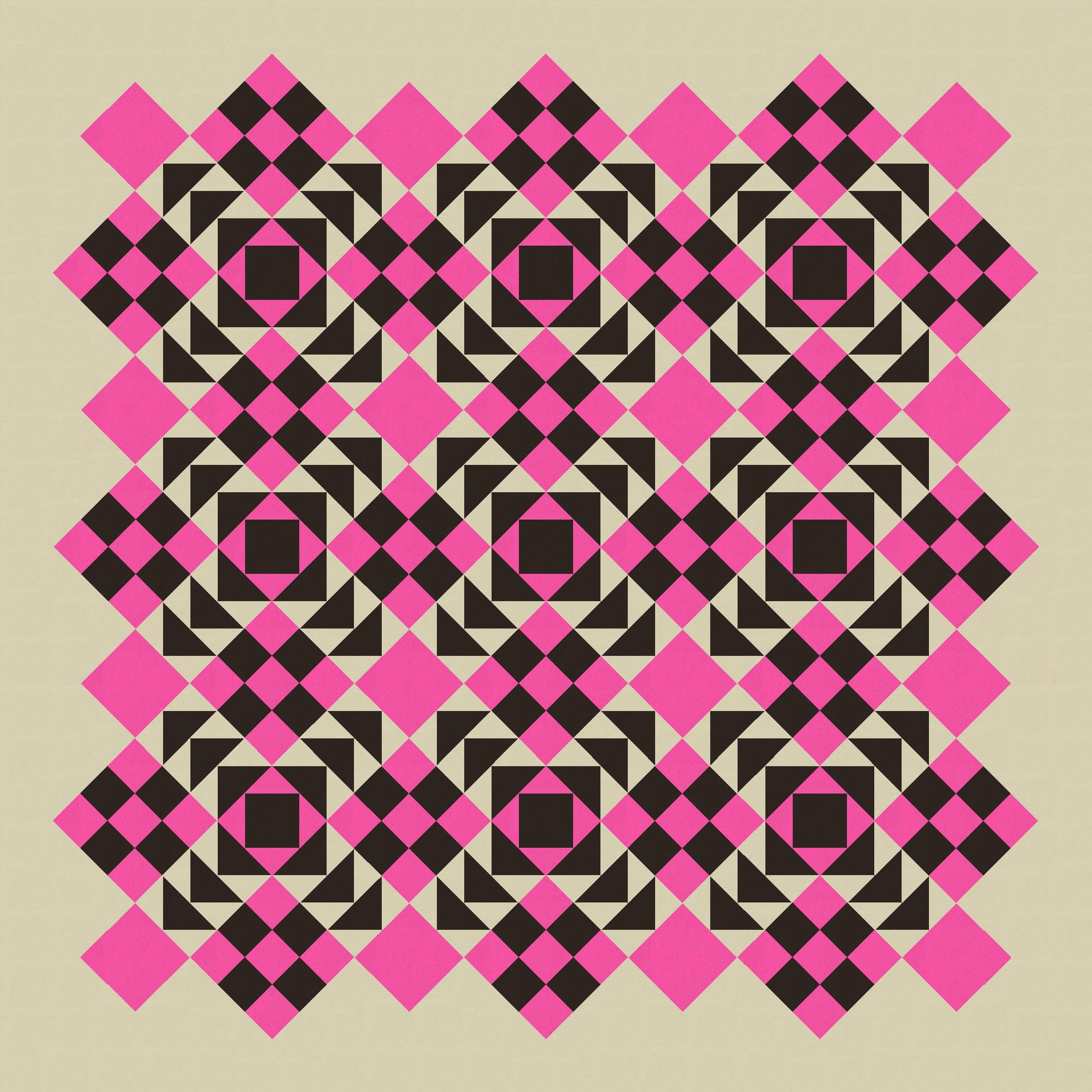
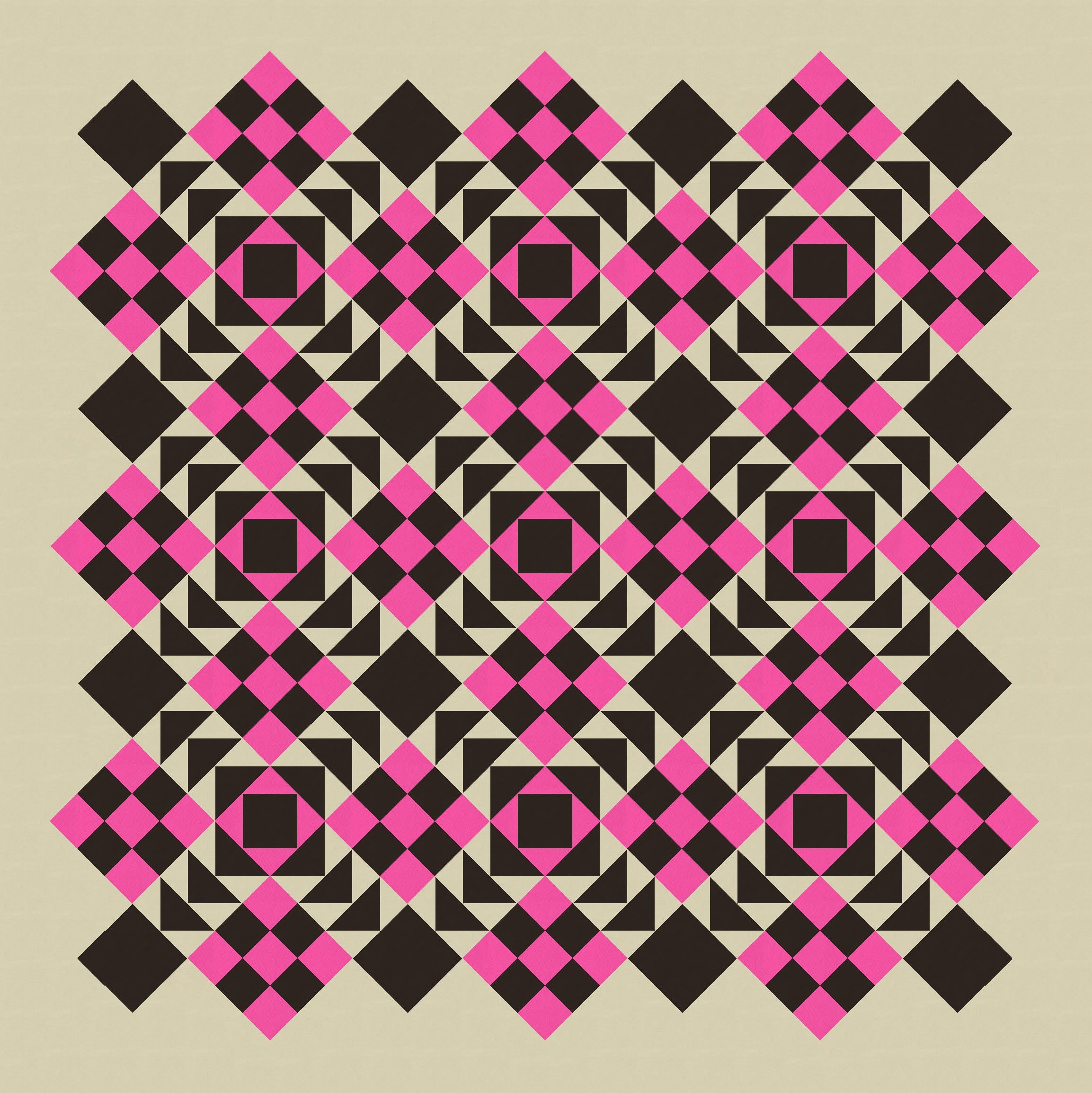
So these designs could all be made using half-square triangles and squares, which are the components of the 25-patch I’ve used as the basic block. But I think you can see that these shapes form larger units, such as flying geese units or even economy blocks. So you could definitely save a few seams by focusing on larger units instead.
And of course, there are ways of making these designs more ‘modern’ by introducing some asymmetry, playing with block placement and scale, and using more interesting colours. Have a play and see what you come up with?
Discover more from Geometriquilt
Subscribe to get the latest posts sent to your email.
