
Sunday sketch #458
If you read the full blog post for last week’s sketch, you’ll be able to spot the single tweak that led to this week’s designs: I changed the squares in the checkerboard blocks to half-square triangles.
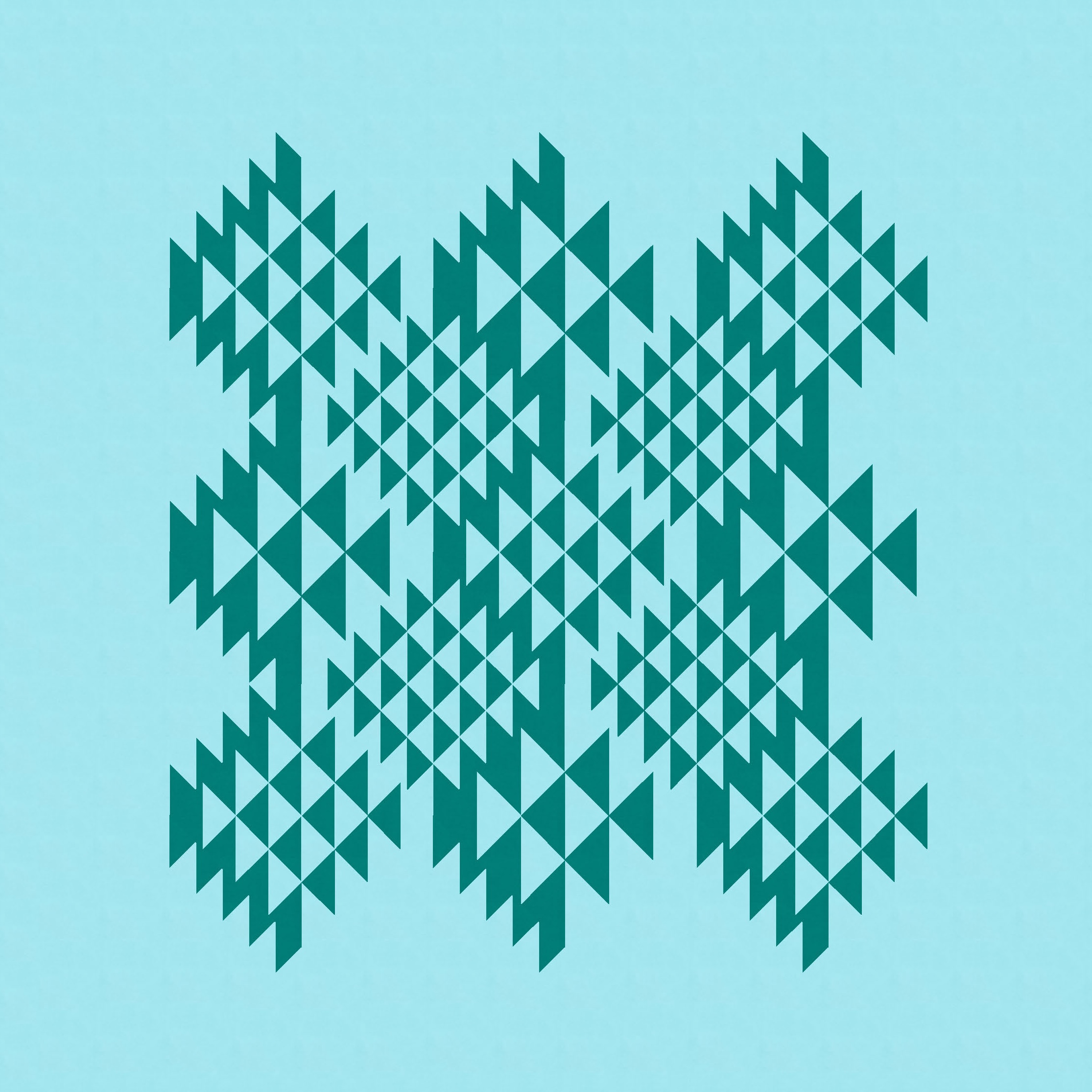
There’s still a mix of 9-patch, 16-patch and 25-patch blocks, and they’re still set on point.
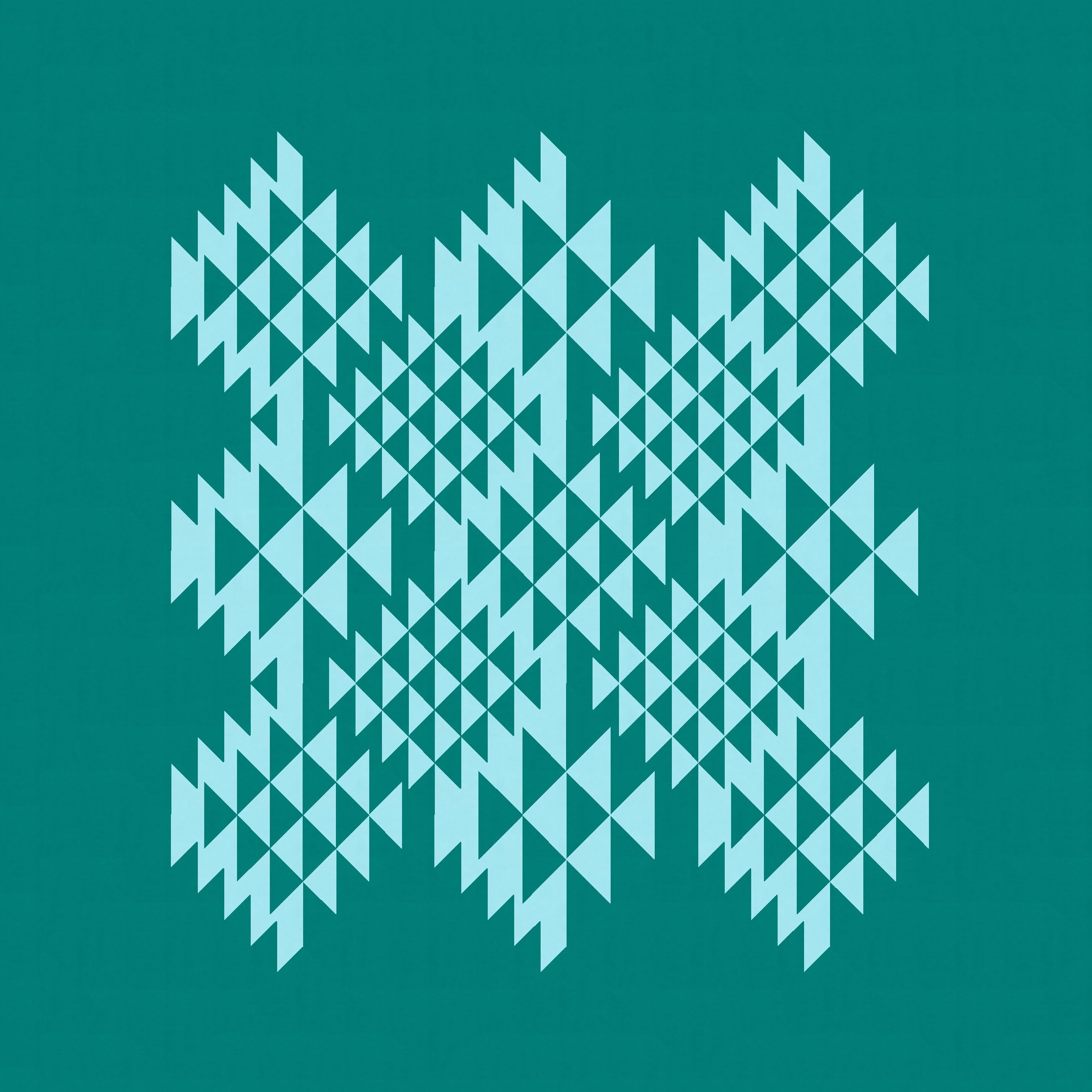
There’s a lot of movement and energy in this design, so I’ve started with a slightly pared-back version. Here’s the fuller layout that more closely resembles the last few designs from last week.
By taking care how I rotated the blocks in each column, I ensured that the straight edges of one colour matched the same colour in adjacent blocks. That creates those channels of solid zig-zags running vertically between the columns.
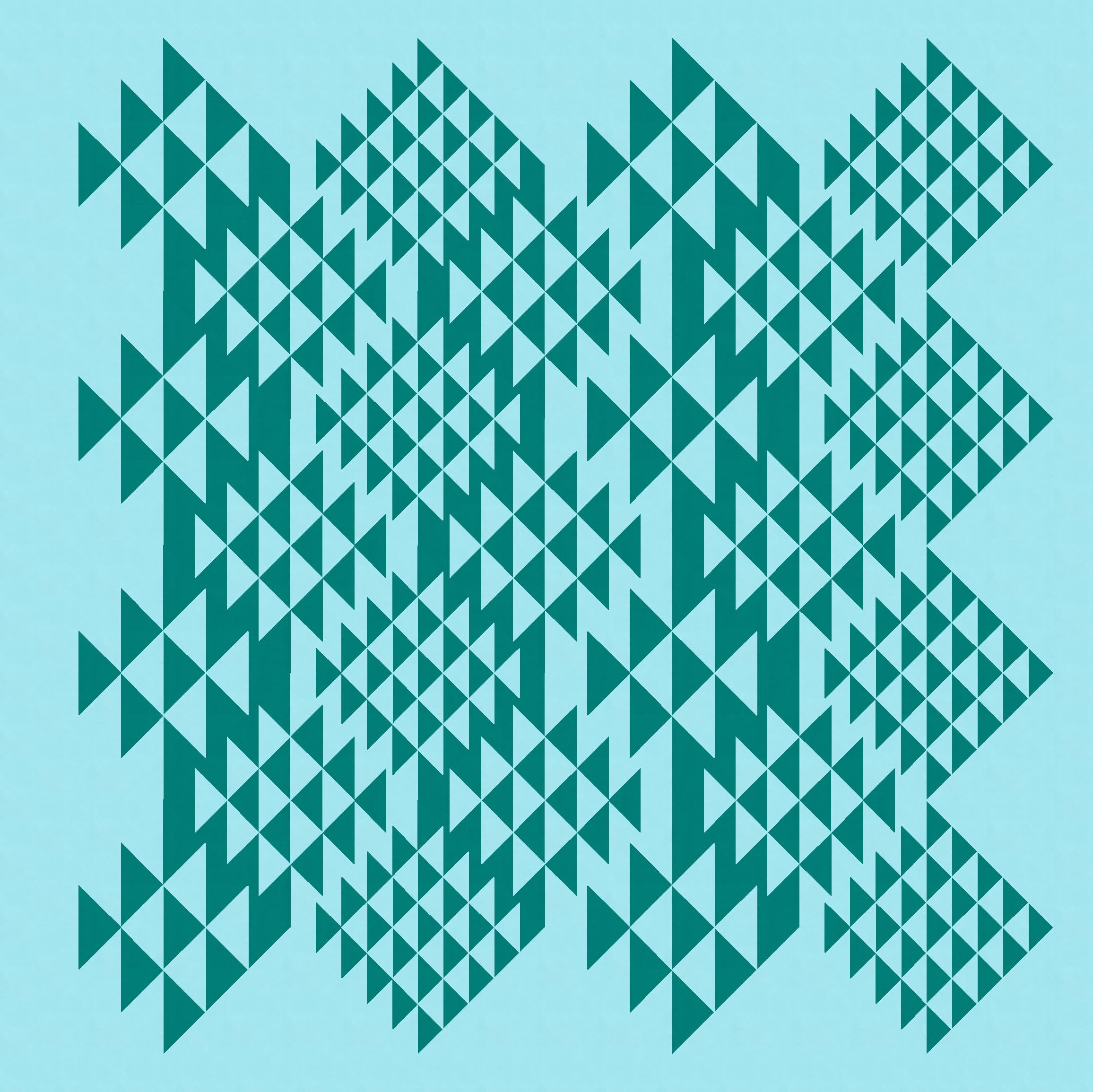
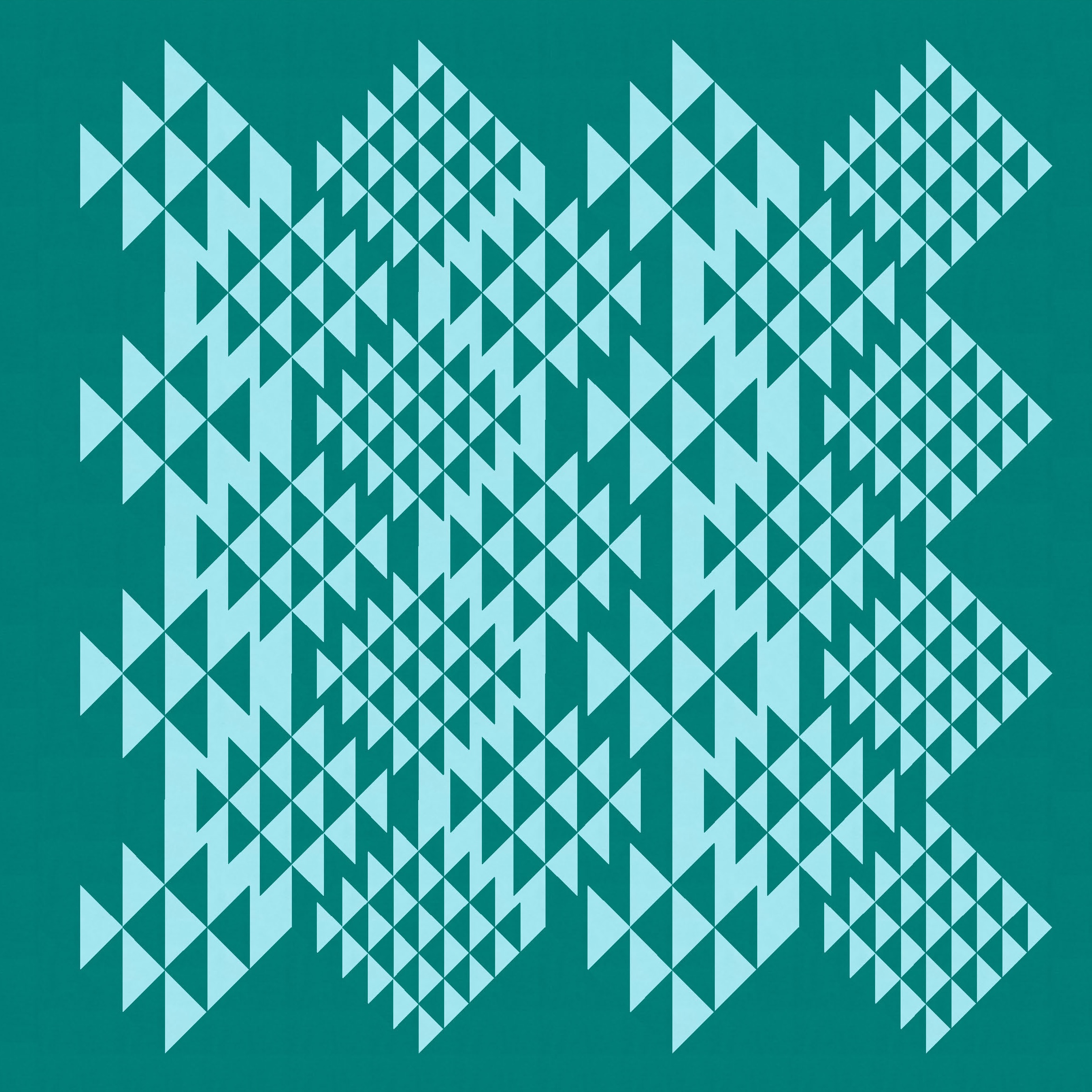
For some reason, I prefer the blocks rotated so the diagonal lines within the smaller squares run horizontally rather than vertically. So let’s switch for a bit.
In these next two versions, the straight edges of the blocks point up or down depending on which background colour I choose; look carefully and you can see that the blocks themselves are coloured exactly the same way in both versions – it’s just the solid blocks that have changed colour.
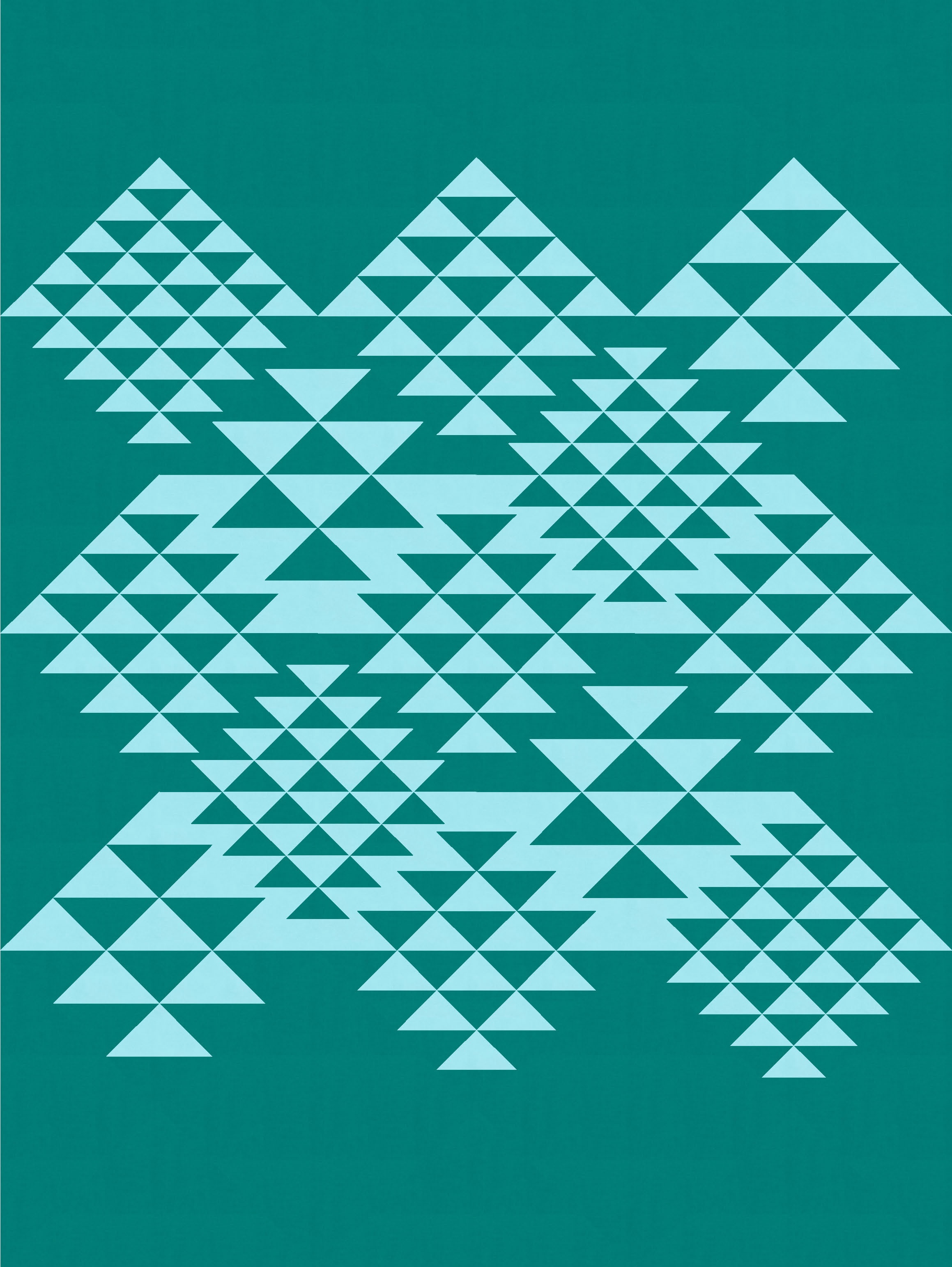
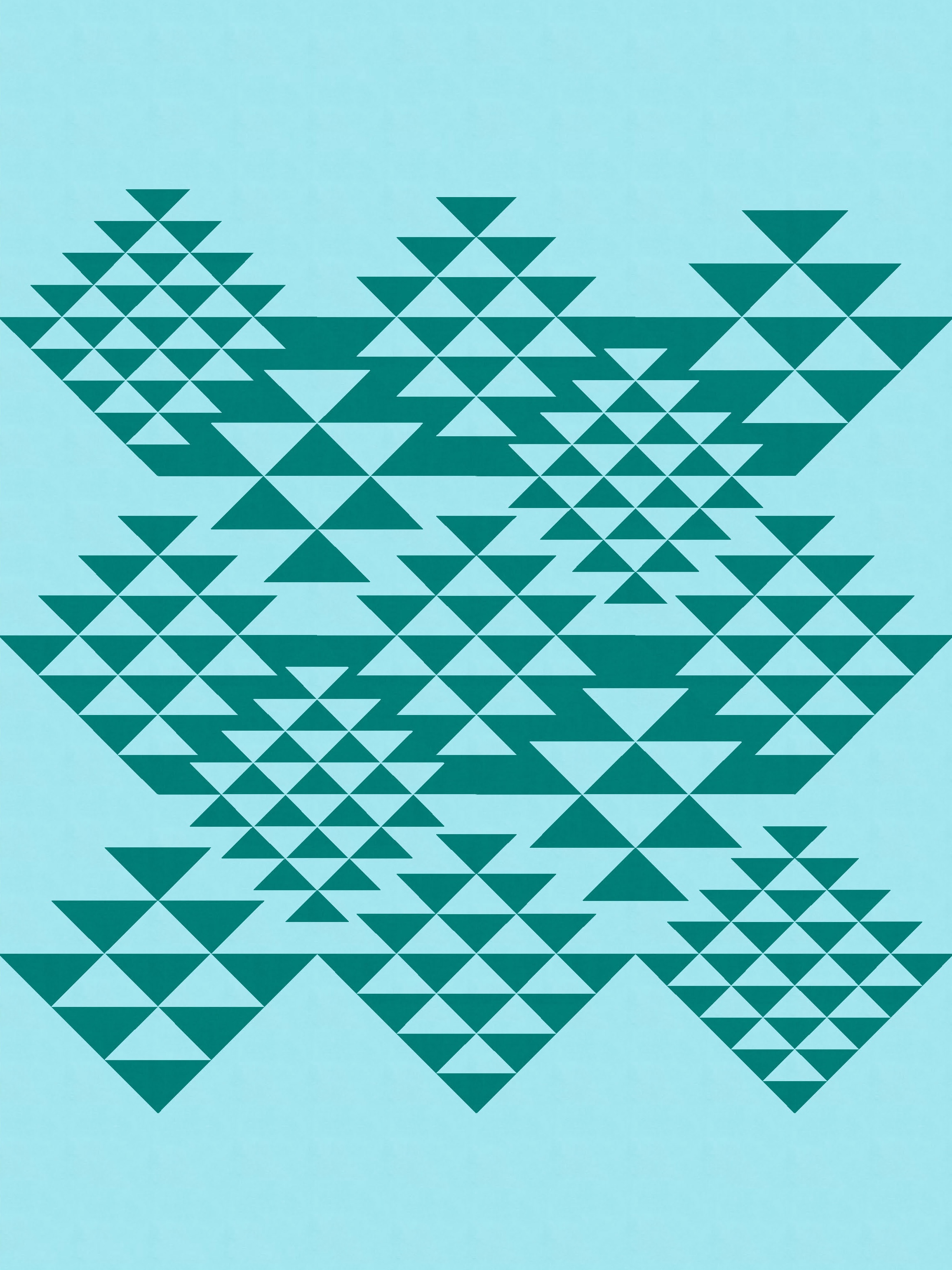
I kinda don’t like those hard edges though. So instead, I can fill those empty spaces with blocks, but colour only the outside triangles within the block. That lets me create those jagged, zig-zag edges again.
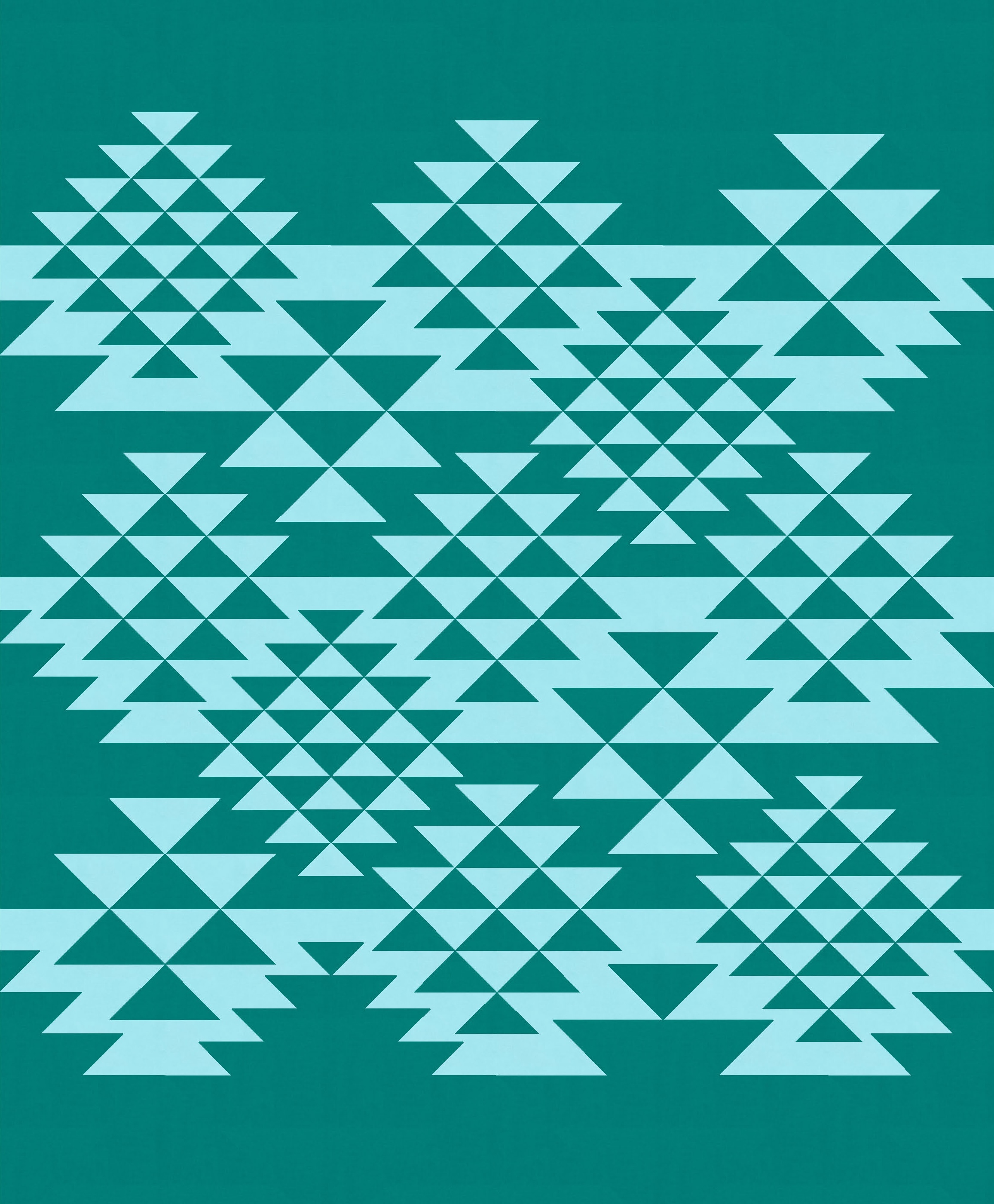
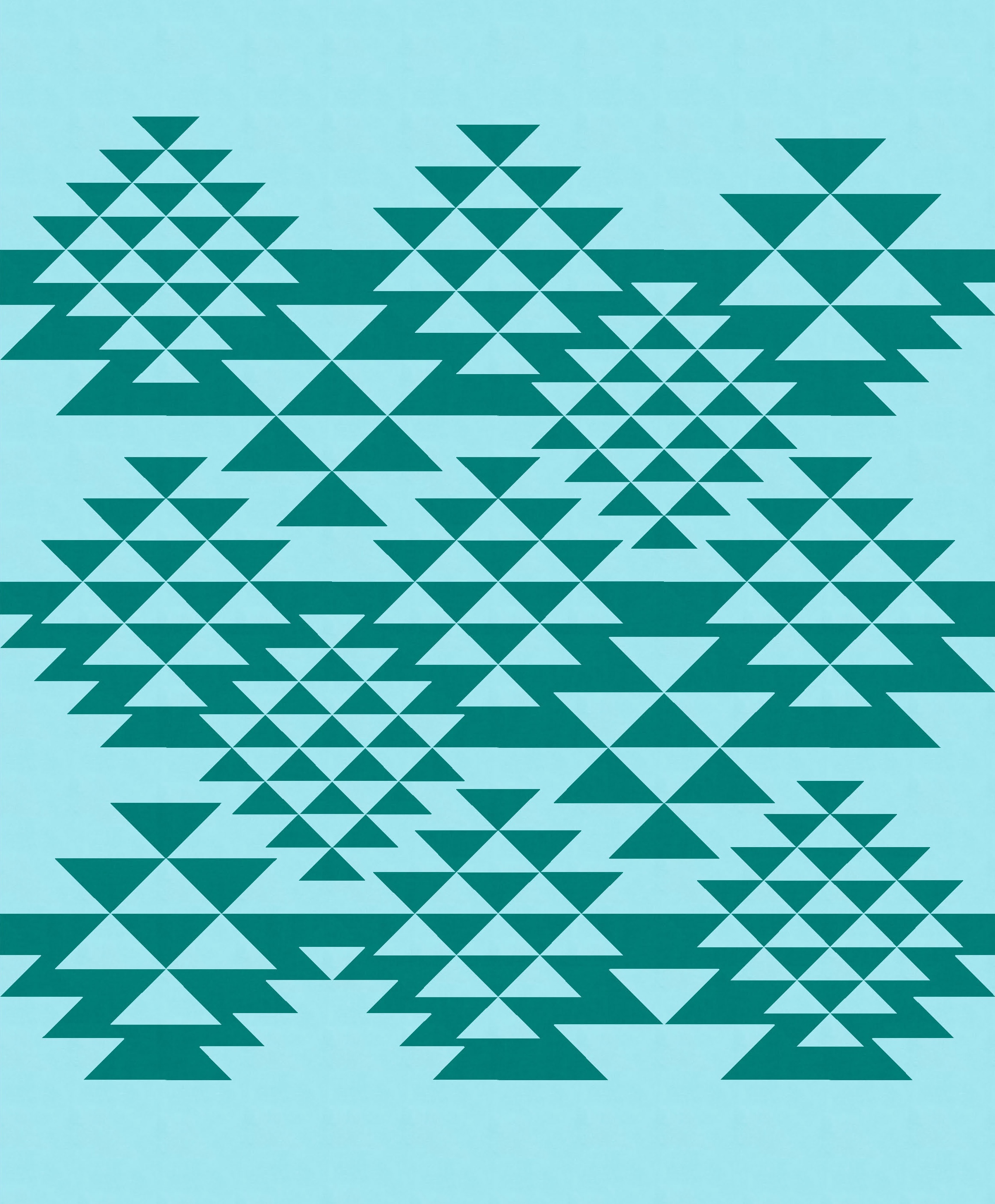
Or I can add a few zig-zag edges at the sides and use different background colours at the top and bottom of the design to offset the triangle colours.
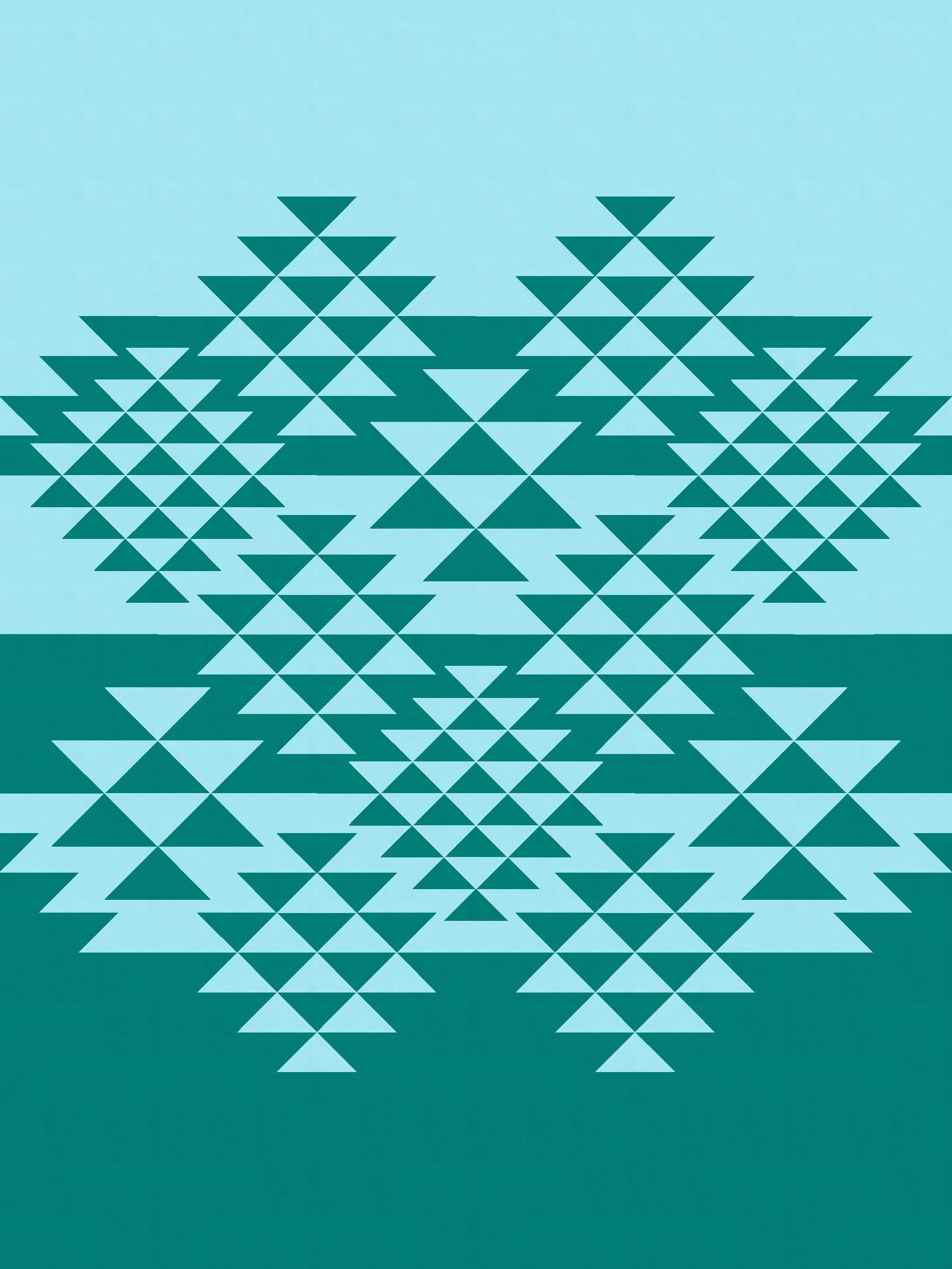
I love all the movement in these designs – the diagonal grid, plus the horizontal lines, keep your eye moving round and round.
I can also set the blocks in a standard layout, so the grid becomes horizontal/vertical and the lines between the triangles run diagonally. Those solid channels between the blocks are still there, also running diagonally now. And I can just use solid colour for some of the top left and bottom right blocks to let those triangles hang free.
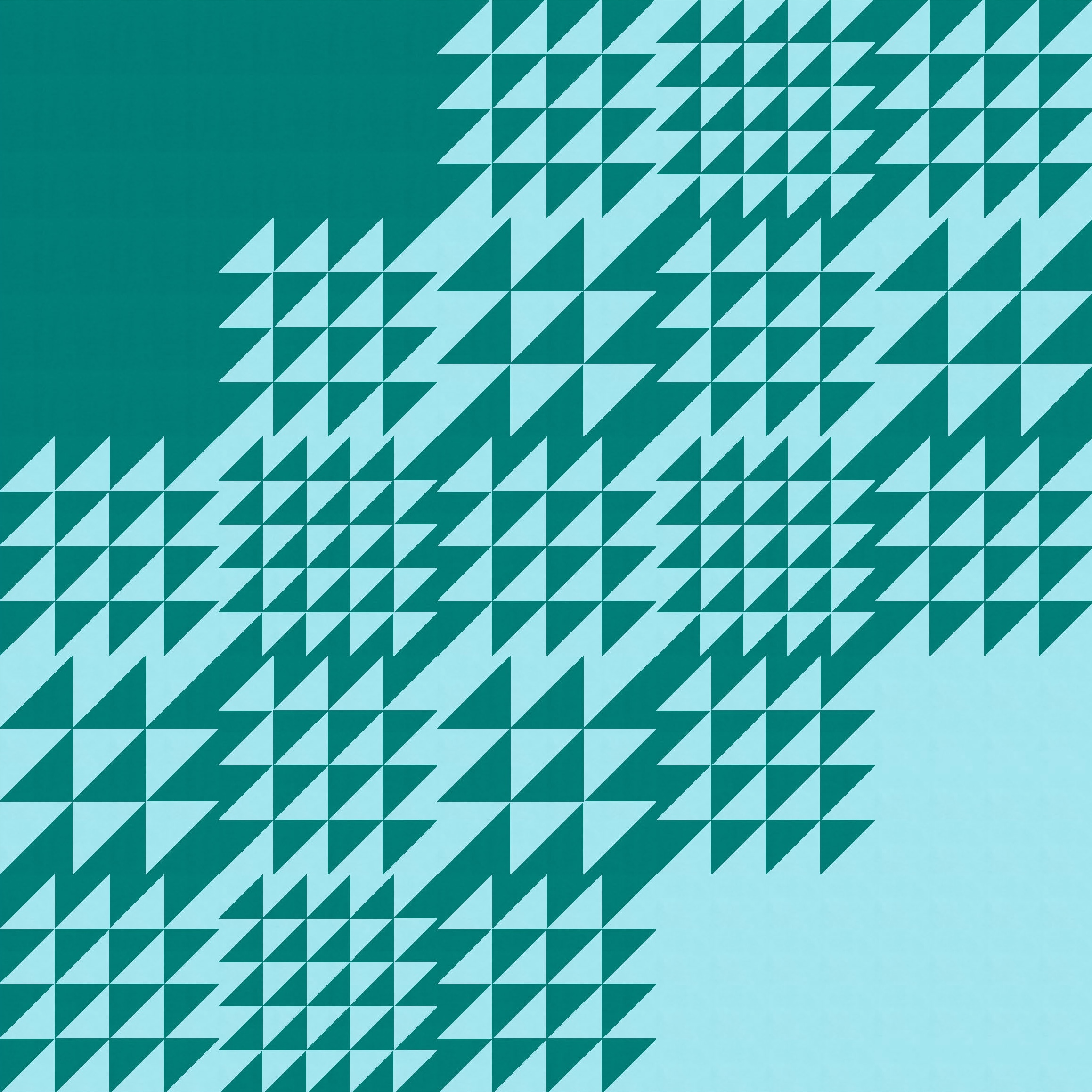
I kinda even like a full frame of blocks: there’s so much going on, but the two-colour palette helps to control the chaos (mostly).
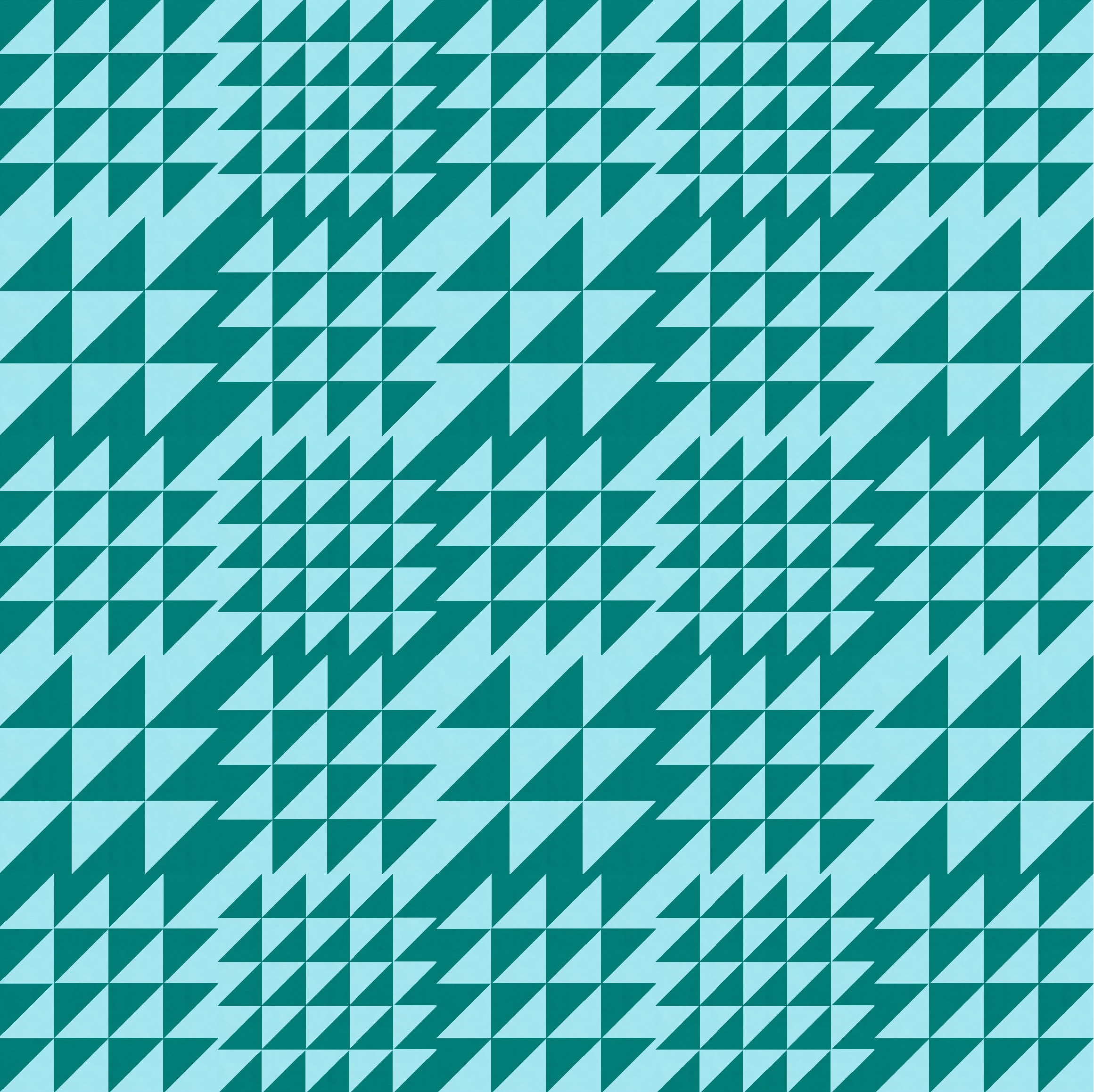
Just as last week’s design required only squares to make into a quilt, this week’s requires only half-square triangles (in three sizes). I think these designs would work well as improv (that is, not requiring precision to make the HSTs); there’s not a lot of points-matching, and I think the designs would work even with a bit of wonkiness.
I’ve used a two-colour palette here, but I think you could also expand that. I don’t love the hard lines that are created when each block is coloured separately, but using one colour consistently across all the blocks helps to reduce the busy-ness.
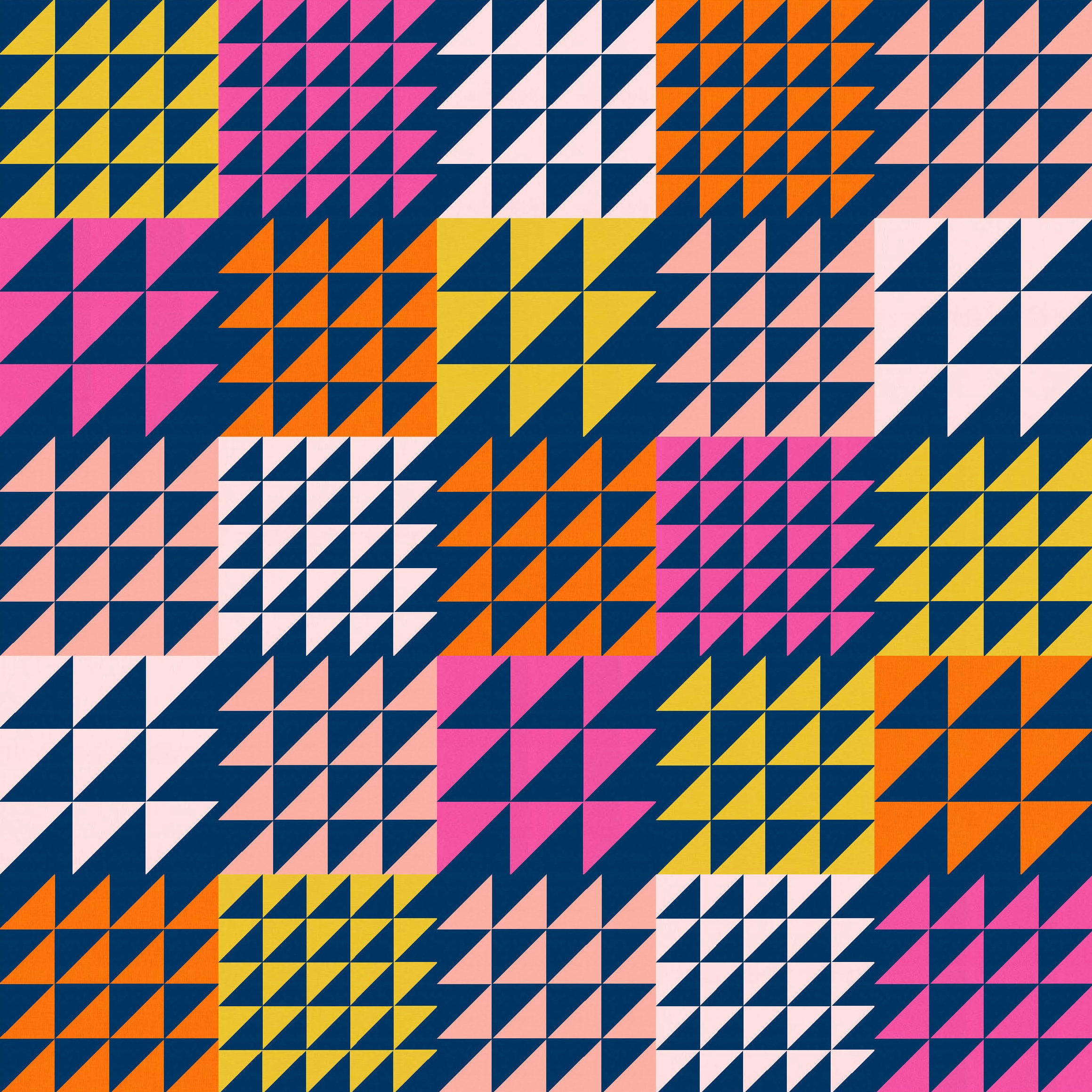
Or interconnected blocks could be coloured the same, emphasising that diagonal movement again.

I still feel like the two-colour version packs more of a punch, but this last version’s growing on me. Maybe in slightly fewer colours with some more order to the colour placement?
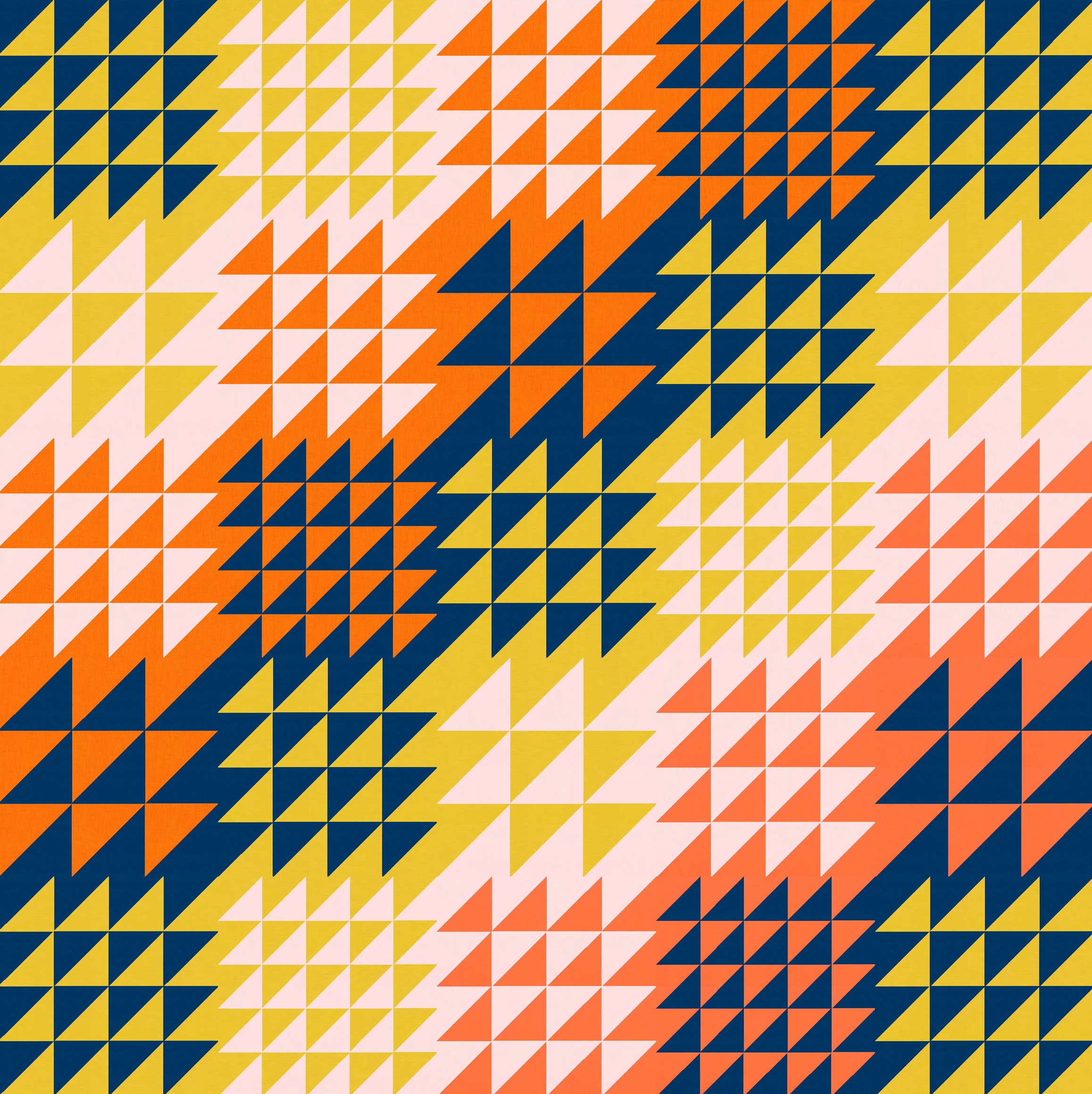
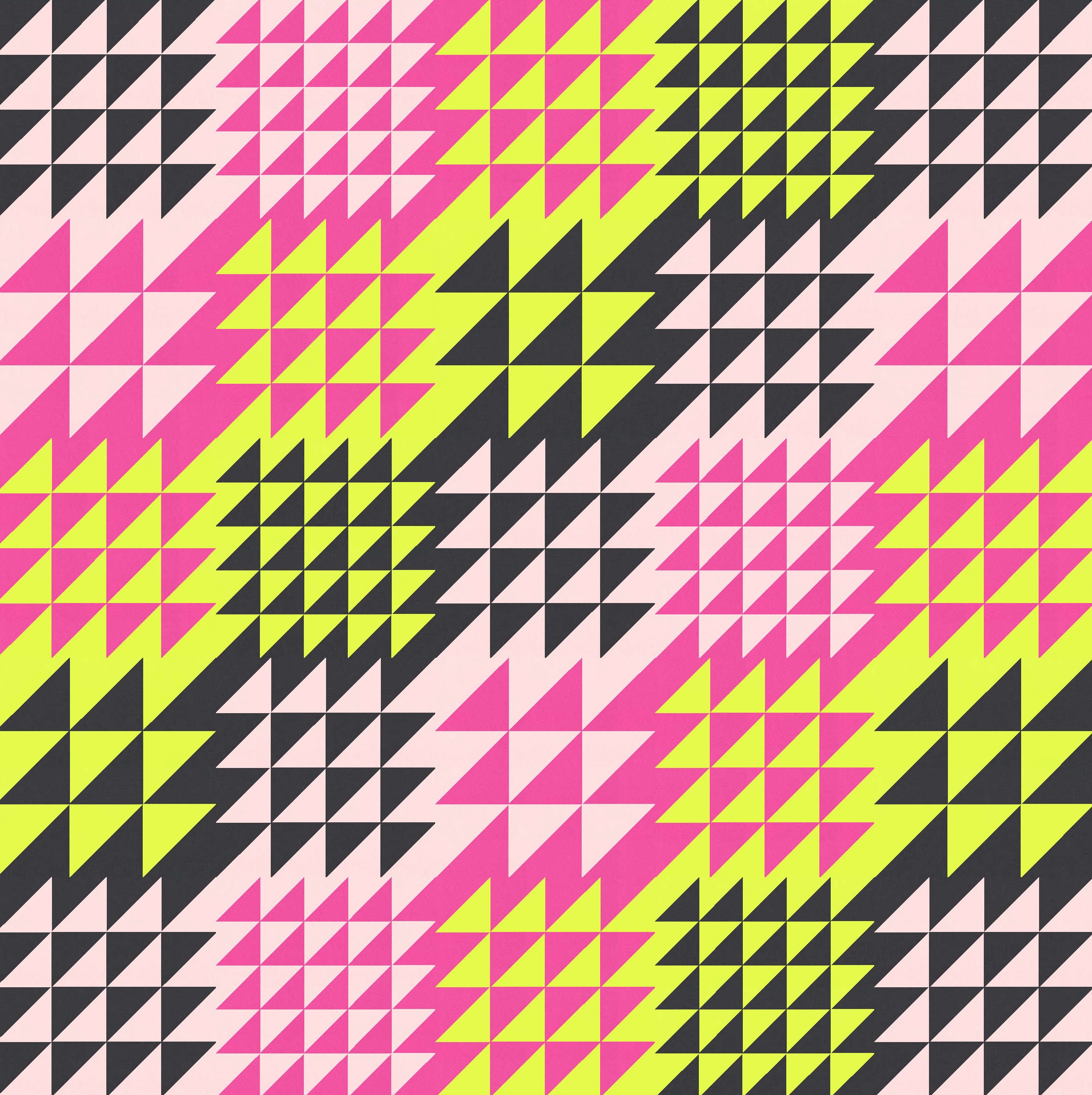
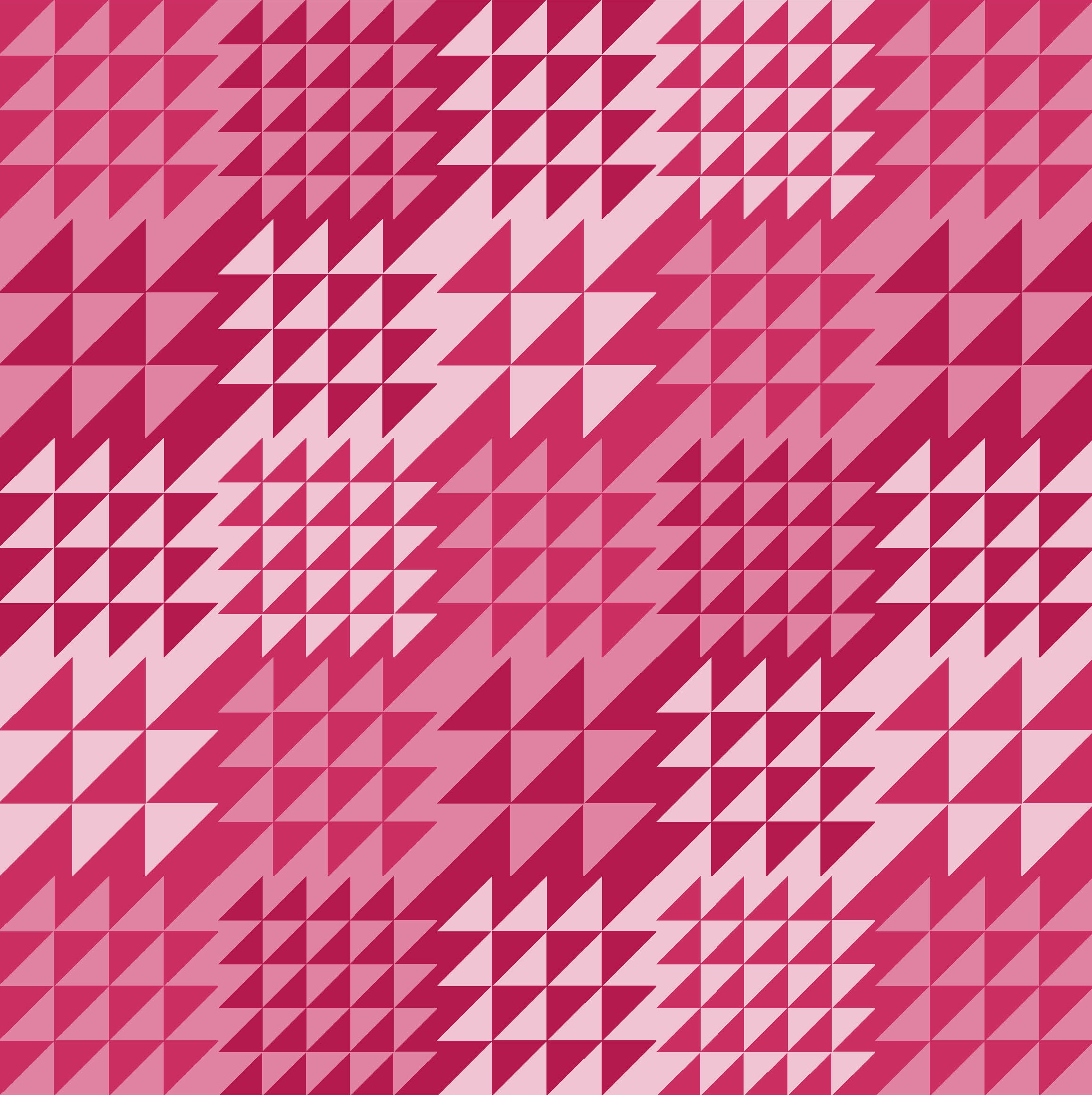
I’m very tempted to make this one, but imprecisely – that is, not trimming my HSTs to the exact right size and piecing them carefully to ensure matching points, etc. I don’t think it’d be that noticeable (even to me!) if a few points weren’t matched perfectly. I’ll have to add it to my (looooong) list of possible makes.
I tried this concept with one more shape, replacing the half-square triangles with something else, so check in next week to see the next iteration of this design.
Discover more from Geometriquilt
Subscribe to get the latest posts sent to your email.
