
Sunday sketch #457
If you’re ever in need of some quilty inspiration, go to an art exhibit. I don’t think it matters which one – any artist, any genre, any gallery, any time. If you keep an open mind, you’re bound to see or feel something that will spark some quilt design ideas.
Earlier this month I went to Adelaide to see the ‘Radical Textiles’ exhibition at the Art Gallery of South Australia and the Chihuly exhibition of glass sculptures in the Adelaide Botanic Garden. I also popped in to the Museum of Economic Botany in the gardens on a friend’s recommendation. It’s a beautiful building with thousands of specimens and models of plants with medicinal, practical and commercial uses. Of course, there is quilty inspiration everywhere, and I was struck by the geometric patterns on these woven pandanus mats from Fiji.
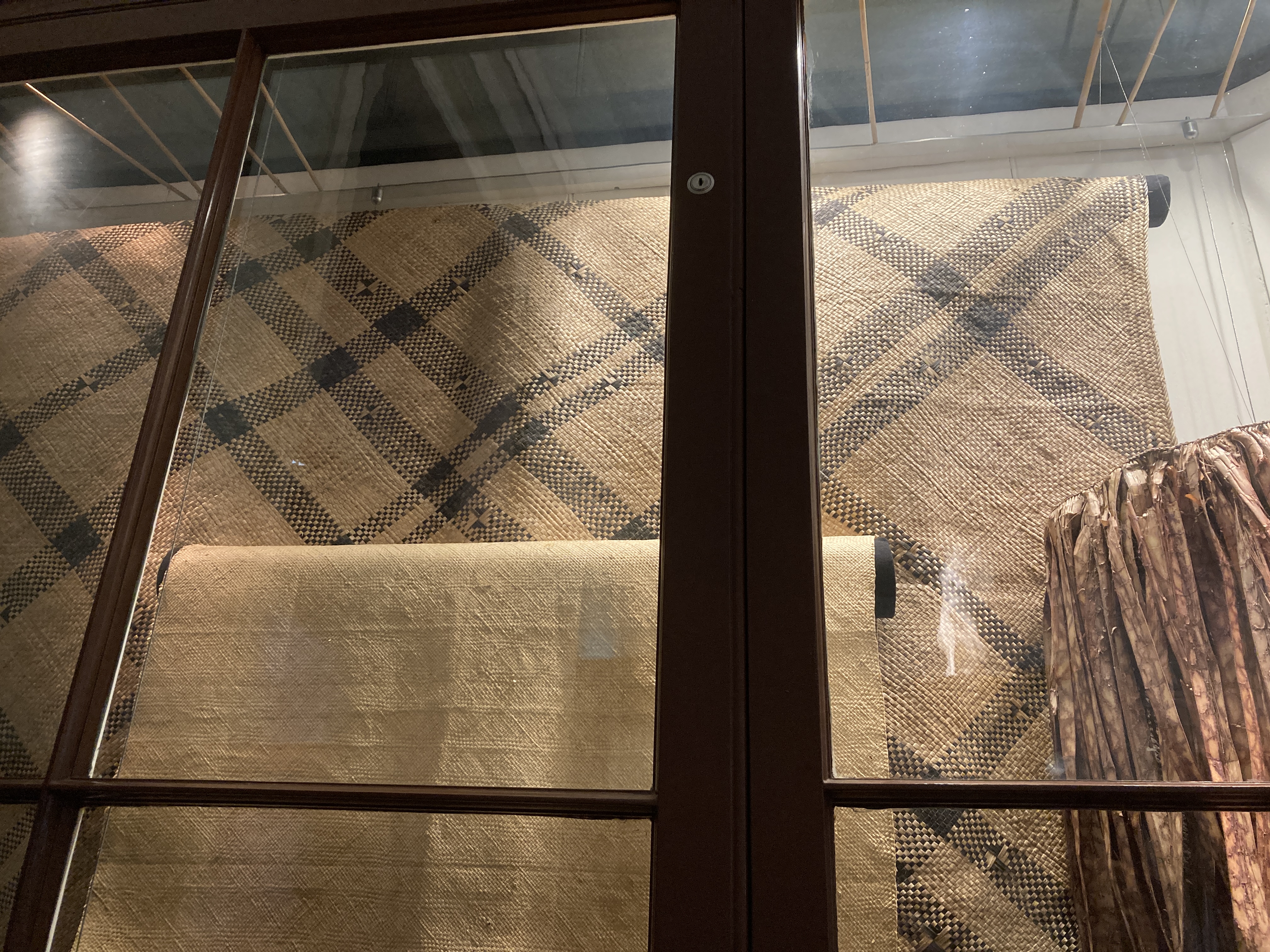

According to the signage, all of the items in this cabinet were “transferred to the South Australian Museum” (from Fiji, I assume) in 1948 (!). Almost 80 years old (at least), and they all looked like they could’ve been made yesterday.
I took inspiration from the rolled-up mat in the right pic, which features a checkerboard-like square repeated vertically. (I say checkerboard-like, because the block is not just a 16-patch of squares; the middle row is split in half laterally, creating a row of half-square triangles instead. It’s hard to see that level of detail in my pic.)
Anyway, I decided to try a checkerboard of checkerboard blocks. I stuck with a similar palette of black and beige.
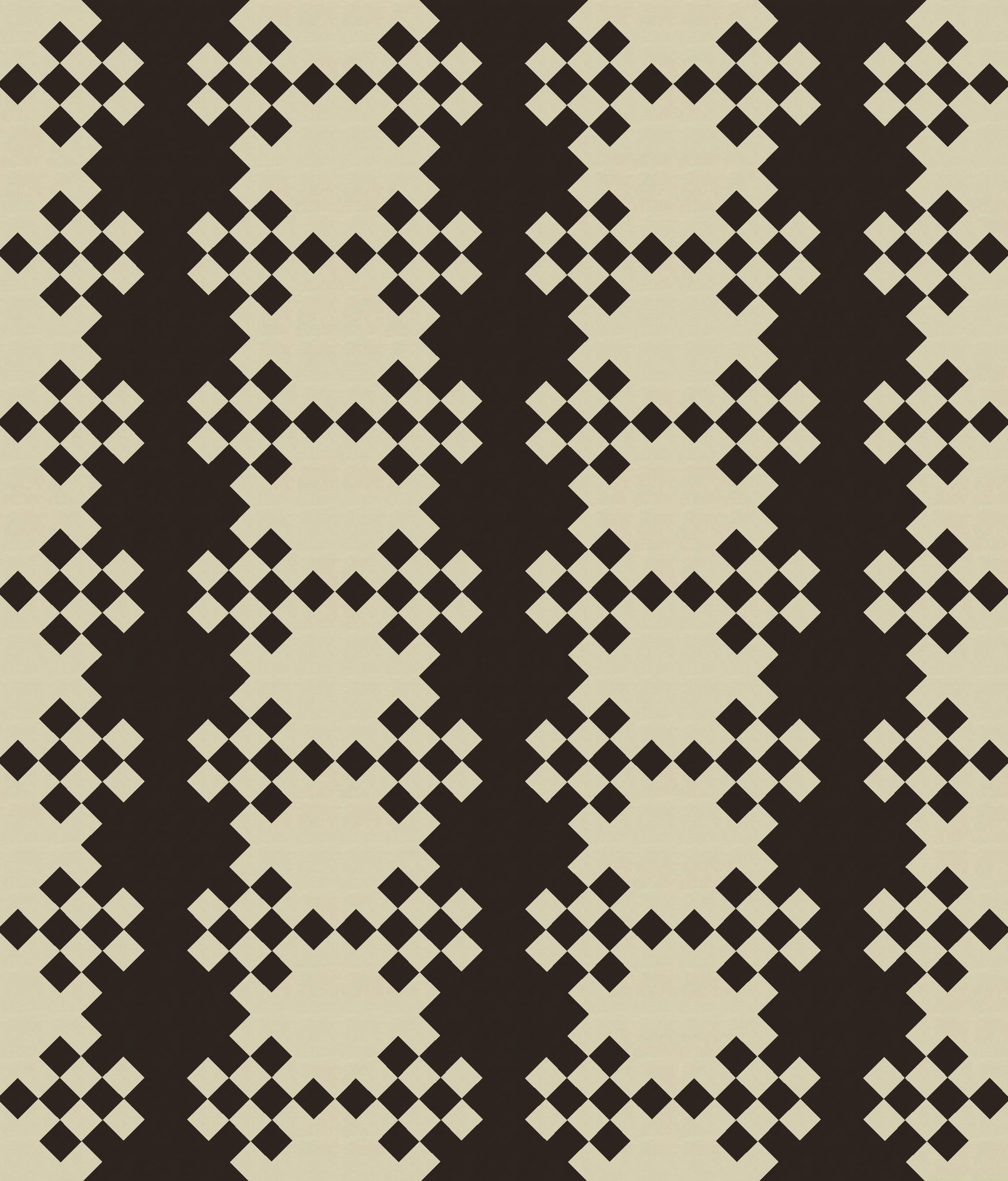
I started with a 16-patch (4 × 4), but also tried a 25-patch (5 × 5). In the 16-patch (shown above), two of the four corners in the block are in one colour, while the other two are in the other colour. In the 25-patch, all four corners of the block are in the same colour. Depending on how the blocks are rotated, this can affect how adjacent blocks interact (their corners either visibly touch or disappear against the same-colour background).
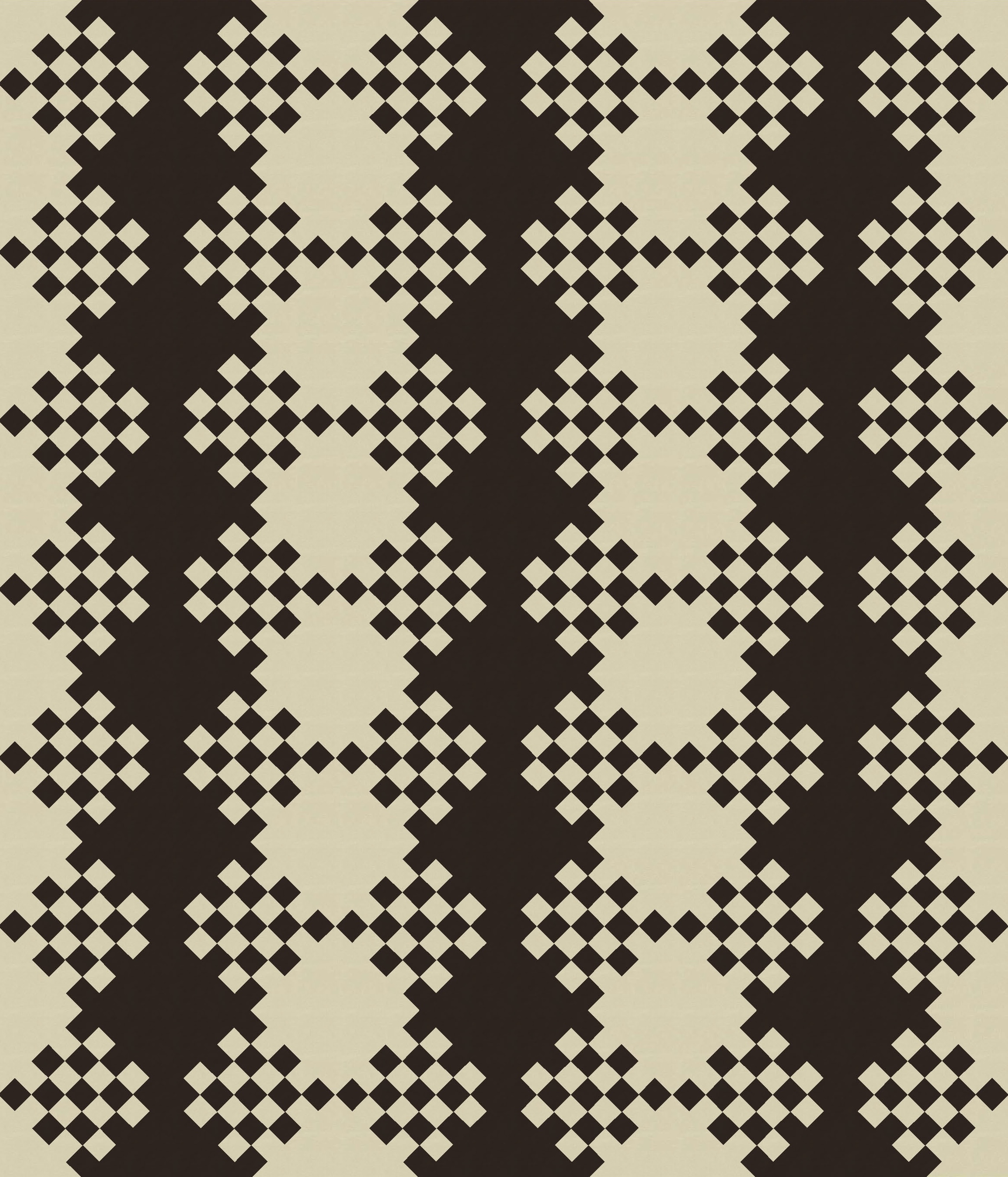

I also tried mixing both types of blocks.
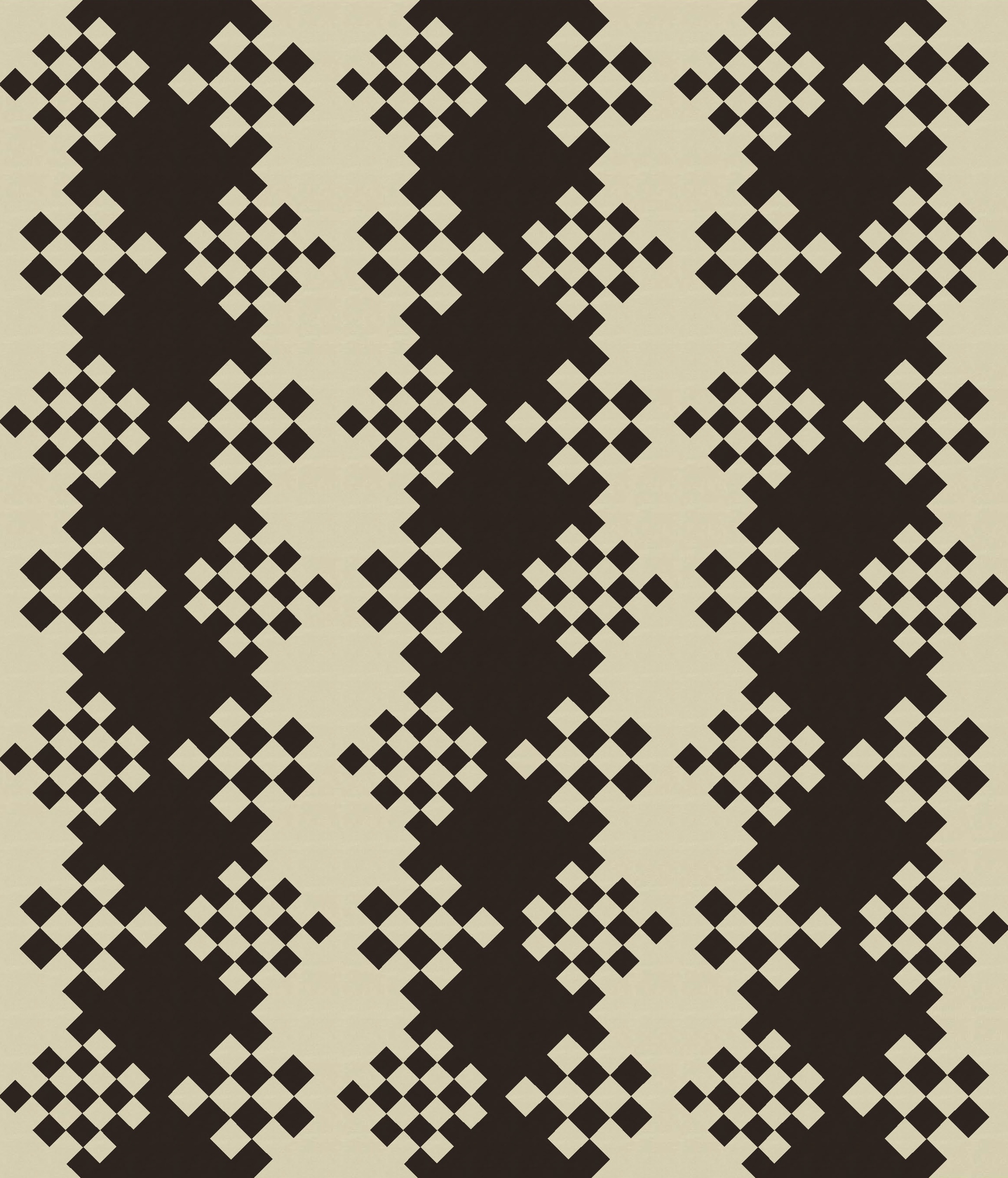
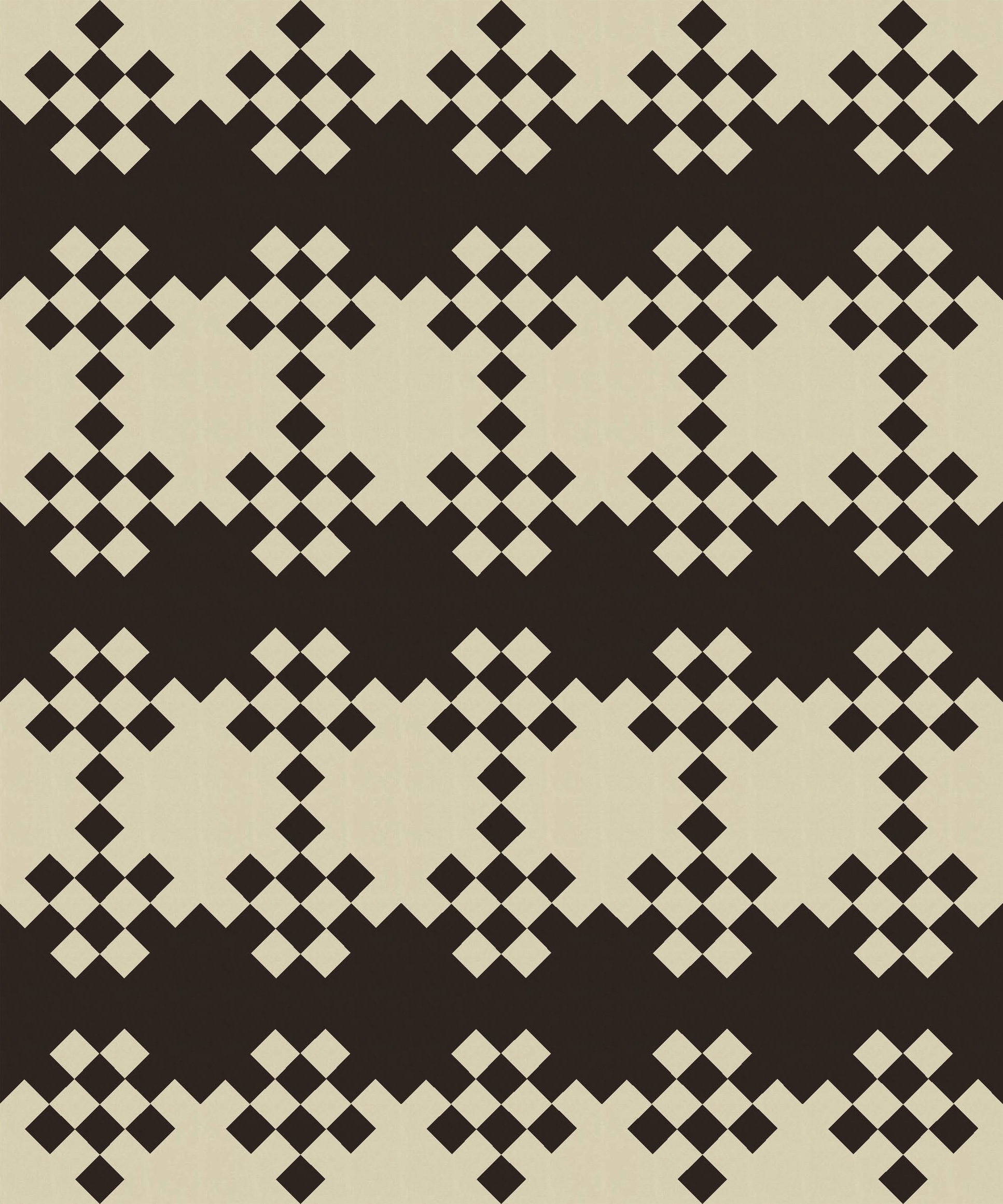
And adding a third block: a 9-patch. I like how each checkerboard block’s east or west corner almost nestles into the horizontally adjacent block’s ‘missing’ east or west corner.
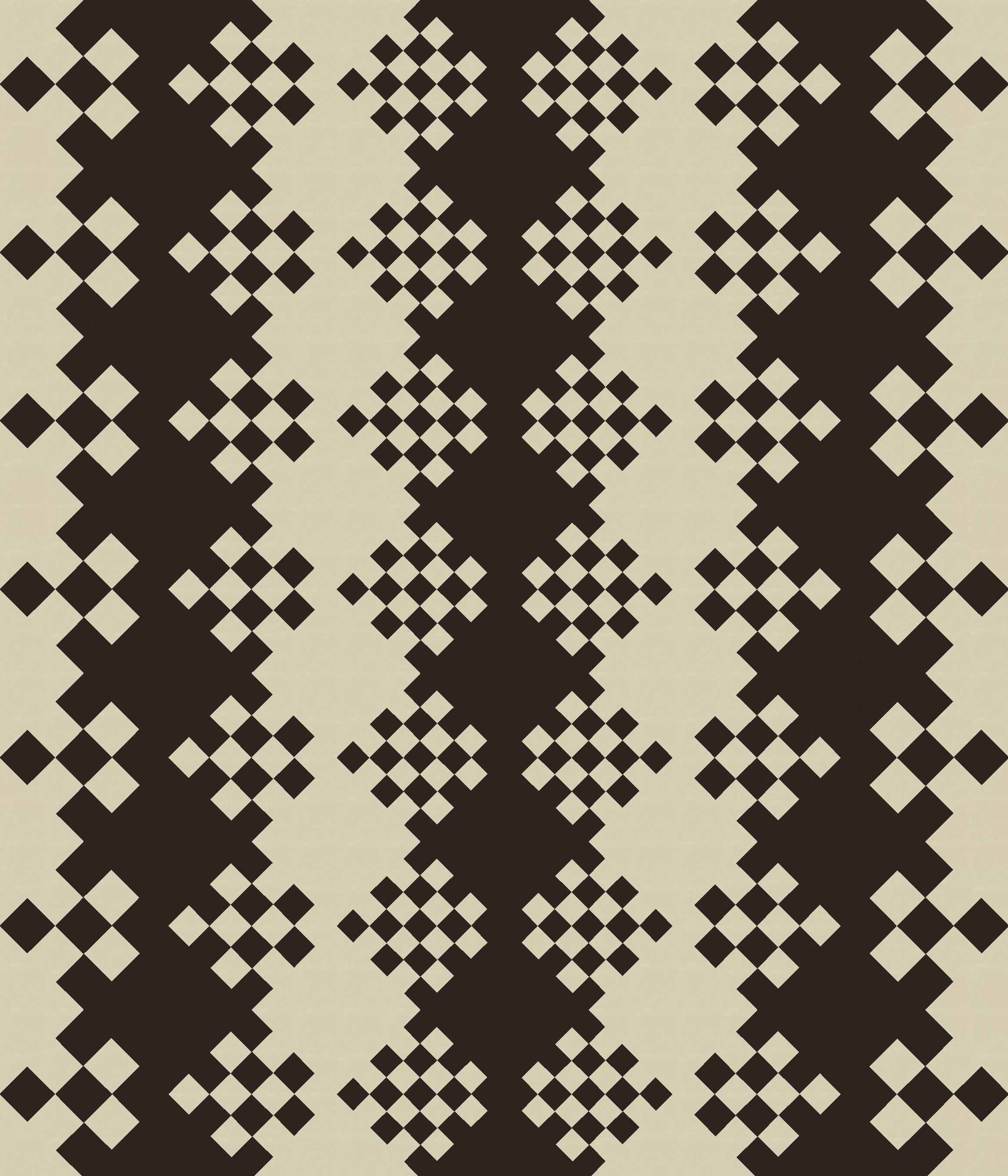
(This was the original orientation I tried with all these designs, but I’ve shown a cropped and rotated version as the first pic, above, just for something different.)
And then I tried taking away the solid black and beige squares and using only the checkerboard blocks. The fact that adjacent squares don’t quite line up means you get some interesting secondary shapes emerging. Changing the rotation of some of the blocks (the ones that have half their corners in one colour and half in the other) changes those internal shapes a bit.
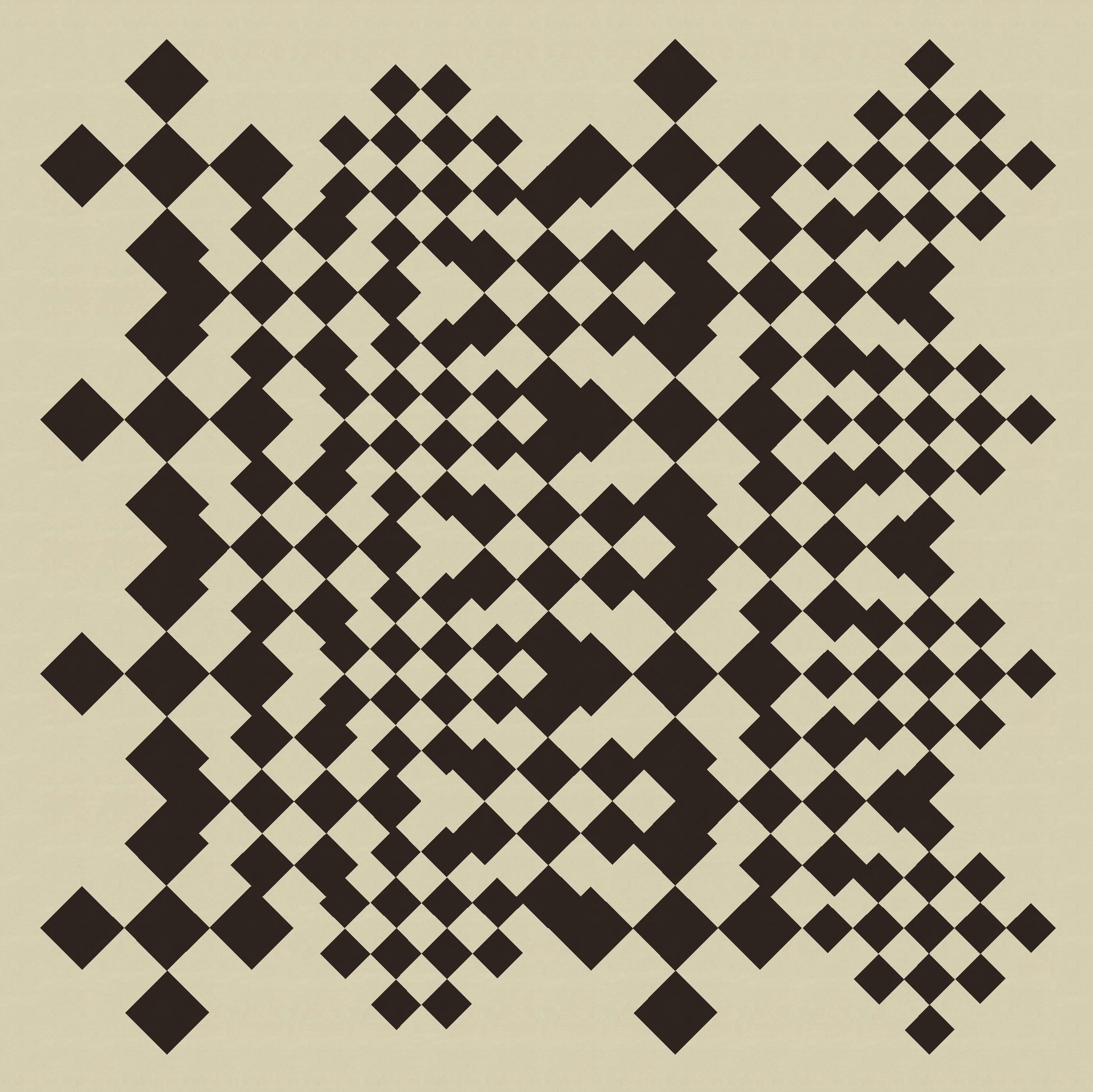


These last few designs remind me a little of Ashley Brown Durand’s work (@latesummerflowers on Instagram) – like this quilt and this one. The designs of Ashley’s quilts feel organic and unplanned, whereas my use of square blocks, set on point, imposes a bit of (hidden) order. Controlled chaos, I guess.
This week’s designs could all be made using squares, squares and more squares. You could make the blocks precisely or improvisationally. I think both would end up looking good. Of course, I’m just working with solids here; I’m not sure how well prints would work in a design like this. I feel like it could all get too busy too quickly, but my threshold for quilty chaos is admittedly very low. Perhaps a square or two of print fabric in amongst mostly solids?
This week’s sketch inevitably led to more related designs, so check in next week (and the week after that) to see where I ended up.
Discover more from Geometriquilt
Subscribe to get the latest posts sent to your email.

Absolutely stunning!